
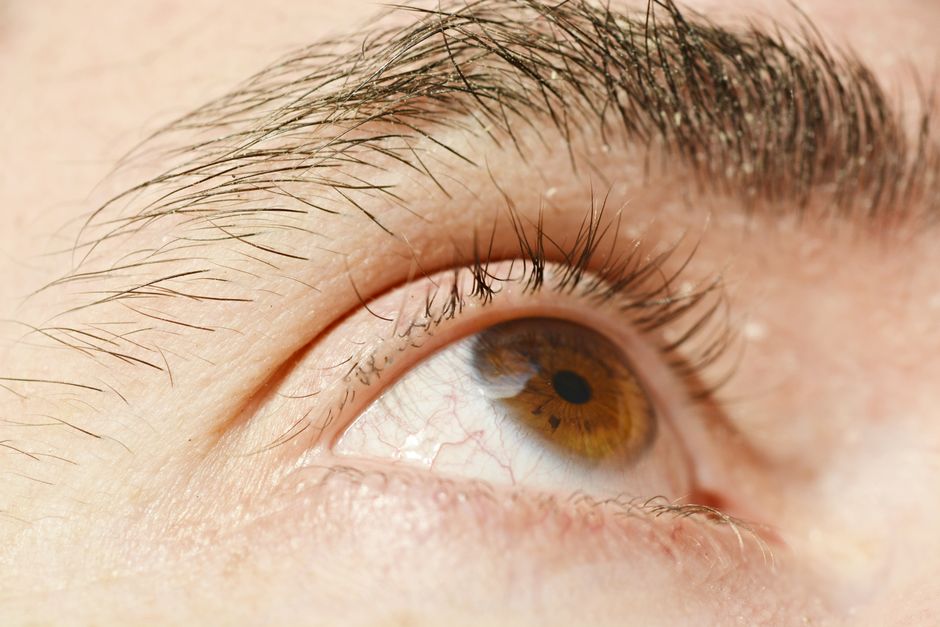
If you wear glasses or contacts, you have probably wondered whether your children will need them too. The short answer is yes, genetics play a major role in many common vision problems. But the full picture is more complex than a simple yes or no. Your genes can set the stage, but your environment and daily habits often determine how the story plays out.
What Causes Nearsightedness and Farsightedness?
Nearsightedness, or myopia, is when you can see things up close clearly but distant objects look blurry. Farsightedness, or hyperopia, is the opposite. Close objects are blurry while distant ones are clearer. These conditions happen because of how light focuses inside your eye.
In a healthy eye, light lands directly on the retina at the back of the eye. In nearsighted eyes, the eyeball is slightly too long. Light focuses in front of the retina instead. In farsighted eyes, the eyeball is too short. Light focuses behind the retina. Both of these physical shapes are strongly influenced by genetics.
Research published in Nature Genetics has identified over 200 genetic variants linked to myopia. Many of these genes affect how the eye grows and develops. If one or both of your parents are nearsighted, your risk of being nearsighted is significantly higher. Studies suggest the risk triples if both parents have myopia.
Is Poor Eyesight Genetic or Caused by Screen Time?
This is one of the most common questions people ask. The honest answer is both. Genetics loads the gun. Environment pulls the trigger. You can inherit a tendency toward myopia without ever developing it if your lifestyle does not encourage it.
Screen time has become a major focus of research because rates of myopia have exploded worldwide. The World Health Organization reports that by 2050, nearly half the global population will be nearsighted. That is a jump from about 23% in 2000. Genes alone cannot explain that rapid change.
What researchers have found is that close-up work of any kind — reading books, using phones, working on computers — increases myopia risk in children. The key factor is not the screen itself but the lack of time spent outdoors. Bright natural light triggers the release of dopamine in the retina, which helps slow the elongation of the eyeball. Without enough outdoor time, eyes grow longer and myopia develops.
So if you have the genetic markers for myopia and spend most of your day indoors doing close work, your risk is much higher. If you have the same genes but spend hours outside daily, your risk drops.
What Types of Vision Problems Are Strongly Genetic?
Some eye conditions are almost entirely determined by your DNA. Others have a weaker genetic link. Knowing the difference helps you understand what you can and cannot change.
| Condition | Genetic Influence | Environmental Influence |
|---|---|---|
| Nearsightedness (Myopia) | Strong | Strong |
| Farsightedness (Hyperopia) | Strong | Weak |
| Astigmatism | Moderate | Weak |
| Color Blindness | Very Strong | None |
| Age-Related Macular Degeneration | Strong | Moderate |
| Glaucoma | Moderate | Moderate |
| Cataracts | Moderate | Strong |
Color blindness is a clear example of a purely genetic condition. It is passed down through the X chromosome. Men are far more likely to have it because they only have one X chromosome. Women need two copies of the faulty gene to be affected.
Astigmatism, where the cornea is shaped more like a football than a basketball, also has genetic roots. But the exact genes are not as well understood as those for myopia. Some people develop astigmatism from eye injury or surgery, but most cases are inherited.




Can You Prevent or Slow Down Genetic Vision Problems?
You cannot change your genes. But you can change how they express themselves. This is the concept of gene-environment interaction. Your DNA gives you a range of possibilities. Your lifestyle decides where in that range you land.
For children, the most effective prevention strategy is time outdoors. A large study in Taiwan found that schools that required 80 minutes of outdoor time per day cut myopia rates in half over one year. The American Academy of Ophthalmology recommends at least two hours of outdoor time daily for children to protect their eyes.
For adults, the window for preventing myopia has mostly closed. But you can slow the progression of age-related vision problems. Eating a diet rich in lutein and zeaxanthin — found in leafy greens like spinach and kale — supports retinal health. The Age-Related Eye Disease Study (AREDS) conducted by the National Eye Institute found that specific vitamin combinations can slow the progression of macular degeneration.
Things that may help slow vision changes:
- Spending time outdoors in natural light daily
- Taking breaks from close work every 20 minutes
- Looking at distant objects regularly to relax eye muscles
- Eating a diet with dark leafy greens, orange vegetables, and fish
- Wearing sunglasses that block UV light
- Getting regular eye exams to catch changes early
There is no evidence that eye exercises can reverse myopia or eliminate the need for glasses. This is a persistent myth that has been studied and debunked multiple times. The American Academy of Ophthalmology states clearly that eye exercises do not improve refractive errors like nearsightedness or astigmatism.
What About Laser Eye Surgery and Genetics?
Laser eye surgery like LASIK or PRK reshapes the front surface of your eye to correct how light focuses. It does not change your genetic blueprint. If you have surgery in your 20s or 30s, your eyes will continue to age based on your genetic programming.
This is why some people need reading glasses or another correction years after successful LASIK. The surgery corrected the shape of your cornea, but it did not stop the natural aging process of your eyes. Presbyopia, the age-related loss of close-up vision, happens to everyone eventually regardless of genetics or surgery.
Some people are not good candidates for laser surgery because of their corneal thickness or curvature — traits that are largely genetic. A thorough evaluation with an ophthalmologist is the only way to know if your eyes are suitable. Do not rely on online quizzes or marketing claims from surgery centers.
How to Know Your Genetic Risk for Vision Problems
Your family history is the most useful tool for understanding your risk. Ask your parents and siblings about their vision. If you can, ask about grandparents too. Patterns matter more than individual cases.
Some signs that genetics are a major factor in your vision:
- Both parents wear glasses or contacts
- You needed glasses before age 12
- Your prescription changed significantly during childhood
- Multiple family members have the same condition like glaucoma or macular degeneration
- A parent or grandparent lost vision from an eye disease
Genetic testing for eye conditions exists but is not routine. It is most useful for rare inherited diseases like retinitis pigmentosa or certain types of childhood blindness. For common conditions like myopia, the genetic markers are too numerous and complex for a simple test to give you a clear answer.
The National Eye Institute recommends that everyone get a comprehensive eye exam by age 40, even if you have no symptoms. If you have a strong family history of eye disease, start earlier. Many vision-threatening conditions like glaucoma have no early symptoms. By the time you notice changes, damage may already be permanent.
Frequently Asked Questions
Can poor eyesight skip a generation?
Yes, it can. Genetic traits for vision can be carried without being expressed, especially if they are recessive and only one parent passes down the gene.
Is poor eyesight always inherited from parents?
No. Some vision problems come from new genetic mutations that neither parent has. Others develop from injury, disease, or environmental factors alone.
Can you have perfect vision if both parents wear glasses?
Yes, it is possible. Your genetic makeup is a combination of both parents’ DNA, and you may inherit different versions of eye-shape genes that result in normal vision.
At what age does genetic nearsightedness usually start?
Most genetic myopia begins between ages 6 and 12 and progresses through the teenage years. It usually stabilizes in the early twenties.
