
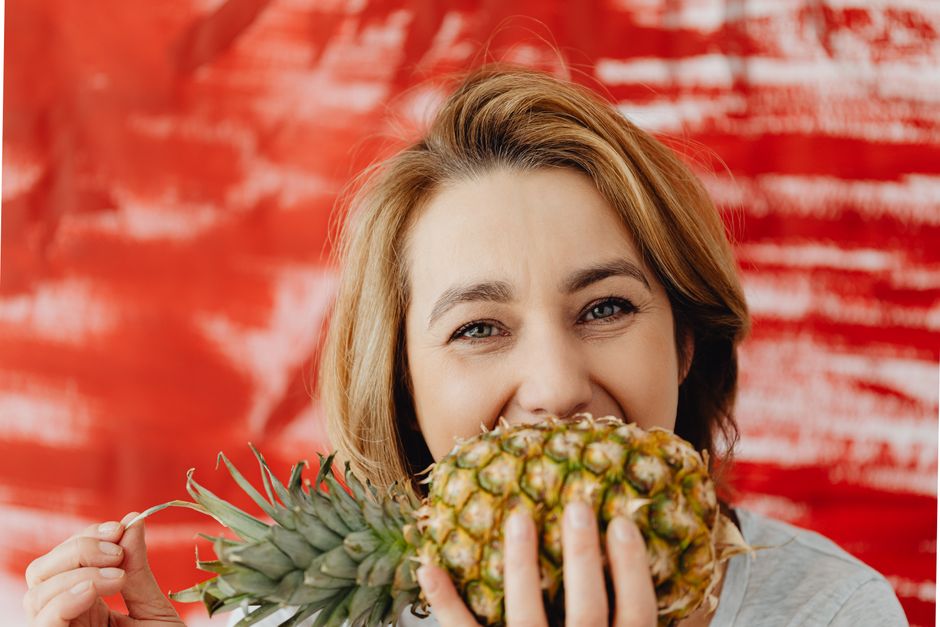
Yes, pineapple is safe to eat during pregnancy. You can enjoy fresh pineapple, canned pineapple, and pineapple juice without worry. The old story that pineapple causes miscarriage or early labor is not backed by science. A pregnant woman would need to eat massive amounts — think seven to ten whole pineapples at once — to get enough bromelain to cause any concern. Normal portions are completely fine.
Where Did the Fear About Pineapple and Pregnancy Come From?
The fear started with bromelain. Bromelain is an enzyme found in pineapple stems and some in the fruit itself. It breaks down protein. That is why pineapple can make your mouth tingle or feel raw if you eat too much.
Some lab studies and animal studies from decades ago suggested bromelain might soften the cervix or trigger contractions. But those studies used highly concentrated bromelain extracts. Not pineapple fruit. Not pineapple juice. The amount of bromelain in a serving of pineapple is tiny compared to what was used in those experiments.
The human body also digests most bromelain in the stomach before it reaches the bloodstream. Very little of it stays active by the time it gets anywhere near the uterus. So the theory does not hold up in real life.
There is no recorded case of a pregnant woman having a problem from eating normal amounts of pineapple. No medical organization lists pineapple as a food to avoid during pregnancy.
What Does Research on Bromelain Show During Pregnancy?
Research published in the journal Planta Medica and other pharmacology journals has looked at bromelain’s effects. The key finding: bromelain supplements are different from eating pineapple.
Bromelain supplements contain concentrated doses. Some studies suggest avoiding bromelain supplements during pregnancy because the dose is much higher than what you get from food. The European Medicines Agency and other health bodies advise against bromelain supplements in pregnancy for this reason.
But pineapple fruit contains very low levels of bromelain. A typical serving of pineapple has about 20 to 30 milligrams of bromelain. A bromelain supplement can contain 500 to 1000 milligrams. That is 20 to 50 times more.
So the concern is about supplements. Not the fruit. Not the juice. Not the canned chunks.
How Much Pineapple Is Considered Safe in a Day?
There is no official limit. No health authority has set a maximum amount of pineapple for pregnant women because the risk is essentially zero.
Common sense still applies. A serving of pineapple is about one cup of fresh chunks or one cup of juice. Eating one or two servings per day is fine. Eating an entire pineapple every day is probably not a great idea for anyone — pregnant or not — because of the acid content and natural sugars.
The real concern with large amounts of pineapple is not bromelain. It is the acid. Pineapple is acidic. Eating too much can cause heartburn or mouth irritation. Pregnancy already increases heartburn for many women. So if you eat a lot of pineapple and feel uncomfortable, that is the acid talking. Not a pregnancy risk.
Here is a comparison of pineapple forms and what to consider:
| Form of Pineapple | Bromelain Level | Main Concern in Pregnancy |
|---|---|---|
| Fresh pineapple (1 cup) | Low (20-30 mg) | Heartburn if eaten in large amounts |
| Canned pineapple (1 cup) | Very low (heat destroys bromelain) | Added sugar in syrup |
| Pineapple juice (1 cup) | Low | Natural sugar content, acid |
| Bromelain supplement | High (500-1000 mg) | Not recommended in pregnancy |



Can Pineapple Help With Pregnancy Symptoms Like Nausea?
Some women report that pineapple helps with morning sickness. This is a personal experience thing. There is no strong clinical evidence that pineapple specifically reduces nausea in pregnancy.
What makes sense biologically: pineapple is sweet, hydrating, and contains some vitamin B6. Vitamin B6 is one of the few things shown to help with pregnancy nausea. The American College of Obstetricians and Gynecologists recommends vitamin B6 as a first-line treatment for nausea in pregnancy.
Pineapple also contains manganese, vitamin C, and fiber. These are all good for general health during pregnancy. But none of these nutrients are unique to pineapple. You can get them from other fruits too.
If pineapple sounds good to you and settles your stomach, eat it. If it does not sound good, skip it. There is no special anti-nausea property that makes it necessary.
What Are the Real Food Safety Concerns With Pineapple in Pregnancy?
The actual risks have nothing to do with bromelain. They are the same food safety risks that apply to any fresh produce.
Fresh pineapple can carry bacteria like listeria or salmonella on the skin. This is true for all fresh fruits and vegetables. The CDC reports that pregnant women are about 10 times more likely to get listeriosis than the general population. Listeria can cause serious pregnancy complications.
The solution is simple. Wash the outside of the pineapple before cutting it. Even though you do not eat the skin, the knife can transfer bacteria from the skin to the flesh. Rinse the pineapple under running water and scrub it with a clean brush.
Pre-cut pineapple from the store is also fine as long as it is refrigerated properly. Eat it within a few days of buying it. If it smells off or looks slimy, throw it away.
Canned pineapple is the safest option from a food safety standpoint because it is heat-processed. The heat kills bacteria. Just watch for added sugar if you are trying to limit sugar intake.
What About Pineapple in Early Pregnancy or the Third Trimester?
Pineapple is safe in all trimesters. The same logic applies at every stage.
In the first trimester, some women worry about miscarriage. There is no evidence that pineapple increases miscarriage risk. The American Pregnancy Association and other major organizations do not list pineapple as a food to avoid in early pregnancy.
In the third trimester, some women have heard that pineapple can induce labor. This is another myth. There is no clinical evidence that eating pineapple starts labor. The idea comes from the bromelain theory, which does not hold up with food amounts.
Some women try eating pineapple to soften the cervix near their due date. It does not work. If it did, hospitals would use pineapple instead of cervical ripening agents. They do not.
Eating pineapple in late pregnancy is fine. It will not hurt you or the baby. It will not start labor. It is just fruit.
Frequently Asked Questions
Can eating pineapple cause a miscarriage?
No. There is no evidence that eating normal amounts of pineapple increases miscarriage risk. The bromelain in pineapple is too low to cause problems.
How much pineapple is too much during pregnancy?
There is no official limit. One to two cups per day is fine for most women. Eating very large amounts may cause heartburn or mouth irritation from the acid.
Is pineapple juice safe during pregnancy?
Yes. Pineapple juice is safe in normal amounts. It contains less bromelain than fresh pineapple because processing reduces enzyme activity.
Can pineapple help induce labor naturally?
No. There is no scientific evidence that eating pineapple starts labor or softens the cervix. This is a common myth with no clinical support.
