
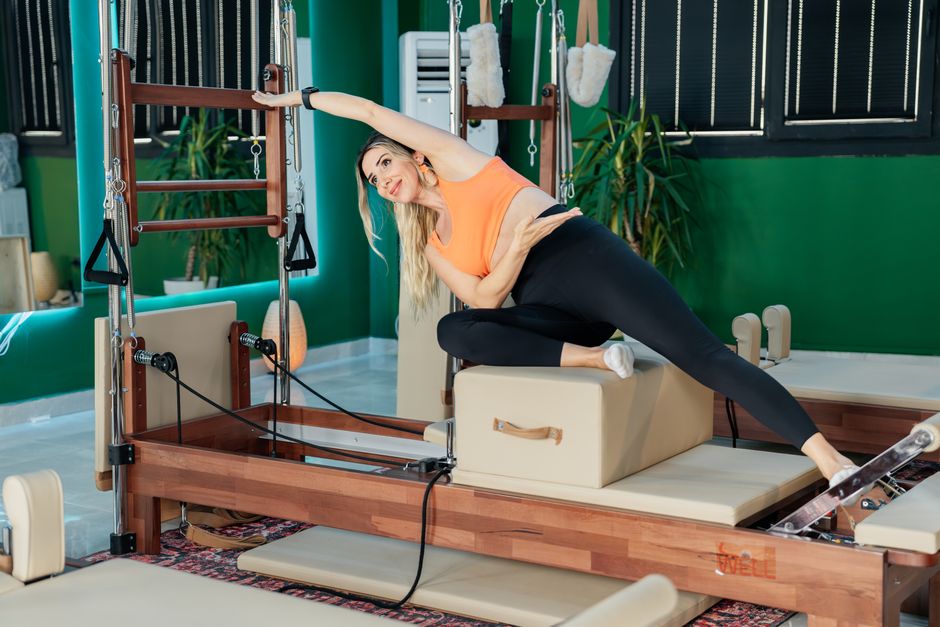
Yoga and Pilates both help you move your body, but neither is a weight loss shortcut. The real answer is that neither is clearly better for weight loss than the other. What matters more is how you use them and what else you do alongside them. This article explains what the evidence actually says so you can decide what fits your life.
What Burns More Calories: Pilates or Yoga?
Calorie burn is the most common way people compare workouts. A 155-pound person burns about 170-200 calories in 30 minutes of beginner mat Pilates. The same person burns roughly 150-180 calories in 30 minutes of Hatha yoga. These numbers are close enough that the difference barely matters.
But not all classes are equal. A vigorous Vinyasa or power yoga class can burn 250-300 calories in 30 minutes. A slow restorative yoga class might burn only 90-120 calories. The same range exists in Pilates. A reformer Pilates class with resistance can burn more than a basic mat class. A study published in the Journal of Strength and Conditioning Research found that advanced Pilates mat work burned about 220 calories per 30 minutes for women.
Here is the honest part. Neither activity burns as many calories as running, cycling, or high-intensity interval training. If pure calorie burn is your goal, these other activities will give you more per minute. But calorie burn is only one piece of the weight loss puzzle.
Does Muscle Building Help With Weight Loss?
Both yoga and Pilates build muscle, but they do it differently. Pilates focuses more on deep core muscles, glutes, and back strength. Yoga builds more full-body endurance and stability through longer holds. More muscle means a slightly higher resting metabolism. The American Council on Exercise reports that each pound of muscle burns about 6-7 calories per day at rest. That is not a huge number, but it adds up.
Research published in the journal PLOS ONE found that 12 weeks of Pilates improved body composition in overweight women. They lost fat and gained lean muscle. A separate study in the Journal of Alternative and Complementary Medicine found similar results for yoga. Both helped people change their body shape even when the scale did not move much.
The key point is that muscle gain is slow with either practice. You will not see dramatic changes in two weeks. But over six months, consistent practice can change how your body looks and functions. That matters more for long-term health than a quick drop on the scale.
What About Stress and Weight Loss?
This is where yoga has a clear advantage. Chronic stress raises cortisol levels. High cortisol is linked to belly fat storage and increased appetite. Yoga reduces cortisol more consistently than Pilates. A 2017 study in the Journal of Clinical Endocrinology and Metabolism found that women who did yoga three times per week for eight weeks had significantly lower cortisol levels.
Pilates also reduces stress, but the mechanism is different. Pilates focuses on controlled breathing and precise movement. This can lower heart rate and calm the nervous system. But yoga includes meditation and mindfulness practices that directly target the stress response. The breathing exercises in yoga called pranayama have been shown to lower cortisol in multiple studies.
If stress eating or emotional eating is part of your weight struggle, yoga may help more. The mindfulness skills you learn in yoga can carry over to how you eat. You may become more aware of true hunger versus boredom or stress. Pilates does not teach this skill as directly.
Some people report that yoga helped them stop binge eating or mindless snacking. This is widely claimed though strong evidence is limited. The research is still early, but the connection between mindfulness and eating behavior is real. A review in the journal Eating Behaviors found that yoga practice was linked to less emotional eating.





Is Pilates or Yoga Better for Weight Loss Consistency?
The best workout is the one you actually do. This sounds like a cliché, but it is backed by real data. The CDC reports that only about 23% of US adults meet the recommended physical activity guidelines. Consistency matters more than which activity you choose.
Yoga is generally easier to stick with for beginners. You can find classes at every level. You can do it at home with minimal equipment. The social aspect of studio classes also helps people stay consistent. A survey by Yoga Alliance found that 72% of yoga practitioners had been practicing for at least one year.
Pilates has a steeper learning curve, especially on the reformer. The equipment is expensive and not available at home for most people. Mat Pilates is more accessible, but many people find it harder to stay motivated without the equipment. However, people who enjoy Pilates often become very dedicated to it.
Here is a simple comparison table to help you decide what fits your life:
| Factor | Yoga | Pilates |
|---|---|---|
| Equipment needed | Mat only | Mat or reformer |
| Home practice ease | Easy | Moderate |
| Typical calorie burn | 150-300 per 30 min | 170-250 per 30 min |
| Stress reduction | Strong | Moderate |
| Muscle building | Moderate | Moderate to strong |
| Beginner friendly | Very | Moderate |
What Does Research on Pilates or Yoga Better for Weight Loss Show?
The direct research comparing yoga and Pilates for weight loss is limited. Most studies look at one practice alone, not head-to-head. But the existing evidence gives us useful patterns.
A 2021 meta-analysis in the journal Obesity Reviews looked at 33 studies on yoga and weight. The researchers found that yoga was linked to modest weight loss of about 2-3 pounds over 12 weeks. That is not dramatic, but it is real. The same analysis found that yoga was more effective for weight loss in people who were overweight or obese compared to those at a healthy weight.
Pilates research shows similar results. A 2018 review in the Journal of Bodywork and Movement Therapies found that Pilates improved body composition and reduced body fat percentage. The changes were modest but consistent across studies. Neither practice caused rapid weight loss.
The honest conclusion is that neither yoga nor Pilates will make you lose weight fast. But both can support weight loss when combined with other healthy habits. The people who lose the most weight are the ones who also change their diet and add some cardio exercise. A study in the journal Complementary Therapies in Medicine found that people who did yoga plus walking lost more weight than people who did yoga alone.
As of 2026 there is no clinical evidence that one practice is superior for weight loss. The choice should depend on your personal preferences, physical limitations, and lifestyle.
Common Misconceptions About Yoga and Pilates for Weight Loss
One common myth is that hot yoga burns a huge number of calories. Bikram yoga done in a 105-degree room does increase heart rate and sweat. But research published in the journal Medicine and Science in Sports and Exercise found that the calorie burn is only about 10-15% higher than the same poses in a normal temperature room. Most of the weight lost in hot yoga is water weight that comes back when you drink.
Another myth is that Pilates reformer classes are magical for weight loss. The reformer adds resistance, which can build more muscle. But the calorie burn is still moderate. A 60-minute reformer class burns roughly 250-350 calories for most people. That is about the same as a brisk 3-mile walk.
Some people believe that yoga does not count as real exercise. This is not true. Vigorous yoga styles like Ashtanga or Power Yoga can elevate heart rate to the moderate-to-vigorous zone. The American Heart Association includes yoga as a valid form of physical activity. The key is the intensity level of the specific class.
Here are the real facts to keep in mind:
- Neither yoga nor Pilates burns enough calories alone for significant weight loss
- Both can improve body composition by building lean muscle
- Yoga has stronger evidence for stress reduction and emotional eating
- Pilates may build core strength more quickly
- Consistency matters more than which one you choose
- Adding cardio and diet changes will give better results than either alone
What to Avoid When Using Yoga or Pilates for Weight Loss
Avoid the trap of thinking a 60-minute class gives you permission to eat whatever you want. A single yoga class burns roughly 200-300 calories. A single restaurant meal can easily be 1000-1500 calories. The math does not work in your favor. Research from the University of Texas found that people often overestimate their calorie burn from exercise by 3-4 times.
Avoid doing only gentle classes and expecting weight loss results. Restorative yoga and gentle Pilates are wonderful for recovery and stress relief. But they will not create a calorie deficit on their own. If weight loss is your goal, choose power yoga, Vinyasa, or advanced Pilates classes at least 3-4 times per week.
Avoid comparing your progress to social media influencers. Many yoga and Pilates instructors are naturally lean or have been practicing for years. Their results come from years of consistency, not a quick fix. The journal Body Image published a study showing that social media fitness content often creates unrealistic expectations.
Also avoid dropping your other exercise entirely. If you currently run, lift weights, or do cardio, do not replace all of it with yoga or Pilates. The best approach is to add these practices alongside your existing routine. The CDC recommends at least 150 minutes of moderate aerobic activity per week plus two days of strength training. Yoga and Pilates can count as strength training but not as your only aerobic activity.
Frequently Asked Questions
Can I lose weight doing only yoga?
Yes, but the weight loss will likely be slow. Most people lose 2-3 pounds over 12 weeks with yoga alone. Adding diet changes and cardio will speed up results.
Which burns more belly fat yoga or Pilates?
Neither targets belly fat specifically. Spot reduction is not supported by research. Both can reduce overall body fat which includes the belly area.
How many times a week should I do yoga or Pilates for weight loss?
Aim for 3-5 sessions per week for noticeable results. Consistency over months matters more than frequency in a single week.
Is hot yoga better for weight loss than regular yoga?
Hot yoga burns slightly more calories, but most of the weight lost is water weight. The difference is not large enough to make hot yoga a superior choice.
