
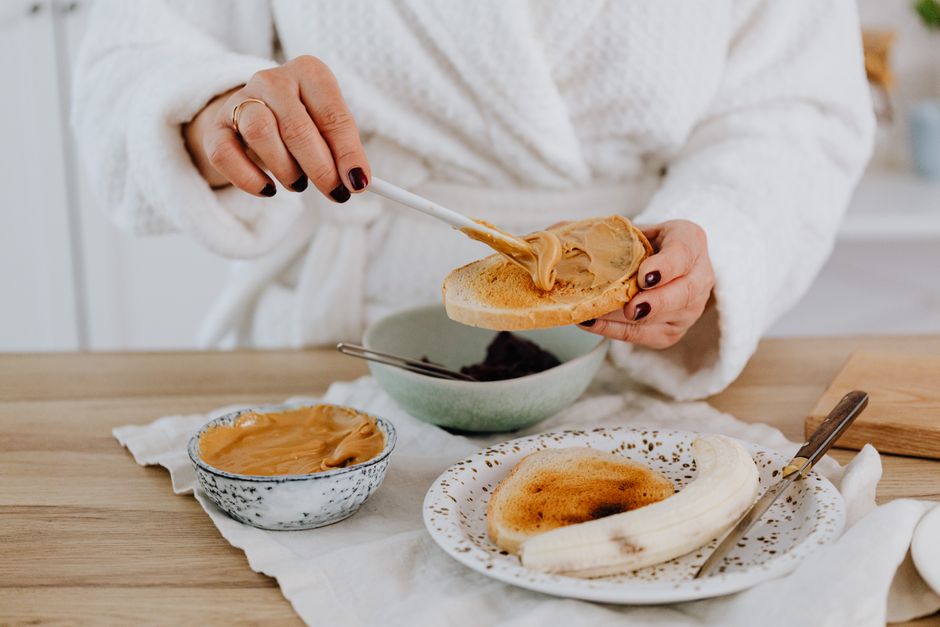
Yes, peanut butter can be part of a weight loss diet, but only when you manage portion sizes carefully. It is high in calories and fat, yet it is also rich in protein and fiber that help you feel full. The key is treating it as a controlled addition to your meals, not an unlimited snack.
Why Peanut Butter Helps With Weight Loss
Peanut butter has a nutrient profile that supports fullness. A two-tablespoon serving provides about 7 grams of protein and nearly 2 grams of fiber. Both of these slow down digestion and keep hunger at bay for hours after a meal.
The fat in peanut butter is mostly monounsaturated, the same type found in olive oil. This fat is not linked to weight gain when eaten in reasonable amounts. In fact, some research suggests that people who regularly eat nuts and nut butters tend to have lower body weight over time compared to those who avoid them.
There is a real difference between eating peanut butter and eating other calorie-dense spreads. A tablespoon of butter has no protein or fiber. Peanut butter at least delivers nutrients that work in your favor.
How Many Calories Are In Peanut Butter
Peanut butter is calorie-dense. A standard two-tablespoon serving contains roughly 190 calories. That is more than many people expect.
Those calories add up fast if you scoop it straight from the jar. A heaping spoonful can easily be three or four tablespoons, which pushes the calorie count toward 400. That is a full meal for many people on a weight loss plan.
The solution is measuring. Use a measuring spoon or a food scale. Two tablespoons is about the size of a golf ball. If you are eating it daily, those two tablespoons are the difference between a helpful snack and a calorie surplus.
Does Peanut Butter Boost Your Metabolism
No food truly “boosts” your metabolism in a way that causes weight loss. Peanut butter is no exception.
What peanut butter does do is support muscle maintenance during weight loss. The protein content helps preserve lean muscle mass while you are in a calorie deficit. More muscle means your body burns slightly more calories at rest, but this effect is modest.
Do not expect peanut butter to speed up fat burning on its own. It works because it keeps you full, which helps you eat fewer total calories across the day.





Is Peanut Butter Good For A Diet To Lose Weight Compared To Other Foods
Compared to most snacks, peanut butter is a better choice. A slice of white bread with jam has about the same calories but far less protein and fiber. A candy bar has more sugar and no meaningful nutrition.
Compared to other protein sources, peanut butter is less efficient. Chicken breast, eggs, or Greek yogurt deliver more protein per calorie. If your goal is maximum protein for minimum calories, those foods win.
Peanut butter earns its place through convenience and satisfaction. It does not spoil quickly, requires no preparation, and tastes good enough to replace less healthy cravings. That practical value matters for long-term diet adherence.
What Type Of Peanut Butter Should You Buy
Ingredients matter more than brand. Look for peanut butter with only one ingredient: peanuts. Some brands add a little salt, which is fine.
Avoid peanut butters with added sugar, palm oil, or hydrogenated oils. These add calories without improving the nutritional value. Some “reduced fat” peanut butters actually contain more sugar to make up for the removed fat, which makes them worse for weight loss.
Natural peanut butter separates at room temperature. The oil rises to the top. Stir it well before each use. This is normal and not a sign of spoilage.
Best Ways To Eat Peanut Butter For Weight Loss
How you eat peanut butter matters as much as how much you eat. Here are approaches that work well:
- Add one tablespoon to oatmeal for breakfast. It adds flavor and keeps you full until lunch.
- Spread it on apple slices or celery sticks. The fiber in the fruit or vegetable combines with the protein and fat for a balanced snack.
- Blend it into a smoothie with a banana and unsweetened almond milk. This makes a satisfying meal replacement.
- Use it as a dip for plain rice cakes instead of spreading it on bread. You get the flavor with fewer refined carbs.
One serving per day is a reasonable target for most people actively trying to lose weight. Two servings can still fit into your calorie budget if the rest of your diet is lean. Three or more servings make weight loss difficult for most people.
When Peanut Butter Can Sabotage Weight Loss
Peanut butter becomes a problem when it is paired with other calorie-dense foods. Peanut butter and jelly sandwiches, peanut butter cookies, or peanut butter swirled into ice cream are not weight loss foods.
Eating it straight from the jar is the most common mistake. It is nearly impossible to track portion sizes this way. Before you know it, you have eaten 500 calories without noticing.
Another issue is “healthy” peanut butter products that are not really peanut butter. Many commercial spreads contain chocolate, honey, or other sweeteners. These can double the sugar content. Check the label every time.
What The Research Actually Shows
Observational studies have consistently linked nut consumption with lower body mass index. People who eat nuts and nut butters regularly tend to weigh less than those who do not, despite the high calorie content.
Some controlled trials have looked at peanut butter specifically for weight management. Results generally show that including peanuts or peanut butter in a calorie-controlled diet does not hinder weight loss. Some studies even suggest it improves adherence because the diet feels less restrictive.
One important note: these studies use measured portions. Participants are not eating unlimited peanut butter. They are eating one to two servings per day as part of a structured plan.
There is no clinical evidence that peanut butter has any unique fat-burning property. Its benefit comes entirely from satiety and overall diet quality.
Peanut Butter And Blood Sugar Control
Peanut butter has a very low glycemic index. It does not cause a rapid spike in blood sugar when eaten alone. This matters because stable blood sugar reduces cravings and energy crashes.
When combined with carbohydrates, peanut butter slows the absorption of sugar into the bloodstream. Spreading it on whole grain toast or adding it to fruit means the glucose from those foods enters your system more gradually.
This effect is helpful for weight loss because it prevents the hunger spike that comes two to three hours after a high-carb meal. You stay satisfied longer and eat less at the next meal.
Portion Control Strategies That Work
Buy single-serving packets. Many brands sell 1.5-ounce or 2-tablespoon packets. These remove all guesswork.
Use a kitchen scale if you want precision. Two tablespoons of peanut butter weighs about 32 grams. Weighing it once or twice helps you learn what a real serving looks like.
Keep the jar out of reach while you eat. If the jar is on the counter next to you, you are more likely to take an extra scoop. Put your measured portion on a plate or bowl and return the jar to the cabinet.
Peanut Butter Alternatives Worth Considering
Almond butter has a similar calorie count but slightly more vitamin E and monounsaturated fat. It is a fine alternative if you prefer the taste.
Powdered peanut butter has about 45 calories per two-tablespoon serving because most of the fat is removed. It mixes well into smoothies and oatmeal, but it does not have the same creamy texture or satiety effect as regular peanut butter.
Sunflower seed butter is a good option for people with peanut allergies. It has a similar nutritional profile, though some brands add sugar, so read labels carefully.
Frequently Asked Questions
How much peanut butter can I eat per day on a weight loss diet?
One to two tablespoons per day is a reasonable amount for most people. This provides roughly 190 to 380 calories, which fits into most weight loss plans.
Is natural peanut butter better than regular peanut butter for weight loss?
Yes, because natural peanut butter contains only peanuts and possibly salt. Regular peanut butter often has added sugar and oils that increase calories without adding nutrition.
Can I eat peanut butter every day and still lose weight?
Yes, as long as you stay within your total calorie target. Daily peanut butter consumption does not prevent weight loss when portions are controlled.
Is peanut butter good before bed for weight loss?
It can be, because the protein and fat keep you full through the night. Keep the serving to one tablespoon to avoid excess calories before sleep.
