
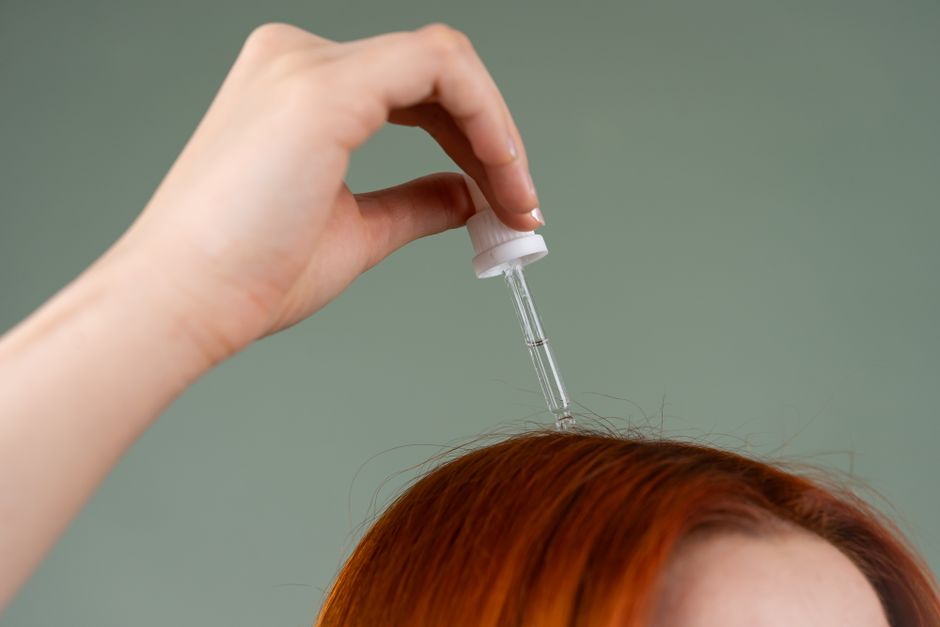
If you have ever felt that cold, tingly rush after massaging a minty shampoo into your scalp, you already know why menthol gets marketed so heavily in hair products. Menthol does not grow hair. There is no evidence that it triggers new growth, thickens strands, or reverses hair loss. What it can do is create a cooling sensation that may temporarily ease itching and make your scalp feel clean and refreshed. Those are real but limited effects, and they are not the same as hair growth.
What Does Menthol Actually Do To Your Scalp?
Menthol is a compound found in mint plants, and it works by activating a specific cold-sensing receptor in your skin called TRPM8. That receptor sends a signal to your brain that says “cold,” even though your scalp temperature has not changed.
This is the same receptor that makes a menthol cough drop feel like it is cooling your throat. It is a sensory trick, not a physical change in temperature.
Beyond the cooling feeling, menthol has mild local effects. It can slightly reduce the perception of itch. It may produce a faint numbing sensation. Some research suggests menthol has mild anti-inflammatory activity when applied to skin, though most of that work has been done in lab settings or on conditions other than the scalp.
What menthol does not do is penetrate deep enough to reach the hair follicle in any meaningful concentration when used in a typical shampoo. It sits on the surface, does its sensory job, and gets rinsed away.
Is Menthol Good For Hair Growth?
No. Menthol is not a hair growth ingredient, and no human trials have shown that it regrows hair or slows hair loss.
Hair growth depends on what happens at the follicle, a tiny organ buried in the dermis layer of your scalp. The follicle cycles through growth, transition, and rest phases. Hair loss happens when that cycle gets disrupted by genetics, hormones, illness, medication, nutritional deficiency, or scarring.
Menthol acts on nerve receptors in the outer skin. It does not influence the follicle’s cycle. There is no established mechanism by which menthol would meaningfully change how fast hair grows or how much of it you keep.
Some people point to menthol’s ability to increase blood flow when it is applied to skin. Even if that happens, increased blood flow to the scalp has not been shown to grow hair on its own. Minoxidil, the topical drug approved for certain types of hair loss, is thought to work through several pathways, and blood flow is only one piece. Copying one piece of a drug’s mechanism does not copy the drug.
If a product claims menthol promotes growth, that claim is not backed by clinical evidence.
Can Menthol Help With Scalp Itching Or Irritation?
Menthol can quiet the sensation of itch, and that is one of its better-supported uses on skin.
The cooling signal from TRPM8 appears to compete with itch signals traveling to the brain. This is why menthol shows up in anti-itch lotions and creams. On the scalp, that effect is real but short-lived. It usually fades within minutes to a few hours.
There is a catch. Itch is a symptom, not a condition. A persistently itchy scalp is often a sign of something specific:
- Seborrheic dermatitis, a common inflammatory condition that causes flaking and itching
- Fungal overgrowth, including the type involved in dandruff
- Psoriasis of the scalp
- Contact dermatitis from a product ingredient
- Lice or another infestation
- Dry skin
Menthol can make any of these feel better for a while. It does not treat the cause. If your scalp itches most days, or if you have redness, sores, or patchy hair loss, a doctor or dermatologist can identify what is actually going on.

Does Menthol Cause Hair Loss Or Damage?
For most people, menthol in a rinse-off shampoo is unlikely to cause harm. But “most people” is doing real work in that sentence.
Menthol is a known skin irritant at higher concentrations, and it can trigger contact dermatitis in people who are sensitive to it. Symptoms include burning, redness, and itching that gets worse after use rather than better.
The tingling sensation many people enjoy is a mild irritant response. For some, that same response crosses into irritation.
There is also a specific concern worth naming. A small number of case reports have described hair loss after using products that combine menthol with methyl salicylate, a topical pain reliever. Case reports are not proof of cause, and the evidence here is limited. Still, if you notice increased shedding after starting a menthol-heavy product, stopping it is reasonable.
People with sensitive skin, eczema, or a known mint allergy should patch test any new menthol product before using it on the scalp.
How Does Menthol Compare To Ingredients That Do Have Evidence?
If your goal is hair growth, menthol is not the ingredient to focus on. A few others have actual clinical trial support for specific types of hair loss.
| Ingredient | Evidence For Hair Growth | Typical Use |
|---|---|---|
| Minoxidil (topical) | Approved for androgenetic alopecia; multiple trials show modest regrowth in some users | Applied to scalp, often twice daily |
| Finasteride (oral) | Prescription drug; trials show effectiveness in men with androgenetic alopecia | Daily oral tablet, men only |
| Ketoconazole shampoo | Some evidence of benefit in androgenetic alopecia, likely through antifungal and anti-inflammatory effects | Medicated shampoo, usually twice weekly |
| Menthol | No evidence for hair growth | Cooling and sensory effect only |
This table is not a treatment plan. Hair loss has many causes, and the right approach depends on which one you have. A dermatologist can tell the difference between pattern hair loss, telogen effluvium, alopecia areata, and other conditions, and each one is handled differently.
Is Menthol Good For Your Scalp And Hair Growth? The Short Answer
Menthol is a cooling agent with mild anti-itch properties. That is the honest summary of what it does.
It can make your scalp feel refreshed. It can temporarily reduce itch. It cannot grow hair, and it does not address any of the underlying causes of hair loss or scalp disease.
If you like the way a menthol shampoo feels and your scalp tolerates it, there is no strong reason to avoid it. If you are using it hoping for thicker hair, you are likely to be disappointed, and you may be delaying something that would actually help.
The most useful step for anyone worried about hair growth is figuring out why hair is thinning in the first place. That answer usually points to a treatment with real evidence behind it, and menthol is rarely part of it.
Frequently Asked Questions
Does menthol help hair grow?
No. There is no clinical evidence that menthol stimulates hair growth or slows hair loss. Its effects on the scalp are limited to cooling and mild itch relief.
Can menthol cause hair loss?
Menthol can irritate sensitive skin and trigger contact dermatitis, which in rare cases has been reported alongside hair shedding when combined with other ingredients. The evidence for menthol directly causing hair loss is limited and based mainly on case reports.
Is it safe to leave menthol shampoo on your scalp?
Most rinse-off shampoos are designed to be used briefly and rinsed, which limits exposure. Leaving menthol products on longer than directed increases the chance of irritation, especially if you have sensitive skin.
What actually helps with scalp itching?
It depends on the cause. Medicated shampoos with ingredients like ketoconazole or zinc pyrithione are commonly used for dandruff and seborrheic dermatitis, while other causes need different treatment. A doctor can identify what is driving the itch.
