
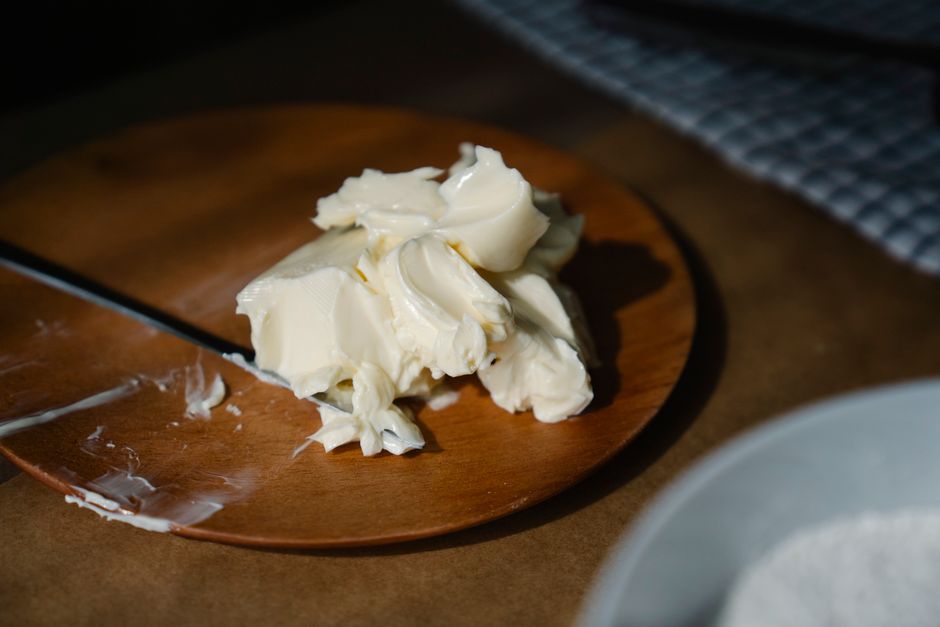
Margarine was invented as a cheaper alternative to butter, but for decades it has been surrounded by confusion and conflicting health advice. The short answer is that modern margarine is not the health disaster it was once thought to be, but it is also not a health food. Whether it is bad for you depends almost entirely on what type you buy and how much you eat.
What Is Margarine Made Of?
Margarine is a processed spread made from vegetable oils. Manufacturers start with liquid oils like soybean, canola, or palm oil. They then turn those liquid oils into a solid spread through a process called hydrogenation.
There are two types of hydrogenation. Full hydrogenation creates a very hard fat with no trans fats. Partial hydrogenation creates the soft spreadable texture people expect, but it also creates artificial trans fats. Those artificial trans fats are the main reason margarine got a bad reputation.
Most margarine sold in the United States today has removed partially hydrogenated oils. The FDA banned artificial trans fats from the food supply in 2018, with full compliance required by 2021. This means the margarine on store shelves now is very different from what your parents bought in the 1990s.
Is Margarine Bad For Your Heart?
This is the most researched question about margarine. The answer has changed over time as the product has changed.
When margarine contained high levels of artificial trans fats, research clearly linked it to heart disease. A major study published in the New England Journal of Medicine in the 1990s showed that trans fats raised LDL cholesterol and lowered HDL cholesterol. That is a dangerous combination for heart health.
Modern margarine without trans fats is a different story. The American Heart Association states that replacing saturated fat from butter with unsaturated fat from margarine can lower heart disease risk. A 2017 review in the journal Circulation found that swapping butter for margarine reduced cardiovascular events by about 10 percent.
The catch is that not all margarines are equal. Stick margarine still contains more saturated fat than tub margarine. Some brands add back small amounts of trans fat through processing. Check the ingredient list for “partially hydrogenated oil” — if it is there, put it back.
Butter Versus Margarine: What Does the Evidence Say?
People want a simple winner in this debate. Research does not give one.
Butter is a natural product made from cream. It is high in saturated fat. One tablespoon has about 7 grams of saturated fat, which is about 35 percent of the daily recommended limit. High saturated fat intake raises LDL cholesterol, which is a risk factor for heart disease.
Margarine is processed but contains mostly unsaturated fats. Even stick margarine has less saturated fat than butter. Tub margarine typically has the least. A tablespoon of tub margarine has about 2 grams of saturated fat.
A 2021 analysis in the journal Nutrients pooled data from multiple studies and found no clear benefit to choosing butter over margarine for heart health. The researchers noted that the quality of the margarine matters more than the category itself.
Here is a simple comparison based on standard one-tablespoon servings:
| Spread | Saturated Fat | Trans Fat | Calories |
|---|---|---|---|
| Butter | 7 g | 0.5 g natural | 102 |
| Stick margarine | 2-3 g | 0-0.5 g | 80-100 |
| Tub margarine | 1-2 g | 0 g | 60-80 |
| Light margarine | 0.5-1 g | 0 g | 40-50 |
The Dietary Guidelines for Americans recommend limiting saturated fat to less than 10 percent of daily calories. For someone eating 2000 calories a day, that is about 22 grams of saturated fat total. Two tablespoons of butter uses more than half of that allowance.





What About Plant Sterols and Added Nutrients in Margarine?
Some margarine brands add ingredients that can improve health markers. This is where the product category gets more interesting.
Plant sterols and stanols are compounds that block cholesterol absorption in your gut. The FDA allows a health claim for margarines containing at least 0.65 grams of plant sterols per serving, stating they may reduce heart disease risk when part of a low-fat diet. Brands like Benecol and Promise Activ are examples.
Research published in the American Journal of Clinical Nutrition found that eating 2 grams of plant sterols daily lowered LDL cholesterol by about 8 to 10 percent. That is a meaningful reduction. But you have to eat the margarine consistently every day to get the benefit.
Many margarines also add vitamin D and vitamin A, which are fat-soluble vitamins naturally present in butter. Some add omega-3 fatty acids from fish oil or flaxseed. These additions make some margarines more nutritious than plain butter, but they do not turn margarine into a health food.
One thing people often miss is that the added nutrients come in small amounts. You would need to eat several tablespoons daily to get meaningful levels of vitamin D or omega-3s from margarine. That much margarine also means extra calories and processed ingredients.
Does Margarine Cause Inflammation?
This question comes up often on social media. The concern is that vegetable oils in margarine are high in omega-6 fatty acids, which some claim cause inflammation.
The omega-6 to omega-3 ratio argument is real in theory. The standard American diet already has too much omega-6 and too little omega-3. Margarine adds to that imbalance. But the link between dietary omega-6 and inflammatory markers in the body is not as clear as internet health writers claim.
A 2019 review in the Journal of the Academy of Nutrition and Dietetics analyzed 15 clinical trials and found that omega-6 intake did not increase inflammatory markers like C-reactive protein or interleukin-6. The authors concluded that omega-6 fatty acids are not pro-inflammatory in humans.
Some people report feeling better when they cut out margarine and processed vegetable oils. This is a real experience. But it is not backed by strong clinical evidence. If you have a specific inflammatory condition like rheumatoid arthritis, experimenting with removing margarine for a few weeks is reasonable. Just know that the science on this is not settled.
What Type of Margarine Should You Buy?
If you decide to use margarine, the choices on the shelf can be overwhelming. Here is what to look for based on current evidence:
- Choose tub margarine over stick margarine. Tub margarine has less saturated fat and fewer processed fats. Stick margarine is more hydrogenated and harder on your arteries.
- Look for “0 grams trans fat” on the label. Check the ingredients list anyway. If you see “partially hydrogenated oil,” even in small amounts, skip it.
- Pick one with liquid oil as the first ingredient. Canola oil, olive oil, or soybean oil listed first means the product is mostly unsaturated fat. Palm oil or coconut oil listed first means more saturated fat.
- Consider margarines with plant sterols if you have high cholesterol. The extra cost may be worth it if you eat it daily. But talk to your doctor first.
- Avoid margarines with added sugar or artificial colors. Some brands add sugar for taste and yellow coloring to look like butter. These are unnecessary additives.
A reasonable approach is to use margarine as a spread in moderation, not as a cooking fat. For high-heat cooking, use olive oil or avocado oil instead. Margarine contains water and milk solids that burn at high temperatures and create off flavors.
Common Misconceptions About Margarine
Several myths about margarine keep circulating despite evidence to the contrary. It helps to know what is real and what is not.
Myth: Margarine is one molecule away from plastic. This is false. Margarine is made from vegetable oils, water, salt, and emulsifiers. The “one molecule away from plastic” claim started as a viral internet joke and has no chemical basis. Plastics are polymers. Margarine is fat.
Myth: Margarine causes cancer. There is no clinical evidence that margarine causes cancer in humans. Some studies have looked at trans fat intake and cancer risk, but the results are inconsistent. The World Health Organization classifies trans fats as probably carcinogenic, but that refers to artificial trans fats, not modern trans-fat-free margarine.
Myth: Butter is better because it is natural. Natural does not mean healthy. Butter comes from cows, but it is still high in saturated fat. Poison ivy is natural too. The health effect of a food depends on its nutritional composition, not its origin.
Myth: All margarine is the same. As discussed throughout this article, margarine varies widely. Some is heavily processed with saturated fats and additives. Others are minimally processed with mostly unsaturated fats and added nutrients. Read labels.
Frequently Asked Questions
Is margarine worse for you than butter?
Modern trans-fat-free margarine is generally better for heart health than butter because it contains less saturated fat, but neither is a health food.
Does margarine raise cholesterol?
Margarine without trans fats does not raise cholesterol the way butter does, and margarines with plant sterols can actually lower LDL cholesterol.
Can you eat margarine every day?
Eating a small amount of trans-fat-free margarine daily is safe for most people, but it should not replace whole foods like nuts, seeds, or olive oil in your diet.
Is margarine inflammatory?
Current research does not show that margarine causes inflammation in the body, though some people with inflammatory conditions may choose to avoid it.
