
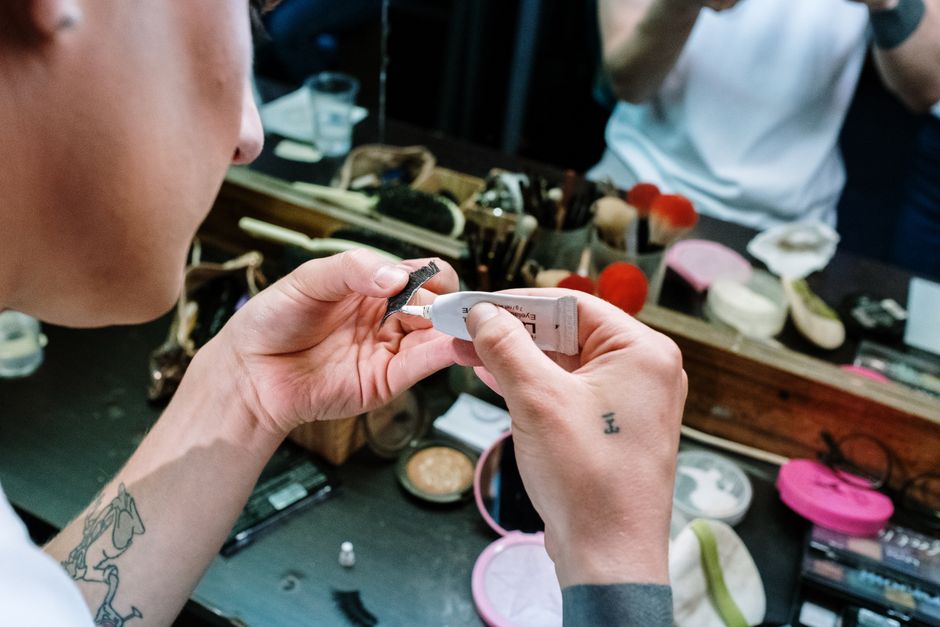
Lash glue is safe for most people when it is used as intended and kept away from the eye itself. The main risks come from the ingredients — especially cyanoacrylate adhesives and formaldehyde-releasing preservatives — and from how the product is applied. Reactions range from mild irritation to allergic contact dermatitis to the eyelids, and in rare cases severe eye injury.
Is Lash Glue Safe For Skin Ingredients And Risks?
Eyelash glue is formulated to bond to hair and to sit close to the eye, not to be spread across skin. That distinction matters. The ingredients that make it hold strongly are also the ones most likely to cause trouble on skin that stays in contact with them.
Most lash adhesives fall into two broad categories. Strip lashes and many individual lash glues use cyanoacrylate — the same family of fast-bonding adhesives found in household “super glue.” Professional and semi-permanent extensions often use similar cyanoacrylate chemistry, sometimes with different formulations.
Cyanoacrylate cures fast by reacting with moisture in the air. That speed is useful for holding a lash in place. It also means the adhesive can bond to skin quickly, and once it sets it can pull on the delicate eyelid skin when removed.
Other common ingredients include latex (in some products), rubber latex alternatives, preservatives, and solvents. Each carries its own risk profile.
What Ingredients In Lash Glue Cause Reactions?
Several ingredients in lash glue are well-documented causes of skin reactions. The most significant is cyanoacrylate.
Cyanoacrylate is a recognized contact allergen. Dermatology literature consistently identifies acrylates — the chemical family that includes cyanoacrylate — as a frequent cause of allergic contact dermatitis, particularly on the eyelids and face. Eyelid skin is thin and absorbs substances more readily than skin elsewhere, which makes it a common site for reactions.
Formaldehyde-releasing preservatives are another concern. Some adhesives use preservatives that slowly release small amounts of formaldehyde to prevent bacterial growth. Formaldehyde is a known sensitizer and is restricted in cosmetics in many jurisdictions. If a product lists ingredients like DMDM hydantoin or quaternium-15, those are formaldehyde releasers.
Latex is a risk for people with a latex allergy. Reactions can range from local irritation to a more serious systemic response in sensitized individuals.
Solvents and removers add another layer. Adhesive removers often contain oils or solvent blends designed to break the cyanoacrylate bond. These can irritate skin on their own, especially with repeated use.
What Are The Signs Of An Allergic Reaction To Lash Glue?
Allergic contact dermatitis from lash glue typically appears where the product touched skin — most often the upper eyelid, the lash line, and sometimes the surrounding eye area. Symptoms usually develop hours to a couple of days after exposure, not immediately.
Common signs include:
- Redness and swelling of the eyelid
- Itching or a burning sensation
- Dryness, flaking, or scaling of the skin
- Small bumps or a rash along the lash line
- Watery or irritated eyes
An important distinction: irritation and allergy are not the same thing. Irritant reactions can happen to anyone with enough exposure and usually settle once the product is removed. Allergic reactions involve the immune system, can worsen with repeated exposure, and may persist or return with future contact.
Once someone is sensitized to an acrylate, reactions can become more intense with each subsequent exposure. This is why a product that caused no problem for months can suddenly trigger a reaction.





Can Lash Glue Cause Serious Eye Injury?
Yes, though serious injury is uncommon when products are used correctly. The scenarios that cause the most harm involve adhesive getting into the eye or bonding the eyelids together.
Cyanoacrylate in the eye is a recognized medical emergency. It can bond to the surface of the eye or seal the eyelids shut. Emergency guidance for these cases generally involves prompt evaluation by a medical professional — do not try to force eyelids open or pull bonded tissue apart. Eye care providers have specific methods for managing cyanoacrylate exposure.
Less dramatic but more common problems include:
- Adhesive fumes irritating the eye surface during application
- Glue entering the eye and causing a foreign-body sensation
- Lashes pulling out along with glue, damaging the lash follicle
- Repeated reactions leading to chronic eyelid inflammation
Anyone who gets lash glue in the eye, or who cannot open their eye after application, should seek medical care rather than attempting home removal.
Is Lash Glue Safe For Sensitive Skin?
People with sensitive skin or a history of eczema, contact dermatitis, or allergies face higher risk from lash glue. The evidence does not support the idea that any adhesive is risk-free for this group.
Products marketed as “sensitive” or “hypoallergenic” are not standardized terms. No regulatory definition governs what “hypoallergenic” means on a cosmetic label. A product labeled this way may still contain cyanoacrylate or other allergens.
Patch testing is a reasonable precaution. Applying a small amount of the product to the inner forearm and watching for a reaction over a couple of days can reveal a sensitivity before it reaches the eyelid. This is not a guarantee — eyelid skin can react even when forearm skin does not — but it lowers the chance of a surprise reaction.
For people with known acrylate allergy, the safest approach is to avoid cyanoacrylate adhesives entirely. That usually means avoiding most strip lash glues and professional extension adhesives. Magnetic lashes and some adhesive-free lash options exist, though these have their own considerations and should be evaluated on their own merits rather than assumed safe.
How Should Lash Glue Be Used To Reduce Risk?
Most lash glue reactions and injuries are linked to application practices rather than the product alone. A few habits meaningfully reduce risk.
Keep adhesive off the skin where possible. Apply glue to the lash band, let it become tacky, and place the band along the natural lash line rather than pressing it onto the eyelid. For extensions, this is a trained professional’s job — improper placement is a common source of irritation.
Never share lash glue. Sharing applicators and adhesive tubes can transfer bacteria and irritants between people.
Respect removal instructions. Cyanoacrylate should be removed with a proper adhesive remover or oil-based product designed for the purpose. Picking or pulling at lashes bonded with glue can tear out natural lashes and irritate the eyelid.
Watch for expiration. Adhesive that has thickened, changed color, or passed its expiration date may behave unpredictably and irritate skin more readily.
Stop using any product that causes redness, swelling, or itching. Continued use after a reaction can worsen sensitization.
Is Lash Glue Regulated And What Do Labels Tell You?
In the United States, eyelash adhesives are regulated as cosmetics by the FDA. That means they must be safe under labeled conditions of use, but it does not mean every ingredient is pre-approved or that “safe” is guaranteed for every person.
Labels can help, but they have limits. Ingredient lists are required, and checking for cyanoacrylate, latex, and formaldehyde-releasing preservatives is worthwhile if you have known sensitivities. Terms like “natural,” “gentle,” and “hypoallergenic” are marketing language, not safety certifications.
Professional-use adhesives are often stronger and formulated differently than consumer products. They are intended for trained application, and using them at home carries higher risk than consumer-grade glues.
Is lash glue safe to use every day?
Daily use raises cumulative exposure to cyanoacrylate and other ingredients, which increases the chance of irritation or sensitization over time. Many people use it regularly without problems, but reactions can develop after repeated use.
Can lash glue cause eyelid dermatitis?
Yes, allergic contact dermatitis of the eyelid is one of the most documented reactions to lash adhesives. It typically appears as redness, swelling, and itching along the lash line, often hours to days after application.
What should I do if lash glue gets in my eye?
Seek medical care promptly and do not try to force the eye open or pull bonded tissue apart. Eye care providers have specific methods for managing cyanoacrylate exposure safely.
Are magnetic lashes safer than glue-on lashes?
Magnetic lashes avoid cyanoacrylate exposure but carry their own risks, including eyeliner-based magnetic formulas and potential irritation from repeated application. The evidence does not establish them as universally safer.
Frequently Asked Questions
Is lash glue safe for skin?
Lash glue is safe for most people when used as intended and kept off the skin. Cyanoacrylate and some preservatives can cause irritation or allergic reactions, especially on thin eyelid skin.
