
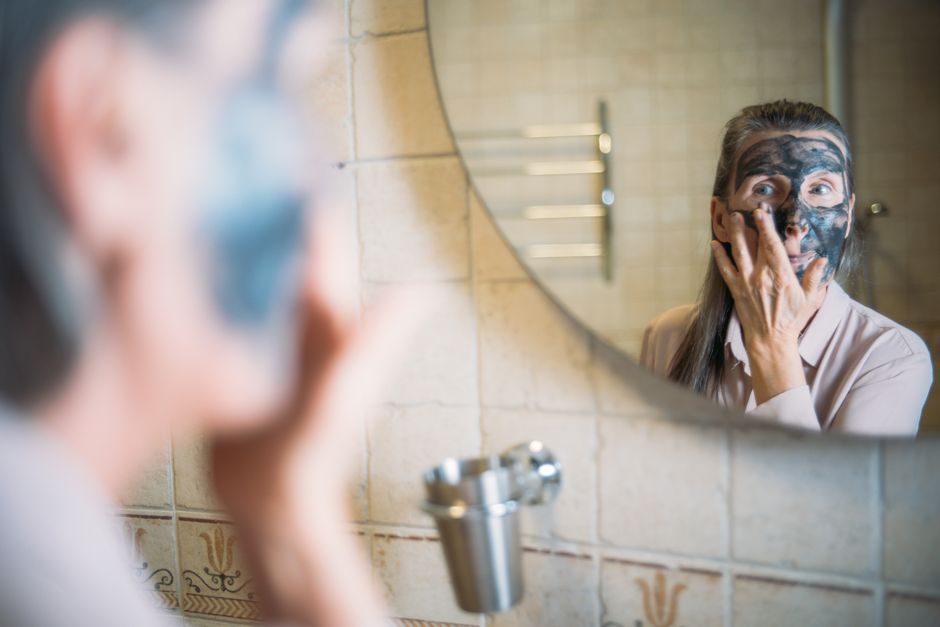
Healthy aging skin comes down to a handful of ingredients with real research behind them. Retinoids, vitamin C, peptides, and sunscreen hold the strongest evidence for improving visible signs of aging. These ingredients work through different mechanisms — some boost collagen, others protect against damage, and some speed up cell turnover. The most effective approach combines a daily sunscreen with a retinoid and an antioxidant, applied consistently for months rather than weeks.
What Is Good For Aging Skin Ingredients That Work?
The best anti-aging ingredients target the underlying causes of visible aging. Skin loses collagen and elastin over time, which leads to fine lines, wrinkles, and sagging. Sun damage accelerates this process. Ingredients that stimulate collagen production, protect against oxidative stress, or increase cell turnover produce the most visible results.
Retinoids are the gold standard. They include prescription tretinoin and over-the-counter retinol. Both forms convert to retinoic acid in the skin, which signals cells to produce more collagen and turn over faster. Clinical trials consistently show retinoids reduce fine lines and improve skin texture within 12 weeks of regular use.
Vitamin C works as an antioxidant. It neutralizes free radicals generated by UV exposure before they can break down collagen. Applied in the morning under sunscreen, it provides an extra layer of protection. Studies show topical vitamin C can improve the appearance of fine lines and brighten dull skin over several months.
Peptides are short chains of amino acids that act as building blocks for collagen. Some peptides signal the skin to produce more collagen. Evidence for peptides is less robust than for retinoids, but multiple small studies show modest improvements in skin firmness and elasticity.
How Does Sunscreen Prevent Skin Aging?
Sunscreen is the only anti-aging ingredient proven to prevent further damage. Research shows that daily sunscreen use slows skin aging over time. A landmark study in Australia followed adults for over four years and found those using sunscreen daily had significantly less skin aging than those who used it occasionally.
UV radiation breaks down collagen and elastin fibers in the dermis. This process, called photoaging, causes wrinkles, rough texture, and brown spots. UVA rays penetrate deeper into the skin and contribute most to aging. UVB rays cause sunburn. Broad-spectrum sunscreen blocks both.
Use sunscreen with at least SPF 30 every day, even when it is cloudy. Reapply every two hours when outdoors. Sun damage is cumulative, meaning every unprotected exposure adds up over a lifetime. Starting a daily sunscreen habit at any age provides measurable benefit.
What Do Retinoids Actually Do To The Skin?
Retinoids are vitamin A derivatives that work at the cellular level. They bind to retinoic acid receptors in skin cells, which changes how genes are expressed. This process increases collagen production, thickens the epidermis, and normalizes how skin cells shed.
Prescription tretinoin is the most studied retinoid. Over-the-counter retinol is less potent but still effective because the skin converts it to retinoic acid. Adapalene, formerly prescription-only but now available over the counter, is a third-generation retinoid with strong evidence for acne and some evidence for anti-aging benefits.
Retinoids cause irritation when you first start using them. Redness, peeling, and dryness are common during the first two weeks. Start with a low concentration twice a week, then gradually increase frequency. Apply a pea-sized amount to dry skin at night. Irritation usually resolves as the skin adjusts.
Results take time. Visible improvement in fine lines typically appears after 8 to 12 weeks of consistent use. Maximum benefit develops over 6 to 12 months. Retinoids do not work overnight, and stopping use reverses the benefits within weeks.




Why Is Vitamin C Recommended For Aging Skin?
Vitamin C is the most studied antioxidant for topical skin care. It neutralizes free radicals, which are unstable molecules that damage collagen and elastin. Free radicals come from UV exposure, pollution, and normal metabolism.
Topical vitamin C also supports collagen synthesis directly. The enzyme that stabilizes collagen molecules requires vitamin C to function. Without adequate vitamin C, collagen production slows and existing collagen breaks down faster.
Not all vitamin C products are equally effective. L-ascorbic acid is the most studied form and has the strongest evidence. It is unstable and degrades quickly when exposed to light and air. Look for products in opaque, airtight packaging. Some formulations use vitamin C derivatives like magnesium ascorbyl phosphate, which are more stable but less studied.
Use vitamin C in the morning under sunscreen. It complements sunscreen by neutralizing the free radicals that sunscreen lets through. A concentration between 10 and 20 percent is supported by research. Higher concentrations do not necessarily work better and may irritate sensitive skin.
Do Peptides Really Reduce Wrinkles?
Peptides are amino acid chains that serve as collagen building blocks. Some peptides act as signaling molecules, telling skin cells to increase collagen production. Others, called carrier peptides, deliver trace minerals like copper to support enzymatic processes in the skin.
The evidence for peptides is promising but not as strong as for retinoids or vitamin C. Several small clinical studies show peptide creams improve skin firmness and reduce the depth of fine lines over 8 to 12 weeks. However, these studies are often funded by the companies that make the products, and larger independent trials are limited.
Peptides work best as part of a complete anti-aging routine rather than as a standalone treatment. They are generally well tolerated and cause minimal irritation, making them a good option for people who cannot use retinoids. Matrixyl and copper peptides are the most studied types.
Peptides are not a replacement for sunscreen or retinoids. They address collagen support from a different angle but do not have the same depth of evidence. If your budget allows only one or two anti-aging products, prioritize sunscreen and a retinoid.
Which Other Ingredients Have Evidence For Aging Skin?
Niacinamide, also called vitamin B3, has solid evidence for improving skin barrier function and reducing the appearance of enlarged pores and uneven tone. Research shows it reduces fine lines and wrinkles over 12 weeks of daily use. It is well tolerated and can be combined with retinoids and vitamin C.
Hyaluronic acid is a humectant that draws water into the skin. It plumps the skin temporarily, which makes fine lines less visible. It does not change the structure of the skin but provides immediate cosmetic improvement. Look for products with multiple molecular weights for deeper and more superficial hydration.
Alpha hydroxy acids like glycolic and lactic acid exfoliate the top layer of dead skin cells. Regular use improves skin texture and reduces the appearance of fine lines. They work differently from retinoids, which affect deeper skin layers. AHAs are useful for people who cannot tolerate retinoids.
Growth factors are a newer category derived from human or plant sources. They signal skin cells to divide and produce collagen. Evidence is early but promising. Some dermatologists recommend them for patients who have plateaued with retinoids.
How Long Before Anti-Aging Ingredients Show Results?
Sunscreen prevents damage immediately but its anti-aging benefit only becomes visible over years. Vitamin C brightens skin within a few weeks but wrinkle improvement takes several months. Retinoids take 8 to 12 weeks for measurable changes and up to a year for maximum benefit.
Peptides and niacinamide typically show modest improvements within 8 to 12 weeks. Hyaluronic acid works within minutes because it hydrates the outer skin layers. Exfoliating acids improve texture within days to weeks.
Consistency matters more than product selection. Using a moderately effective product daily for a year beats using a highly effective product occasionally. Skin cells turn over roughly every 28 days, and collagen remodeling takes months. No ingredient reverses aging. These products slow the process and improve the appearance of existing damage.
Frequently Asked Questions
Frequently Asked Questions
What is the single most effective ingredient for aging skin?
Retinoids have the strongest evidence for reducing fine lines and wrinkles. They stimulate collagen production and speed up cell turnover, with visible results after about 12 weeks of daily use.
Can I use vitamin C and retinol together?
Yes, but use them at different times of day. Apply vitamin C in the morning under sunscreen and retinol at night to avoid irritation and get the benefits of both.
Do expensive anti-aging products work better than drugstore brands?
Price does not guarantee effectiveness. The active ingredient concentration and formulation matter more than the brand. Many affordable products contain effective levels of retinoids, vitamin C, and niacinamide.
Are anti-aging ingredients safe for sensitive skin?
Some are, some are not. Niacinamide and hyaluronic acid are generally well tolerated. Retinoids and vitamin C can irritate sensitive skin, so start with low concentrations and apply every other day.
