
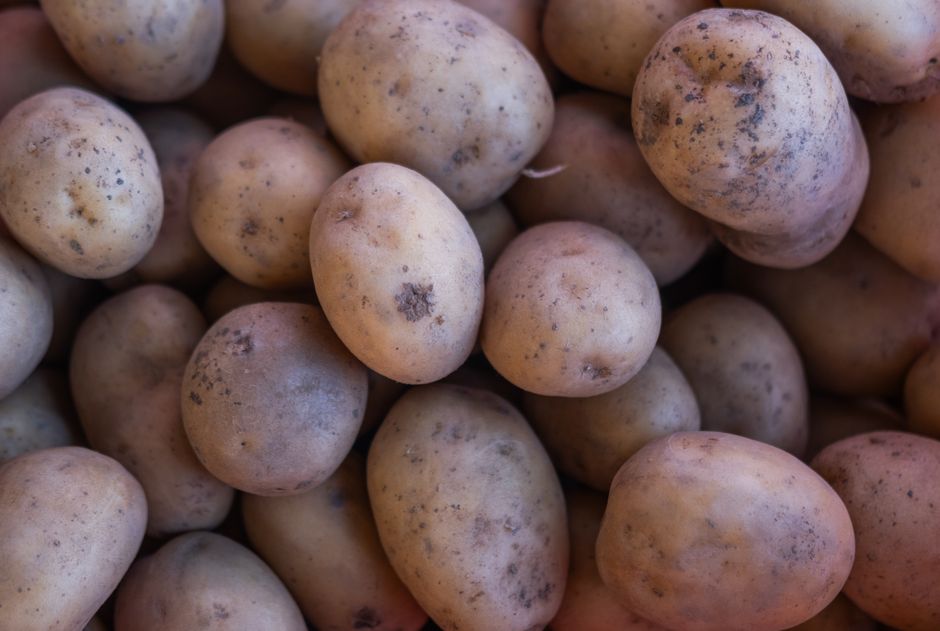
Green potatoes are not a sign of ripeness or a harmless quirk of nature. They are a sign that the potato has started producing a natural toxin called solanine, and eating enough of it can make you sick.
The short answer: a small green patch on an otherwise normal potato is unlikely to cause harm if you cut it away generously before cooking. But a potato that is heavily green, sprouted, or bitter should be thrown out. Solanine is not destroyed by cooking, frying, or baking, so you cannot heat your way out of the problem.
This article explains what solanine is, how much is dangerous, who is most at risk, and what to do with potatoes that have turned green.
What Makes Green Potatoes Different From Normal Ones?
The green color comes from chlorophyll, the same pigment that makes leaves green. Chlorophyll itself is harmless. The problem is what comes with it.
When potatoes are exposed to light, they produce chlorophyll as a response. At the same time, they also produce glycoalkaloids, a group of natural compounds that includes solanine and chaconine. These compounds are the potato plant’s built-in defense against insects and animals that might eat the tuber.
Chlorophyll and glycoalkaloids form under the same conditions, so green color is a useful visual warning sign. It is not a perfect one. A potato can have elevated glycoalkaloid levels with only faint greening, and greening can sometimes be superficial while the toxin is concentrated just below the skin.
Glycoalkaloids are concentrated in the skin and in the sprouts. They also accumulate in any damaged or bruised areas. The flesh of a normal, non-green potato contains relatively low levels.
How Much Solanine Is Actually Dangerous?
Solanine is toxic to humans, but the dose matters enormously. The amount found in a typical store-bought potato is generally far below the level that causes symptoms.
Potatoes sold in the United States are subject to industry guidelines that keep glycoalkaloid levels below 20 milligrams per 100 grams of fresh potato. This is not a regulatory limit enforced by law, but it is a widely followed standard in the potato industry. Potatoes above that level are considered unsuitable for sale.
Symptoms of solanine poisoning typically begin at doses around 1 to 5 milligrams per kilogram of body weight, according to toxicology references. For a 70-kilogram adult, that works out to roughly 70 to 350 milligrams of solanine.
To put that in perspective: you would need to eat a substantial quantity of heavily green or sprouted potatoes to reach that range. A single small green spot is not going to do it.
Severe poisoning is rare but has occurred. Documented cases have involved people eating large amounts of green, sprouted, or damaged potatoes, sometimes over several days. Symptoms include nausea, vomiting, diarrhea, stomach cramps, and in more serious cases, neurological effects like confusion, dizziness, and headaches.
There is no antidote for solanine poisoning. Treatment is supportive care, and most people recover within one to three days.
Does Cooking Destroy Solanine in Potatoes?
Cooking does not destroy solanine. Boiling, baking, frying, and microwaving all leave glycoalkaloids largely intact.
This is one of the most common misconceptions about green potatoes. People assume that because cooking kills bacteria and breaks down many plant compounds, it will neutralize the toxin. It does not.
Some studies suggest that boiling may leach a small amount of glycoalkaloids into the cooking water, but the reduction is modest. Frying at high temperatures does not degrade solanine either. In fact, because frying removes water, it can concentrate the glycoalkaloids that remain in the potato.
What does work is physical removal. Cutting away the green areas and the layer of flesh beneath them removes most of the toxin, because glycoalkaloids do not migrate far from where they form. Peeling the entire potato also helps, since the skin is where concentrations are highest.





How Can You Tell If a Potato Is Safe to Eat?
Visual inspection is your first tool, but it is not the only one. Here is what to look for:
- Light green patches: Cut them away with at least a quarter-inch of flesh beneath. If the rest of the potato looks normal, it is generally considered safe.
- Deep or widespread green color: Discard the potato. If the green extends into the flesh or covers a large portion of the surface, cutting it away is not reliable.
- Sprouts: Small sprouts can be removed along with the surrounding flesh. Potatoes with long or numerous sprouts should be discarded.
- Bitterness: Solanine tastes bitter. If a potato tastes bitter after cooking, stop eating it. Bitterness is a warning sign that glycoalkaloid levels are elevated.
- Softness or shriveling: These are signs of age and spoilage, not necessarily high solanine, but they mean the potato is past its best and may have higher glycoalkaloid levels.
Do not rely on smell or texture alone to judge safety. Bitterness is the most reliable taste indicator, but by the time a potato tastes bitter, you may have already eaten a bite.
Who Is Most at Risk From Green Potatoes?
Most healthy adults would need to eat a significant amount of green potato to experience symptoms. But some groups are more vulnerable.
Children have lower body weight, so a smaller absolute dose can cause symptoms. The same is true for anyone who weighs less. A child eating a green potato is a bigger concern than an adult eating the same amount.
People with gastrointestinal conditions may be more sensitive to the nausea and stomach upset that solanine causes, though this is based on general principles rather than specific studies on solanine in these populations.
There is no established safe level of solanine for pregnant women, infants, or young children. No clinical guidelines currently exist for these groups. The safest approach for anyone in these categories is to avoid green potatoes entirely rather than trying to trim them.
People taking medications that affect liver function may also be at higher risk, since solanine is metabolized in the body. But again, this is based on how the body handles toxins in general, not on specific research on solanine and these medications.
Are Green Potatoes More Dangerous Raw or Cooked?
Raw green potatoes are not more toxic than cooked ones in terms of solanine content. The toxin is present either way.
However, raw potatoes are harder to eat in large quantities, so the practical risk of poisoning from raw green potatoes is lower simply because people eat less of them. Cooking makes potatoes more palatable, which means you might eat more.
The bigger issue is that cooking does not reduce solanine, so a cooked green potato carries the same toxin load as it did raw. If anything, cooking can make a dangerous potato more appealing, which increases the chance you will eat enough to get sick.
How Should You Store Potatoes to Prevent Greening?
Light is the trigger for greening. Store potatoes in a cool, dark, dry place. A pantry or cupboard works well. A sealed container or paper bag also helps block light.
Do not store potatoes in the refrigerator. Cold temperatures convert potato starch to sugar, which affects texture and flavor when cooked. More importantly, refrigeration does not prevent greening and may actually increase glycoalkaloid levels in some cases, according to some studies.
Do not store potatoes near onions. Onions release gases that can cause potatoes to sprout faster. Keep them separate.
Use potatoes within a few weeks of purchase. The longer they sit, the more likely they are to sprout or develop green patches.
If you buy potatoes in a plastic bag, transfer them to a paper bag or a bowl where air can circulate. Plastic traps moisture, which encourages spoilage.
Frequently Asked Questions
Can you eat a potato with a small green spot?
Yes, if you cut away the green area plus at least a quarter-inch of flesh beneath it. If the rest of the potato looks and tastes normal, it is generally considered safe.
Does peeling a green potato make it safe?
Peeling removes most of the glycoalkaloids because they concentrate in the skin and just below it. But if the green color extends deep into the flesh, peeling is not enough and the potato should be discarded.
How long does it take to get sick from solanine?
Symptoms usually appear within 30 minutes to 12 hours after eating, depending on the amount consumed. Most people recover within one to three days with supportive care.
Can you get solanine poisoning from potato chips or fries?
Commercial potato products are made from potatoes that meet industry glycoalkaloid standards, so the risk is very low. Homemade fries from a green potato could carry more solanine because frying does not destroy it.
