
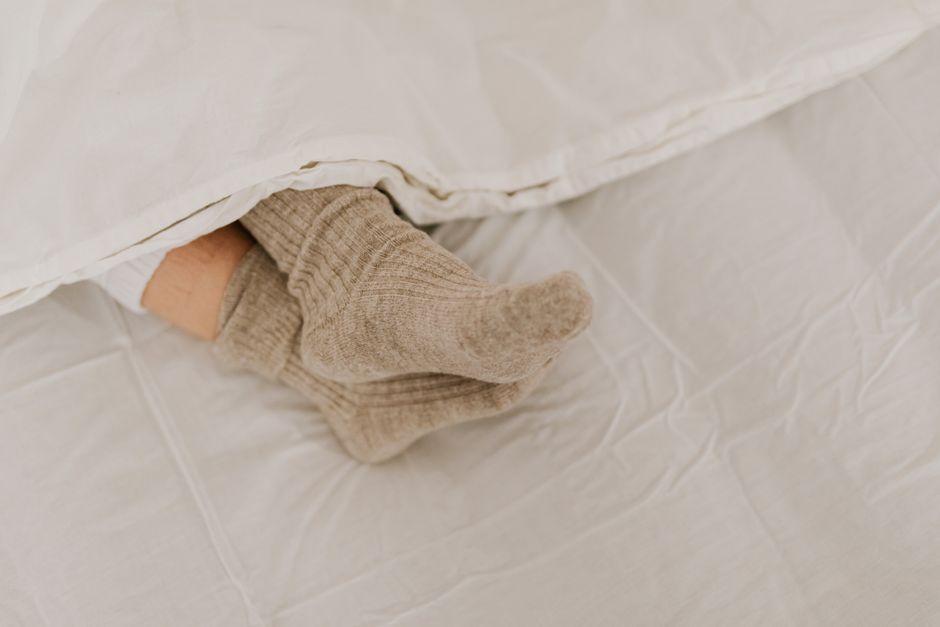
Yes, you can sleep in compression socks, and for some people it is helpful. But it is not right for everyone. The answer depends on why you are wearing them and what your doctor has advised.
Compression socks squeeze your legs to help blood flow back toward your heart. That gentle pressure can ease swelling and aching after a long day. For people with certain vein or circulation problems, wearing them overnight may even be part of a treatment plan. For healthy people with no leg symptoms, there is usually no clear benefit to sleeping in them.
What Do Compression Socks Actually Do?
Your veins carry blood from your feet back up to your heart. They have to work against gravity. Tiny one-way valves inside the veins keep blood moving in the right direction. When you walk, your calf muscles squeeze the veins and push blood upward. This is often called the calf muscle pump.
Compression socks add external pressure from the outside. The pressure is tightest at the ankle and gets gradually looser as it moves up the leg. This gradient helps blood and fluid move up and out of the lower leg instead of pooling there.
That pooling is what causes the heavy, swollen feeling many people get after standing or sitting all day. It is also why compression is used after surgery and during long flights.
Is It Ok To Sleep In Compression Socks?
For many people, yes. Sleeping in compression socks is generally considered safe when the socks fit properly and are the right strength for your needs. Some doctors specifically recommend overnight compression for people with certain conditions.
The key word is properly. A sock that is too tight can do harm. A sock that is too loose does nothing. And a sock worn for the wrong reason may not help at all.
If you are healthy and your legs feel fine, there is little reason to wear them overnight. The main benefit of compression is during the day, when you are upright and gravity is working against your veins. Lying flat already takes much of that pressure off.
Who Might Benefit From Overnight Compression?
Some people get real help from wearing compression socks while they sleep. This is often guided by a doctor rather than self-prescribed.
- People recovering from certain leg or vein procedures, when a clinician has recommended it
- People with chronic venous insufficiency, a condition where veins struggle to return blood efficiently
- People with lymphedema, a buildup of fluid that can worsen without management
- People whose legs swell significantly during pregnancy, when a doctor has approved it
- People with certain heart or kidney conditions, only under medical guidance
In these cases, overnight compression is not a trend. It is a treatment. The pressure, the fit, and the timing are usually chosen by a healthcare provider.





When Should You Not Sleep In Compression Socks?
Compression socks are not safe for everyone. The biggest concern is peripheral artery disease, often called PAD. In PAD, arteries that bring blood into the leg are narrowed. External pressure can make it harder for blood to get in. That can worsen symptoms and, in serious cases, cause tissue damage.
Other situations where you should check with a doctor first include:
- Poor circulation in the legs from any cause
- Diabetes with nerve damage or poor wound healing in the feet
- Open sores, wounds, or skin infections on the legs
- Severe heart failure, where fluid balance needs close monitoring
- A known blood clot in the leg that has not been treated
If you have any of these, do not start wearing compression socks overnight on your own. Talk to a clinician first.
What Can Go Wrong With Compression Socks At Night?
The most common problem is a sock that is too tight. Symptoms to watch for include numbness, tingling, cold toes, pain, or skin that turns pale, blue, or red. If any of these happen, take the socks off.
Another issue is skin irritation. Wearing compression socks for many hours, especially overnight, can trap moisture and rub the skin. This matters more for people with sensitive skin or diabetes. Clean, dry skin and well-fitted socks reduce this risk.
Some people also find that tight socks disturb their sleep. If you wake up uncomfortable, that alone is a reason to stop and reconsider.
How Do You Choose The Right Compression Sock?
Compression socks come in different pressure levels. The unit used is millimeters of mercury, or mmHg. Lower levels feel snug. Higher levels feel firm and are usually reserved for medical use.
Over-the-counter socks sold for everyday wear tend to be on the lower end. Medical-grade compression, which is stronger, is typically fitted by a clinician or a trained fitter. Getting the right size matters more than the brand. Measure your ankle and calf, and follow the sizing chart exactly.
For sleep specifically, many people do better with a lower-pressure sock than what they wear during the day. If your doctor has prescribed a specific pressure, follow that instead of guessing.
Does Sleeping In Compression Socks Help With Recovery?
This is where marketing often gets ahead of the evidence. Many socks are sold with claims about faster recovery, better performance, or improved circulation during sleep.
The evidence here is mixed. Some studies suggest compression may help reduce swelling and soreness after exercise. Other studies find little or no effect on recovery markers. Results vary by study, sport, and how the socks are used.
What is well established is that compression helps with fluid movement and swelling in people who have vein or lymph problems. What is not well established is that healthy people recover faster by sleeping in compression socks. No large human trials have confirmed that specific claim.
Practical Tips If You Want To Try It
If you have no circulation problems and want to see whether overnight compression helps you, a few simple steps make it safer.
- Start with a lower-pressure sock, not a medical-grade one
- Make sure the fit is correct at the ankle and calf
- Check your feet and toes before bed and again in the morning
- Stop if you feel numbness, tingling, pain, or cold toes
- Keep the skin clean and dry
- Ask a doctor first if you have any health condition affecting your legs or circulation
If your legs swell, ache, or feel heavy most days, that is worth a medical visit. Swelling can come from many causes, and the right treatment depends on which one is behind yours. Compression socks may help, but they are not a substitute for finding out why.
Frequently Asked Questions
Is it ok to sleep in compression socks every night?
For many people it is safe to wear them nightly, especially if a doctor recommended it. If you have circulation problems like peripheral artery disease, check with a clinician first.
Can compression socks be too tight for sleeping?
Yes, and tight socks can reduce blood flow and cause numbness, tingling, or cold toes. If you notice any of these, remove the socks and speak with a doctor.
Do compression socks help swollen legs at night?
They can help move fluid out of the lower legs, which may reduce swelling. Lasting or one-sided swelling should be checked by a doctor to rule out other causes.
Should I wear compression socks all night after surgery?
Follow your surgeon’s instructions exactly, since the pressure and timing are chosen for your situation. Do not change or stop them without asking your care team.
