
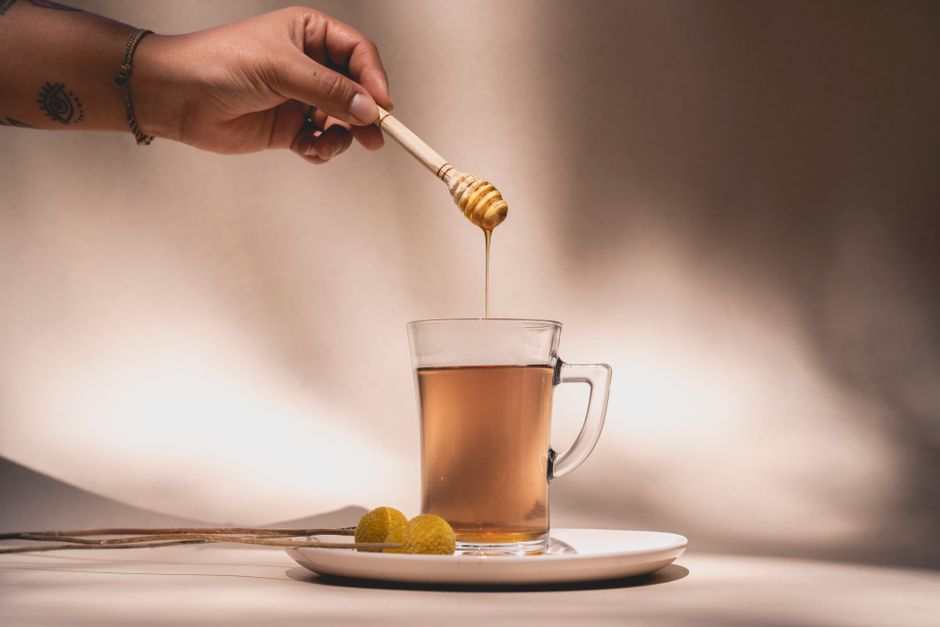
Honey has real antibacterial properties, but that does not mean eating it boosts your immune system in any proven way. The immune benefits people attribute to honey are mostly based on lab studies and traditional use, not on clinical trials showing fewer colds or stronger immunity in humans. What the science does support is narrower: honey can soothe a sore throat and calm a cough, and it contains compounds with antimicrobial activity in a petri dish. Whether those effects translate into a stronger immune system when you swallow a spoonful is a different question, and the honest answer is that we do not know.
What Is Actually in Honey That Could Affect Immunity?
Honey is mostly sugar and water. Those two things make up the bulk of it. The compounds that get attention for immune effects are a small fraction of the total.
The main ones researchers study are hydrogen peroxide, methylglyoxal, and a range of plant-derived polyphenols and flavonoids. Different honeys contain different amounts of these. Manuka honey, for example, is unusually high in methylglyoxal. Most supermarket honey is not.
Honey also has a low pH and low water content, which makes it hostile to bacteria. That is partly why it has been used on wounds for thousands of years. But this is a property of honey sitting on a surface, not of honey circulating in your bloodstream after you eat it.
This distinction matters. A compound that kills bacteria in a lab dish is not the same as a compound that strengthens your immune response inside your body. Your digestive system breaks honey down before most of these compounds reach your cells in any meaningful amount.
Does Eating Honey Strengthen Your Immune System?
No human trial has shown that eating honey strengthens immune function in a general sense. That is a strong statement, and it reflects the actual state of the evidence.
What we have are studies on specific outcomes — cough, sore throat, wound healing, and to a lesser extent, seasonal allergies. We do not have trials showing that regular honey eaters get fewer infections, mount stronger immune responses, or recover faster from illness. That research largely has not been done.
Some small studies have looked at honey and markers of inflammation or oxidative stress in the blood. Results have been mixed and the studies are generally short and small. It would be an overreach to call this proof of an immune benefit.
There is also a real downside to consider. Honey is roughly 80 percent sugar. Eating it regularly adds calories and sugar to your diet. If you are using honey as your main source of “immune support,” you may be trading a small theoretical benefit for a real dietary cost.
Can Honey Help With a Cough or Sore Throat?
Yes, and this is where the evidence is strongest. Honey can reduce cough frequency and severity, particularly in children over age one, and it can coat and soothe an irritated throat.
Several studies have compared honey to common over-the-counter cough medicines and found honey performed at least as well, sometimes better. The mechanism is not fully clear. It may be partly the soothing effect of the thick liquid, partly the sweetness triggering saliva and mucus production, and possibly some antimicrobial action.
Some clinical guidance now suggests honey as a first option for cough in children over one year old. This is one of the few areas where traditional use and clinical evidence line up.
One important note: honey is not safe for infants under 12 months. It can contain Clostridium botulinum spores, which can cause infant botulism. This is a serious and well-documented risk. Do not give honey to babies, even a taste.





What About Honey for Allergies?
The idea that local honey desensitizes you to local pollen is popular and biologically appealing. The evidence does not support it.
There are a few problems with the theory. The pollen that causes seasonal allergies is usually wind-borne, light, and abundant in the air. Bees collect heavier, sticky pollen from flowers, which is not the same pollen that triggers your symptoms. So even if eating local honey could desensitize you, it is not delivering the pollen that matters.
A small number of studies have looked at honey and allergy symptoms. Results have been mixed, and the better-designed studies have generally not shown a benefit over placebo. If you find honey helps your throat during allergy season, that is a soothing effect, not an immune one.
How Does Honey Compare to Other Natural Remedies?
Honey sits in an interesting middle ground. It is not a proven immune booster, but it is also not useless. Some natural remedies have almost no evidence behind them. Honey has real, if narrow, evidence for cough and throat symptoms.
Here is a rough comparison of what the evidence actually supports:
| Remedy | Best-supported use | Evidence strength |
|---|---|---|
| Honey | Cough and sore throat relief | Moderate for these uses |
| Zinc lozenges | Shortening cold duration if started early | Mixed, depends on formulation |
| Vitamin C | Small reduction in cold duration in some people | Weak to modest |
| Echinacea | Cold prevention or treatment | Mixed and inconsistent |
| Elderberry | Cold and flu symptoms | Limited, small studies |
None of these are immune boosters in the way marketing suggests. They are symptom remedies at best. The same is true for honey.
What Actually Supports Immune Function?
If your goal is a stronger immune system, the evidence points to unglamorous basics rather than any single food.
- Sleep. Consistently getting enough sleep is one of the most reliable ways to support immune function. Short sleep is associated with higher infection risk.
- Nutrition. Adequate protein, vitamins A, C, D, E, and minerals like zinc and iron all play roles in immune function. Deficiencies impair immunity. Extra amounts beyond what you need generally do not help.
- Exercise. Regular moderate activity is linked to better immune surveillance. Very intense training without recovery can go the other way.
- Stress management. Chronic stress is associated with suppressed immune responses.
- Not smoking, limiting alcohol. Both have well-documented effects on immune health.
Honey can fit into a healthy diet as a sweetener. It has slightly more antioxidants than white sugar and a lower glycemic index in some forms. But it is not a substitute for the fundamentals, and no amount of honey will make up for poor sleep or a nutrient-poor diet.
Is Honey Good For Your Immune System What Science Says
The honest summary is that honey has some real biological activity, but the claim that it boosts immunity is not supported by human trials. What it does have is solid evidence for soothing coughs and sore throats, and a long history of topical use for wounds.
If you enjoy honey and want to use it for a cough or a scratchy throat, the evidence is on your side. If you are taking it daily hoping to ward off illness, you are acting on a theory that has not been tested in any meaningful way. That is not a reason to avoid honey. It is a reason to be clear about what it can and cannot do.
Be cautious with raw or unpasteurized honey if you have a compromised immune system. While rare, honey can contain spores and bacteria that a healthy person handles easily but that can cause problems for someone with weakened immunity. Pasteurized honey is generally considered safer for these individuals, though even pasteurization does not eliminate all bacterial spores.
Frequently Asked Questions
Does honey actually boost your immune system?
No human trials have shown that eating honey strengthens immune function. Honey has antimicrobial compounds that work in lab settings, but there is no evidence these translate to a stronger immune system when you eat it.
Can honey help a cold or cough?
Yes, honey can reduce cough frequency and soothe a sore throat, and some clinical guidance suggests it as a first option for children over one year old. It does not appear to shorten a cold or prevent illness.
Is it safe to give honey to a baby?
No. Honey is not safe for infants under 12 months because it can contain Clostridium botulinum spores that cause infant botulism. This is a well-documented risk and the restriction is firm.
Does local honey help with seasonal allergies?
The evidence does not support this. Bees collect flower pollen, not the wind-borne pollen that typically triggers seasonal allergies, and better-designed studies have not shown a benefit over placebo.
