
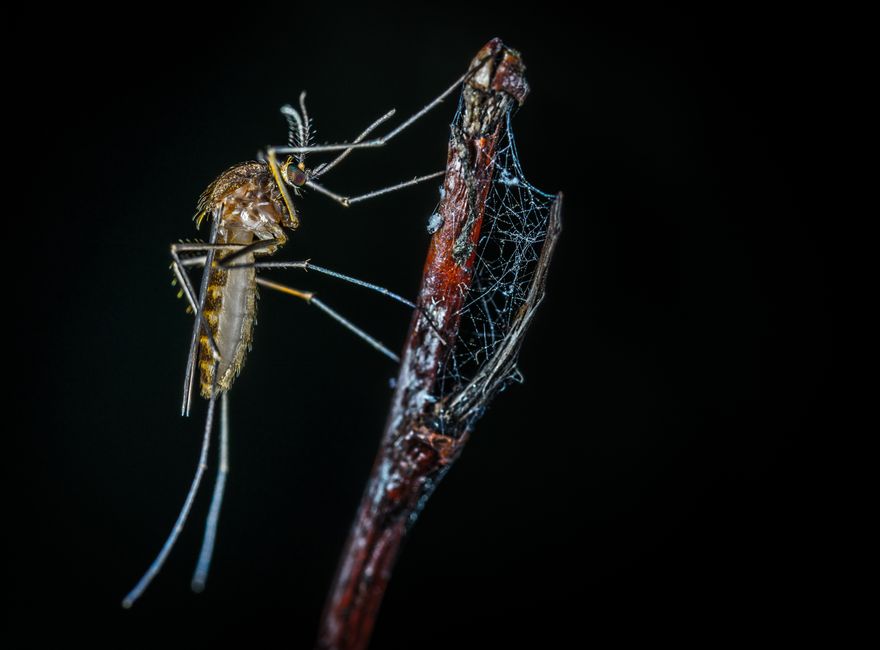
Vanilla extract is often listed as a natural mosquito repellent, but the science behind it is more complicated than most online sources suggest. The short answer is that pure vanilla extract has not been proven to reliably repel mosquitoes in controlled studies. Some compounds found in vanilla beans show weak repellent activity in laboratory settings, but this does not translate into dependable protection outdoors. If you are facing a mosquito-heavy environment, vanilla alone should not be your first line of defense.
What Does the Science Say About Vanilla and Mosquitoes?
Research on vanilla as a mosquito repellent is limited. Most of what circulates online comes from anecdotal reports or small laboratory experiments, not large field studies. Some studies have looked at vanillin, the main flavor compound in vanilla beans, and found it has mild repellent properties against certain mosquito species. However, the effect is short-lived and much weaker than established repellents like DEET or picaridin.
A few laboratory studies have tested vanilla-based mixtures and found they can reduce mosquito landings for a short period. But laboratory conditions do not reflect real-world situations. Outdoors, factors like wind, sweat, and body heat change how a repellent performs. A substance that works in a closed lab chamber often fails in a backyard setting.
The evidence does not support vanilla as a standalone repellent. Some research suggests it might work as a component in a blend, but no large human trials have confirmed this. The honest position is that vanilla has not been proven to provide meaningful mosquito protection.
Why Do People Believe Vanilla Repels Mosquitoes?
The belief likely comes from several sources. Vanilla has a strong, sweet aroma that people associate with natural ingredients. In many cultures, strong-smelling plants and extracts are used as traditional insect deterrents. Vanilla is also widely available and safe to apply to skin, which makes it an appealing option for people who want to avoid synthetic chemicals.
Another reason is confusion with other natural repellents. Some plant-based oils, like citronella, lemongrass, and eucalyptus, do have documented repellent properties. Vanilla is often grouped with these in natural repellent lists, but it does not have the same level of evidence behind it.
Social media has amplified the claim. Videos and posts showing people mixing vanilla extract with water or carrier oils and spraying it on skin get thousands of shares. These posts rarely cite scientific studies, and the success stories are anecdotal. Personal experience is not a reliable measure of whether a repellent works, because mosquito attraction varies dramatically between individuals and environments.
How Mosquito Repellents Actually Work
Mosquitoes find their targets through several cues. They detect carbon dioxide from breath, body heat, and chemical compounds in skin sweat. Repellents work by interfering with these detection systems. DEET, for example, does not block the mosquito’s ability to smell. Instead, it creates a vapor barrier that confuses the mosquito’s sensory receptors, making it harder for them to recognize you as a food source.
Picaridin works similarly but with a different chemical structure. It is less oily than DEET and has a milder odor. Both are considered highly effective and are recommended by public health agencies worldwide.
Plant-based repellents like oil of lemon eucalyptus work through a different mechanism. They contain compounds that mosquitoes find aversive at close range. These products can be effective, but they typically need to be reapplied more often than synthetic options.
Vanilla does not fit neatly into any of these categories. The compounds in vanilla have not been shown to block mosquito sensory receptors in the same way as DEET or picaridin. There is no established mechanism that explains how vanilla would repel mosquitoes effectively in real-world conditions.





Does Vanilla Work as a Carrier Oil or Additive?
Some natural repellent recipes use vanilla as an additive to improve the smell of other ingredients. This is a different question than whether vanilla itself repels mosquitoes. Vanilla extract can mask the strong odor of ingredients like citronella or tea tree oil, making a homemade spray more pleasant to wear.
There is no evidence that adding vanilla to another repellent improves its effectiveness. It might make the product more tolerable to use, which could lead to more consistent application. But the active repellent is still the other ingredient.
Some people mix vanilla extract with water and spray it on outdoor furniture or clothing. This may create a temporary scent barrier, but it will not last long. Vanilla extract is water-soluble and evaporates quickly, especially in warm weather. Reapplication would be needed every 20 to 30 minutes, which is not practical for most situations.
What Are the Established Natural Mosquito Repellents?
If you prefer plant-based options, several have stronger evidence behind them than vanilla.
- Oil of lemon eucalyptus (OLE) is the most studied plant-based repellent. It is registered with the EPA and has been shown to provide protection comparable to low concentrations of DEET. It should not be confused with pure essential oil of lemon eucalyptus, which is not registered and has not been tested as thoroughly.
- PMD (para-menthane-3,8-diol) is the synthetic version of the active compound in OLE. It is also registered and effective.
- Citronella oil provides short-term protection, usually around 20 to 30 minutes. It is less effective than DEET or picaridin but still offers some benefit.
- IR3535 is a synthetic repellent based on a naturally occurring amino acid. It is effective for several hours and is commonly found in commercial repellents.
These options have been tested in controlled studies and field trials. Vanilla has not been held to the same standard.
When Vanilla Extract Is Safe to Use on Skin
Vanilla extract is generally safe for topical use in small amounts. It is a common food ingredient, and skin contact is not considered dangerous for most people. However, it is not formulated for skin application. Pure vanilla extract contains alcohol, which can dry or irritate sensitive skin. Vanilla essential oil, which is different from vanilla extract, is highly concentrated and should never be applied directly to skin without a carrier oil.
There is no clinical guidance on using vanilla as a skin repellent. No regulatory agency has evaluated it for this purpose. If you choose to try it, do a patch test on a small area of skin first. Stop using it if you develop redness, itching, or irritation.
Do not apply vanilla extract to broken skin or open wounds. Keep it away from eyes and mucous membranes. If you are pregnant, breastfeeding, or applying it to a child, no safety data exists for this specific use. It is safer to stick with products that have been formally evaluated for mosquito repellency.
What Actually Works for Mosquito Protection
For real protection against mosquito bites, the evidence is clear. Products containing DEET, picaridin, IR3535, or oil of lemon eucalyptus are the most reliable options. The CDC and other public health bodies consistently recommend these ingredients. They have been tested for safety and effectiveness over decades of use.
Wearing long sleeves and pants is a simple physical barrier that works well. Mosquitoes can bite through thin fabric, but loose, thick clothing provides meaningful protection. Treating clothing with permethrin, an insecticide that repels and kills mosquitoes, adds another layer of defense.
Removing standing water around your home eliminates mosquito breeding sites. This is one of the most effective long-term strategies. Mosquitoes lay eggs in stagnant water, and even small amounts in plant saucers or gutters can support a population.
Using fans on patios or porches reduces mosquito landings. Mosquitoes are weak fliers, and the airflow from a fan makes it difficult for them to approach. This is a practical, evidence-based approach for outdoor gatherings.
Frequently Asked Questions
Does vanilla extract keep mosquitoes away?
No clinical evidence confirms that vanilla extract reliably repels mosquitoes outdoors. Some lab studies show weak repellent activity, but it does not hold up in real-world conditions.
Can I use vanilla extract as mosquito repellent on my skin?
It is generally safe for small skin patches, but it is not a proven repellent and contains alcohol that can irritate skin. No regulatory agency has evaluated vanilla for this use.
What is the most effective natural mosquito repellent?
Oil of lemon eucalyptus is the most studied plant-based repellent and is registered with the EPA. It provides protection comparable to low concentrations of DEET.
Why do people mix vanilla with water to spray for mosquitoes?
It creates a temporary scent that some people find pleasant, but it evaporates quickly and has no established repellent effect. Reapplication every 20 to 30 minutes would be needed, which is not practical.
