
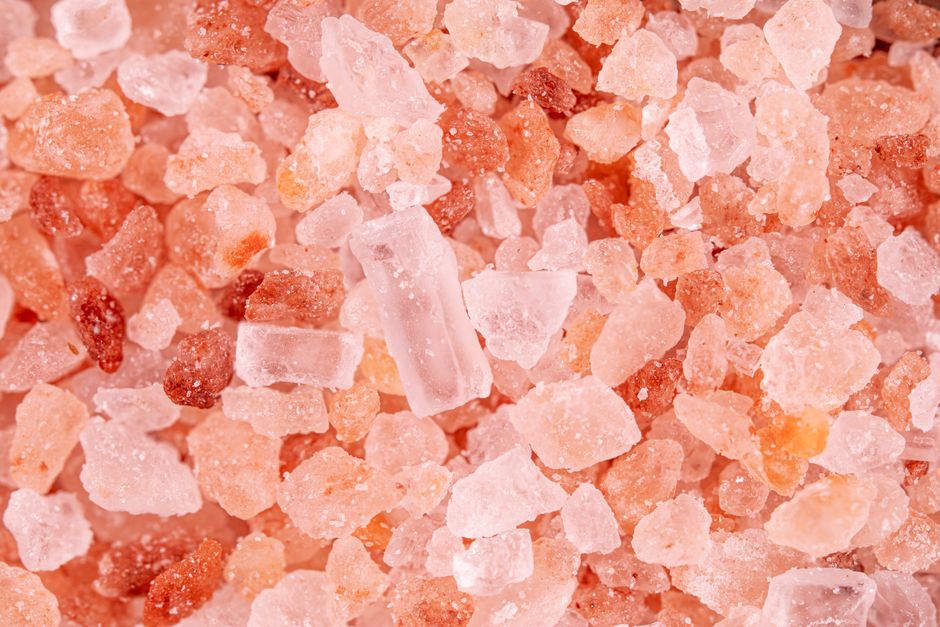
Himalayan pink salt is mostly sodium chloride, just like regular table salt, with small amounts of trace minerals that give it its color. For most people, it is not meaningfully healthier than standard salt, and it carries the same primary health risk: too much sodium raises blood pressure. The mineral content is too small to provide any real nutritional benefit, so the practical answer is that pink salt is fine to use, but it is not a health food.
What Is Himalayan Pink Salt?
Himalayan pink salt comes from the Khewra Salt Mine in Pakistan, though similar pink salts are mined in other regions. The salt gets its color from trace amounts of iron oxide, along with other minerals like potassium, magnesium, and calcium. These minerals exist in such tiny quantities that they do not meaningfully change how the salt behaves in your body.
Table salt, sea salt, and pink salt are all roughly 97 to 99 percent sodium chloride. The remaining percentage is what differs. In pink salt, that remaining fraction contains the trace minerals. In iodized table salt, that fraction includes added iodine, which is important for thyroid function.
The visual difference is real. The nutritional difference is negligible.
Is Himalayan Pink Salt Good For You Compared to Regular Salt?
No clinical evidence shows that pink salt provides health benefits beyond regular salt. The trace minerals in pink salt are present in amounts too small to affect your daily nutrient intake. To get a meaningful amount of potassium from pink salt, you would need to consume so much sodium that you would harm your health first.
Some research suggests that certain pink salts contain slightly more minerals than table salt. But “slightly more” in this case means fractions of a milligram per gram of salt. Your body needs hundreds of milligrams of potassium and magnesium daily. Pink salt cannot realistically contribute to those needs.
If you prefer the taste or texture of pink salt, there is no reason to avoid it. But choosing pink salt over regular salt will not improve your health.
Does Pink Salt Contain Less Sodium?
Pink salt and table salt contain nearly identical amounts of sodium by weight. A teaspoon of table salt contains about 2,300 milligrams of sodium. A teaspoon of pink salt contains roughly the same amount, though the exact number varies slightly depending on the crystal size and brand.
Some people believe pink salt is lower in sodium because the crystals are larger and less dense. This is a misunderstanding. If you weigh the salt, the sodium content is essentially the same. If you measure by volume, larger crystals may pack less tightly, so a teaspoon of coarse pink salt might contain slightly less sodium than a teaspoon of fine table salt. But the difference is small and unreliable.
The American Heart Association recommends limiting sodium to no more than 2,300 milligrams per day, with an ideal limit of 1,500 milligrams for most adults. These limits apply regardless of the type of salt you use.





What About the 84 Trace Minerals Claim?
Marketing materials for pink salt often claim it contains 84 trace minerals. This number is misleading. It comes from mineral analyses that detect many elements in tiny quantities, but it does not mean your body can use them or that they exist in meaningful amounts.
Some of the elements detected in pink salt include things like aluminum and lead. The amounts are generally within safe limits, but you are not getting a nutritional benefit from them. A mineral that exists in your salt at 0.001 percent concentration is not a nutrient source.
No study has shown that consuming pink salt improves mineral status, athletic performance, hydration, or any other health marker. The trace mineral claim is marketing, not medicine.
Are There Any Real Benefits of Pink Salt?
Pink salt has genuine benefits, but they are not nutritional. It contains no additives like anti-caking agents, which some people prefer to avoid. It is less processed than typical table salt, which matters to people who want minimally processed foods.
Some people find that pink salt has a more complex flavor than table salt. This can lead to using less salt overall, which is a practical benefit. If a stronger flavor means you sprinkle less on your food, your sodium intake may drop.
Pink salt is also used in salt lamps, bath soaks, and cosmetic products. These uses have no proven health effects. A salt lamp does not clean the air. A salt bath does not detoxify the body. These are wellness trends without clinical support.
Who Should Be Careful With Pink Salt?
People with high blood pressure, kidney disease, or heart failure should treat pink salt exactly like regular salt. The sodium in pink salt raises blood pressure the same way sodium in table salt does. The trace minerals do not protect you from the effects of excess sodium.
People with thyroid conditions should know that pink salt does not contain iodine unless it is specifically labeled as iodized. Iodized table salt was introduced in the 1920s to prevent iodine deficiency, which causes goiter and other thyroid problems. If you rely on salt for iodine and switch to pink salt, you may lose that source.
Most people get enough iodine from other foods like dairy, eggs, and seafood. But if your diet is limited, the switch from iodized table salt to pink salt could matter.
How Much Salt Is Too Much?
The Dietary Guidelines for Americans recommend limiting sodium to less than 2,300 milligrams per day. Most Americans consume well above this, averaging around 3,400 milligrams daily. The excess comes mostly from processed foods, not from the salt shaker.
About 70 percent of the sodium in the typical American diet comes from packaged and restaurant foods. Bread, cold cuts, pizza, soup, and sandwiches are common sources. Reducing your salt intake starts with these foods, not with swapping your table salt for pink salt.
If you cook at home and control your seasoning, the type of salt you use matters far less than the total amount. A dash of pink salt on a home-cooked meal is not a health concern for most people.
Is Pink Salt Worth the Higher Price?
Pink salt typically costs several times more than table salt. You are paying for the color, the marketing, and the imported origin. You are not paying for a healthier product.
If you enjoy pink salt and can afford it, there is no harm in using it. But if you are buying it because you believe it is better for your health, you are spending money on a claim the evidence does not support.
A more useful approach is to reduce total sodium intake, eat more whole foods, and use any salt in moderation. The color of the salt does not change the outcome.
Frequently Asked Questions
Does Himalayan pink salt have less sodium than table salt?
No. By weight, pink salt and table salt contain nearly the same amount of sodium. Coarse crystals may pack less densely in a spoon, but the difference is small and not a reliable way to reduce sodium.
Can Himalayan pink salt help with thyroid function?
No. Pink salt does not naturally contain iodine. If you switch from iodized table salt to pink salt, you may lose a dietary source of iodine, which is important for thyroid health.
Is Himalayan pink salt better for high blood pressure?
No. The sodium in pink salt raises blood pressure the same way sodium in regular salt does. People with high blood pressure should limit all types of salt.
Are the trace minerals in pink salt beneficial?
The amounts are too small to provide any meaningful nutritional benefit. No clinical evidence shows that pink salt improves mineral status or overall health.
