
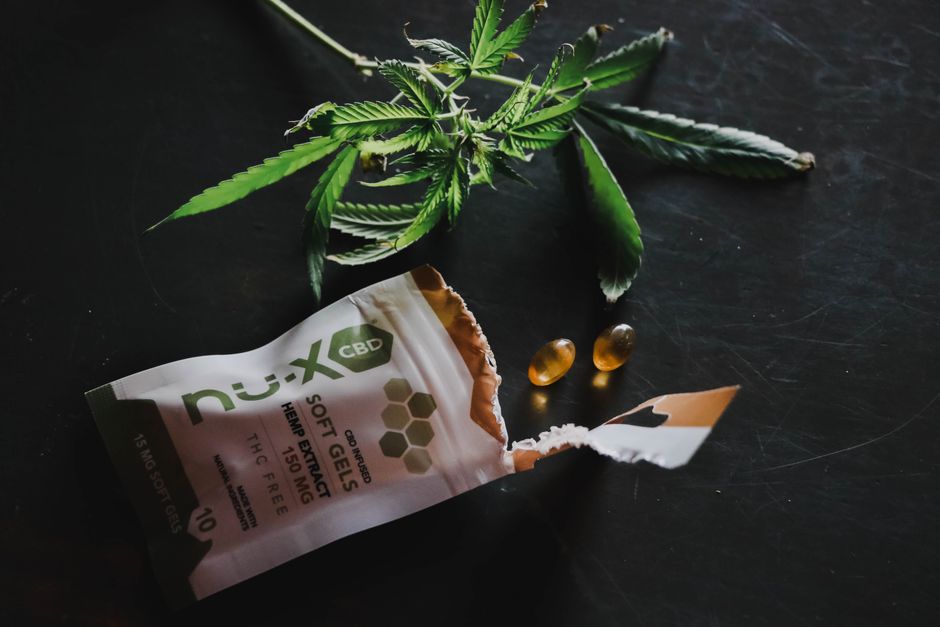
Hemp oil occupies a strange legal space in the United States. It is legal at the federal level when it comes from hemp, but some states have their own restrictions, and the rules can change depending on what kind of hemp oil you mean and where you buy it.
The confusion is understandable. “Hemp oil” can mean two very different products: CBD oil extracted from hemp flowers, or hemp seed oil pressed from hemp seeds. Federal law treats them differently. State law adds another layer. And what is allowed in one state may be restricted in another.
Here is what the rules actually say, and where the gray areas remain.
Is Hemp Oil Illegal Under Federal Law?
No. Hemp oil is not illegal under federal law, provided it comes from hemp as defined by the 2018 Farm Bill.
That law, formally called the Agriculture Improvement Act of 2018, removed hemp from the Controlled Substances Act. It defined hemp as cannabis plants and derivatives containing no more than 0.3% delta-9 THC on a dry weight basis. Anything above that threshold is legally considered marijuana, which remains a Schedule I controlled substance under federal law.
This distinction matters. The Farm Bill did not legalize all cannabis products. It legalized hemp specifically, and it set the 0.3% THC limit as the dividing line.
Hemp seed oil, which is pressed from seeds and contains little to no THC or CBD, has been legal and widely sold as a food product for decades. It is found in salad dressings, skincare products, and supplements. It has no psychoactive effect and was never really the target of drug enforcement.
CBD oil from hemp is the more complicated category. The Farm Bill made hemp-derived CBD legal at the federal level, but it left the Food and Drug Administration to sort out how it should be regulated as an ingredient in food, drinks, and dietary supplements. That process is still ongoing. The FDA has stated that it is not currently legal to add CBD to food or to market it as a dietary supplement, though enforcement has been limited and inconsistent.
What Is the Difference Between Hemp Seed Oil and CBD Oil?
These two products share a name but almost nothing else. Confusing them is one of the most common sources of legal misunderstanding.
Hemp seed oil is pressed from the seeds of the hemp plant. It contains no meaningful amount of THC or CBD. It is a cooking oil and a cosmetic ingredient. Nutritionally, it is high in polyunsaturated fats, including omega-3 and omega-6 fatty acids.
CBD oil is extracted from the flowers, leaves, and stalks of the hemp plant. It contains cannabidiol, a compound that does not produce a high. It may contain trace THC, depending on how it was processed.
The legal treatment differs because the chemical content differs. Hemp seed oil was never restricted. CBD oil exists in a regulatory middle ground that federal agencies are still working out.
If you are trying to understand whether a product is legal, the first question is which type of oil it actually is. The label does not always make this clear.
Do States Have Their Own Hemp Oil Laws?
Yes. State law can be stricter than federal law, and in some cases it is.
The Farm Bill gave states the authority to create their own hemp production programs, subject to federal approval. Most states have done so. But states also retain the power to regulate or restrict the sale of hemp-derived products within their borders, and some have exercised that power.
Several states have banned or restricted CBD in food and beverages. Others have passed laws specifically addressing hemp-derived intoxicating compounds, a category that has grown rapidly since the Farm Bill passed. These compounds include delta-8 THC and similar substances that can be derived from hemp but produce psychoactive effects.
The legal status of these products varies widely. Some states have moved to restrict them. Others have not. Federal law does not clearly address them, which has created a patchwork of state rules that changes frequently.
For anyone trying to determine whether a specific hemp product is legal where they live, checking state law is necessary. Federal legality does not guarantee state legality.





Can You Travel With Hemp Oil Between States?
Traveling with hemp oil is legal under federal law, but state and local enforcement can complicate the picture.
Because hemp is no longer a controlled substance under federal law, transporting hemp-derived products across state lines is not a federal crime. But if you travel to a state that restricts those products, you may be subject to that state’s laws once you arrive.
Air travel adds another layer. The Transportation Security Administration has stated that it does not specifically search for hemp products, but if an item is discovered during screening and local law enforcement is called, the outcome depends on local law. TSA’s primary focus is security, not drug enforcement, but officers do not ignore illegal items.
For CBD products specifically, carrying documentation showing the product’s THC content may help, though it does not guarantee anything. There is no federal requirement that travelers carry such documentation, and no federal protection against state enforcement if a product violates state law.
The practical reality is that hemp oil is generally treated as legal for personal possession in most states. But “generally” is not “always,” and the exceptions matter.
What About Hemp Oil Sold Online or Across State Lines?
Online sales of hemp oil are common, and federal law does not prohibit them. But buying from an out-of-state seller does not exempt you from your own state’s rules.
If a product is legal in the seller’s state but restricted in yours, you could still face issues. Enforcement varies. In practice, many online sellers ship nationwide without incident. But the legal risk exists, particularly for products containing THC or intoxicating hemp-derived compounds.
Product quality is a separate concern. The FDA has tested CBD products and found that many did not contain the amount of CBD listed on the label. Some contained THC even when the label said they did not. This is not a legal issue, but it is a practical one for anyone using these products.
Third-party lab testing is one way to verify what a product actually contains. Not all companies provide it. Those that do typically post certificates of analysis on their websites.
What Are the Penalties for Illegal Hemp Oil?
Penalties depend entirely on what the product actually is and where you are.
If a product is hemp as defined by federal law, there are no federal penalties for possession or sale. If it exceeds the 0.3% THC threshold, it is legally marijuana, and federal penalties for marijuana possession and distribution apply.
At the state level, penalties vary. Some states treat hemp-derived products the same as marijuana if they contain any detectable THC. Others have specific rules for hemp products. A few have no specific penalties because they have not restricted the products at all.
For consumers, the risk is typically low for personal possession of clearly hemp-derived products with minimal THC. For sellers, the risk is higher, especially for products that push the boundaries of the 0.3% limit or contain intoxicating compounds.
How Can You Tell If a Hemp Oil Product Is Legal?
There is no single answer, but a few practical steps can help.
- Check the label for THC content. Products with more than 0.3% THC are not hemp under federal law.
- Look for a certificate of analysis from a third-party lab. This shows what the product actually contains.
- Check your state’s laws. Some states restrict or ban certain hemp-derived products.
- Be cautious with products marketed as “legal in all 50 states.” That claim is often inaccurate.
The legal landscape for hemp oil is still shifting. Federal law set a baseline, but states have filled in the details in different ways. For now, the safest approach is to know what you are buying, know where you are, and understand that the rules are not uniform.
Frequently Asked Questions
Is hemp oil legal in all 50 states?
Hemp seed oil is legal in all 50 states. CBD oil from hemp is legal under federal law, but some states have restrictions on certain hemp-derived products.
Can I buy hemp oil online legally?
Federal law does not prohibit buying hemp oil online, but your state’s laws still apply. If a product is restricted in your state, buying it online does not make it legal.
Does hemp oil get you high?
Hemp seed oil does not get you high because it contains no meaningful THC or CBD. CBD oil from hemp does not produce a high either, though products with more than 0.3% THC are legally marijuana.
What is the difference between hemp oil and CBD oil?
Hemp seed oil is pressed from seeds and contains no significant CBD or THC. CBD oil is extracted from flowers and leaves and contains cannabidiol, which does not produce a high.
