
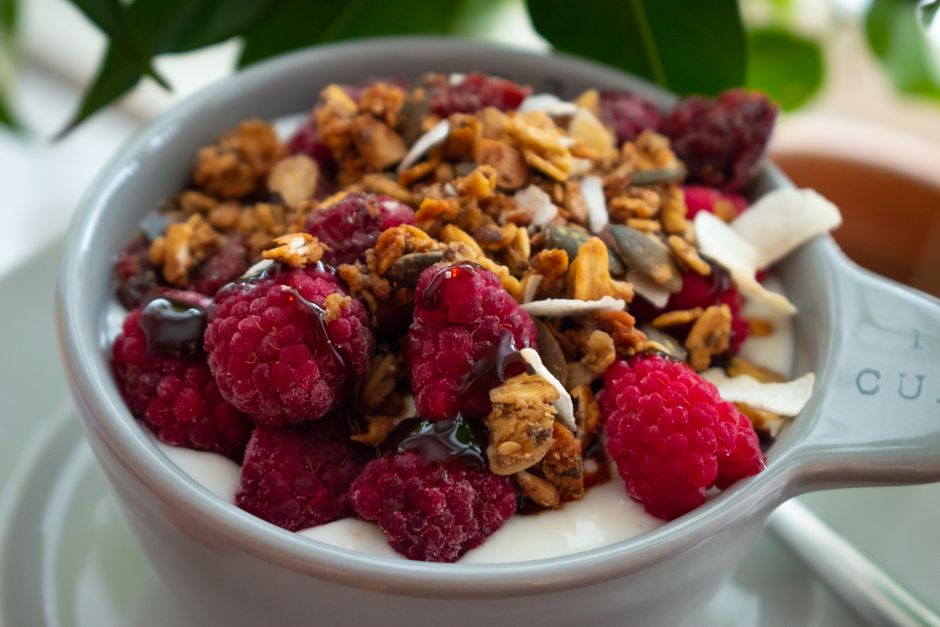
Greek yogurt and granola can fit into a weight loss plan, but the pairing is not automatically a weight loss food. The yogurt brings protein that helps with fullness. Granola often brings more sugar, oil, and calories than people expect. Whether the combination helps or hurts depends almost entirely on which products you buy and how much you pour.
That is the short answer. The longer answer involves reading labels, understanding why granola is so calorie-dense, and knowing what a realistic portion actually looks like. Most people who struggle with this breakfast are not failing at willpower. They are working with a bowl that contains more calories than they realize.
Why Does Greek Yogurt and Granola Seem Like a Healthy Breakfast?
Both foods carry a health halo, and in some ways that reputation is earned. Greek yogurt is strained, which removes much of the whey and lactose. What remains is a thicker product with more protein per ounce than regular yogurt. A typical plain Greek yogurt has roughly double the protein of the same amount of conventional yogurt.
Granola, meanwhile, is made from oats, nuts, seeds, and dried fruit. Those are real foods with real nutrients. Oats provide fiber. Nuts and seeds provide unsaturated fats. Dried fruit provides potassium and fiber.
The problem is what happens during manufacturing. To get granola to clump and stay crunchy, producers add sweeteners and oil, then bake the mixture. That process concentrates calories. A food that started as oats and nuts becomes something closer to a cookie in calorie density.
So you have one genuinely high-protein food paired with one genuinely calorie-dense food. The combination sounds virtuous. The math does not always cooperate.
How Many Calories Are Actually in This Bowl?
This is where most people get surprised. A standard serving of granola on the package is often just a quarter cup. That is roughly the size of a large egg, or a small handful. Most people pour two to three times that amount without measuring.
Here is a rough comparison of what different components contribute. These are general ranges based on typical commercial products and USDA data, not specific brands.
| Food | Typical Amount | Approximate Calories | Protein |
|---|---|---|---|
| Plain nonfat Greek yogurt | 1 cup (227 g) | About 130-150 | About 20-23 g |
| Whole milk Greek yogurt | 1 cup (227 g) | About 220-240 | About 18-20 g |
| Granola, typical commercial | 1/4 cup (about 28 g) | About 120-140 | About 3 g |
| Granola, typical commercial | 1/2 cup | About 240-280 | About 6 g |
| Honey | 1 tablespoon | About 64 | 0 g |
Add it up. One cup of whole milk Greek yogurt, half a cup of granola, and a tablespoon of honey lands somewhere around 520 to 580 calories. That is a substantial breakfast. For someone eating 1,600 to 1,800 calories a day, it consumes nearly a third of the day’s intake before lunch.
The protein is real and valuable. The calorie load is also real. Both things are true at once.
Is Greek Yogurt and Granola Good for Weight Loss?
It can be, if the portions and products are managed. It can work against you if they are not. The pairing itself is neither good nor bad for weight loss. Weight loss comes down to eating fewer calories than you burn over time, and this meal can fit into that or blow past it depending on how it is built.
What Greek yogurt genuinely offers is protein. Protein takes longer to digest than carbohydrate and appears to influence satiety hormones. Research consistently shows that higher-protein meals tend to reduce hunger more than lower-protein meals of the same calories. That is a well-established effect, not a marketing claim.
What granola genuinely offers is crunch, flavor, and a delivery vehicle for fat and sugar. It is not a protein food. It is not a low-calorie food. It is a topping, and it behaves best when treated like one.
The honest position: this breakfast can support weight loss if you control the granola and choose the yogurt wisely. It will not support weight loss if you treat granola as a base and yogurt as a garnish.





What Should You Look for on the Labels?
Reading two labels carefully will tell you more than any general advice. Start with the yogurt, then move to the granola.
For Greek yogurt, the key numbers are protein, sugar, and fat. Plain varieties have no added sugar. Flavored varieties often contain 10 to 20 grams of sugar per cup, and that sugar is added, not naturally occurring from milk. If you want sweetness, adding your own honey or fruit lets you control the amount.
Fat content matters for calories. Nonfat and low-fat Greek yogurt have noticeably fewer calories than whole milk versions. Whether that trade-off is worth it depends on your total diet and personal preference. Full-fat yogurt may keep you fuller slightly longer, but it also carries more calories per cup.
For granola, the key numbers are calories per serving, added sugar, and oil content. Some granolas list sugar as the second ingredient. Some contain more calories per quarter cup than a chocolate chip cookie. Look for options where oats appear first, added sugar is low, and the ingredient list is short.
- Check the serving size first. It is often a quarter cup, not a full bowl.
- Compare added sugar across brands. It varies widely.
- Look at protein. If a granola claims to be high-protein, check whether it actually delivers.
- Consider whether you need granola at all, or whether nuts and fresh fruit could do the same job with more control.
How Can You Make This Breakfast Work for Weight Loss?
Small changes move the numbers meaningfully. None of them require giving up the meal.
Measure the granola. Use a quarter cup measure, not a pour. This single change can cut 150 to 250 calories from the bowl. It is the highest-leverage adjustment available.
Choose plain Greek yogurt. Add your own fruit and a small amount of sweetener. You get more control and usually less sugar than flavored versions.
Add fresh fruit instead of relying on dried fruit in the granola. Berries are low in calories and high in volume. A cup of strawberries has far fewer calories than a quarter cup of granola and takes up more space in the bowl.
Consider a lower-calorie crunch. A small amount of chopped nuts, unsweetened coconut, or even a few tablespoons of a lower-sugar cereal can deliver texture with fewer calories than granola.
Watch the total, not just the ingredients. A breakfast of 350 to 450 calories with 25 to 30 grams of protein tends to work well for appetite control. That is achievable here with adjustments.
One thing worth knowing: the feeling of fullness from protein does not happen instantly. It builds over the next few hours. People who eat a high-protein breakfast often report less snacking mid-morning, but the effect is gradual, not immediate.
What Are the Common Mistakes People Make?
The most common mistake is treating granola as a cereal rather than a topping. A bowl of granola with a spoonful of yogurt is a very different meal from a bowl of yogurt with a spoonful of granola. The first can easily exceed 600 calories. The second can land under 300.
The second mistake is assuming that because a food is natural or wholesome, it is low in calories. Olive oil is natural. So are almonds. Both are calorie-dense. Granola sits in that same category.
The third mistake is not accounting for liquid calories. Honey, maple syrup, agave, and fruit juice concentrates all add sugar and calories without adding much fullness. They are easy to overlook because they are poured, not chewed.
The fourth mistake is trusting front-of-package claims. Words like “natural,” “wholesome,” and “made with real honey” carry no regulated meaning tied to weight loss. They tell you about ingredients, not about calories or health outcomes.
None of this means the meal is bad. It means the meal requires attention. Most foods that support weight loss require some attention.
Frequently Asked Questions
Is Greek yogurt and granola good for weight loss?
It can be, if you keep the granola portion small and choose plain yogurt. It can also add more calories than expected if the granola portion is large or the yogurt is flavored and sweetened.
How much granola should I put in Greek yogurt?
A quarter cup is the standard serving on most packages and is a reasonable starting point. Most people pour two to three times that amount without measuring, which can add 150 to 250 extra calories.
Is granola healthier than cereal?
Not necessarily. Granola often has more calories, fat, and sugar per serving than many cold cereals. Some cereals are fortified with vitamins and minerals that granola may not contain.
What can I use instead of granola for crunch?
Chopped nuts, unsweetened coconut flakes, or a small amount of low-sugar cereal can provide texture with fewer calories. Fresh fruit adds volume without much calorie cost.
