
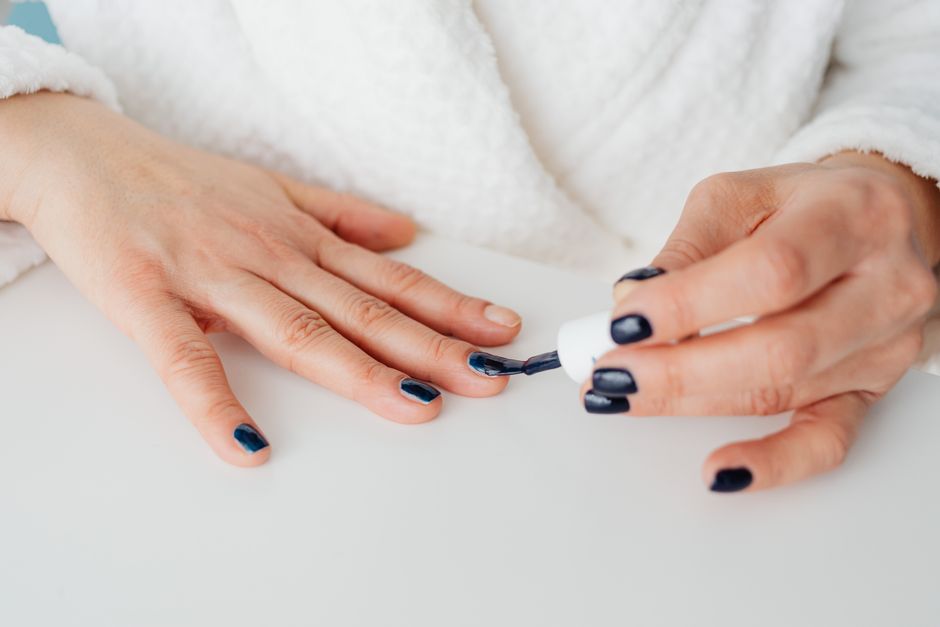
Gel polish is not resin in the sense most people mean. It is a light-cured coating made mainly of acrylic monomers and oligomers — methacrylates — that harden under a UV or LED lamp. There is no plant sap, no epoxy, and no two-part resin mix involved. The word “resin” gets used loosely in the nail industry, which is where the confusion starts.
If you have read that gel polish contains resin, or that it is a type of resin, that statement is partly true and mostly misleading. Some of the ingredients are technically oligomers, which are short polymer chains. In chemistry, a resin is a broad category that can include these materials. In everyday language, resin means something else entirely. This guide explains what gel polish actually is, how it cures, and what the ingredients mean for your nails.
What Is Gel Polish Actually Made Of?
Gel polish is a mixture of methacrylate monomers and oligomers, plus photoinitiators, pigments, and solvents. The photoinitiators are the key. They absorb light at specific wavelengths and start a chemical chain reaction that links the small molecules into a solid polymer network.
The main families of ingredients you will see on a gel polish label include:
- Methacrylate monomers such as hydroxyethyl methacrylate (HEMA) and ethyl methacrylate
- Oligomers like urethane methacrylate, which give the film its flexibility and shine
- Photoinitiators, which respond to UV or LED light
- Pigments and fillers for color and texture
- Solvents that keep the mixture workable before curing
HEMA is the ingredient most often discussed in allergy research. It is a small molecule that can penetrate the skin and trigger sensitization in some people. This is a well-documented occupational and consumer concern, not a rare fluke.
Is Gel Polish Resin? The Chemistry Explained
Chemically, the cured film in gel polish is a cross-linked polymer network, and some of its starting materials are oligomers that fall under the broad technical umbrella of resins. So a chemist could reasonably call certain gel components “resins” in a lab context.
In the consumer and salon world, “resin” usually means something different. It refers to epoxy resin, polyester resin, or plant-derived resins used in crafts, jewelry, and some nail art products. Those are not the same materials as gel polish.
The confusion matters because people search for “gel polish resin” expecting one of two things. Either they want to know if gel polish is a type of resin, or they have seen resin-based nail products and want to know if they are the same as gel. They are not.
A useful way to think about it: all gel polish contains resin-like polymers, but not all resins are gel polish. The categories overlap without being identical.
How Does Gel Polish Cure Under a Lamp?
Gel polish cures through a process called free-radical polymerization. When the photoinitiator absorbs light from a UV or LED lamp, it splits into reactive fragments. Those fragments attack the methacrylate groups and link them into long chains. The result is a hard, glossy film that will not dissolve in ordinary nail polish remover.
This is why gel polish behaves so differently from regular lacquer. Regular polish dries by evaporation. The solvent leaves, and the pigment and film-former are left behind. Gel polish does not dry. It cures. The liquid turns into a solid through a chemical reaction, not through drying.
Two practical points follow from this:
- If the lamp does not deliver enough of the right wavelength, the gel will not fully cure. It may stay tacky, peel early, or leave uncured monomers on the nail.
- Uncured or partially cured gel contains free methacrylate monomers, which are the form most likely to cause skin reactions.
This is one reason proper lamp use and full curing matter. It is also why some clinicians advise against letting uncured gel touch the skin around the nail.





Are Gel Polish and Resin Nail Products the Same Thing?
No. Gel polish and resin-based nail products are different materials with different chemistry, different curing methods, and different removal processes.
| Feature | Gel Polish | Resin Nail Products |
|---|---|---|
| Main chemistry | Methacrylate monomers and oligomers | Epoxy or other synthetic resins |
| How it hardens | UV or LED light curing | Mixing two parts or air drying |
| Removal | Soaking in acetone | Varies; often mechanical |
| Common use | Salon and home gel manicures | Crafts, jewelry, some nail art |
The overlap in language is real, but the products are not interchangeable. Using a craft resin on nails is not the same as using gel polish, and it is not something to do casually. Craft resins are not formulated for skin contact and may contain ingredients not tested for cosmetic use.
Can Gel Polish Cause Allergies or Nail Damage?
Yes. Methacrylate allergy from gel polish is well documented in dermatology research. Symptoms include itching, redness, swelling, and sometimes blistering or peeling around the nail. Once sensitized, a person may react to other methacrylate-containing products, including some dental materials and medical adhesives.
The risk is higher with:
- Repeated skin contact with uncured gel
- Home gel kits used without proper training
- Lamps that do not fully cure the product
- Frequent application without breaks
Nail damage is a separate issue. Gel polish itself does not damage the nail plate. Damage usually comes from removal. Picking, peeling, or scraping gel off can strip layers from the nail and leave it thin and weak. Acetone soaking, done properly, is gentler.
Some people also develop a sensitivity to acetone or other removers. If you notice persistent irritation, the honest position is to stop using the product and see a dermatologist rather than to push through it.
Is Gel Polish Safer Than Regular Polish?
Neither is clearly safer across the board. They have different risk profiles, and the evidence does not support a simple ranking.
Regular nail polish typically contains solvents like ethyl acetate and butyl acetate, which evaporate as the polish dries. Some formulas contain toluene, formaldehyde, or dibutyl phthalate, though many brands have removed these in response to consumer concern. The health significance of occasional exposure at cosmetic levels is not well established.
Gel polish avoids those solvents but introduces methacrylate exposure and the need for UV or LED light. UV lamps emit some ultraviolet radiation, though the dose from a typical manicure is low and generally considered small compared with ambient sun exposure. LED lamps emit mainly in the UVA range and cure faster.
For most people, neither type of polish is a major health concern. The bigger variables are how often you use them, whether you have a history of skin reactions, and how carefully the product is applied and removed.
What Should You Look For on a Gel Polish Label?
The ingredient list is the most useful information on the bottle. Look for the methacrylate names, especially HEMA, because that is the one most linked to sensitization. Some brands offer HEMA-free formulas, though those still contain other methacrylates and are not automatically risk-free.
Also worth noting:
- “Non-toxic” and “natural” are marketing terms, not regulated claims
- No gel polish is truly “chemical-free” — that is not possible
- Cure time and lamp compatibility matter more than most label claims
- If a product claims to be “resin-free,” check what it actually contains
If you have known methacrylate sensitivity, the safest step is to avoid gel polish entirely and discuss alternatives with a dermatologist. No clinical guidelines currently exist for selecting a “safe” gel polish for sensitive individuals, so professional advice is the better path.
Frequently Asked Questions
Is gel polish a resin?
Gel polish contains resin-like oligomers, so in a technical chemistry sense it overlaps with the resin category. In everyday use, it is not the same as craft or epoxy resin.
Is gel polish the same as resin nails?
No. Gel polish cures under UV or LED light, while resin nail products typically harden by mixing two parts or air drying. They use different chemistry and are not interchangeable.
Can gel polish cause an allergic reaction?
Yes. Methacrylate allergy from gel polish is well documented, with symptoms like itching, redness, and swelling around the nail. Repeated skin contact with uncured gel raises the risk.
Does gel polish damage your nails?
Gel polish itself does not damage the nail plate. Most damage comes from picking or scraping it off, which removes layers of the nail.
