

Gel nail polish is considered safe for most healthy adults when applied correctly and cured properly. The main concerns are allergic skin reactions to certain ingredients, damage from improper removal, and the ultraviolet light used to cure the polish. Serious health problems from gel manicures are uncommon, but they are real and largely preventable.
What Makes Gel Nail Polish Different From Regular Polish?
Regular nail polish dries by evaporation. The solvent in the bottle turns into vapor, and what’s left behind hardens into a film. Gel polish works differently. It contains photoinitiators — molecules that react to specific wavelengths of light — along with acrylate monomers and oligomers. When you put your hand under a UV or LED lamp, those molecules link together and the polish hardens into a solid plastic-like coating.
That chemical reaction is why gel lasts longer. It’s also why removal requires more than standard polish remover. The cross-linked polymer doesn’t dissolve easily. It has to be broken down with acetone, usually after the top layer is filed away.
The word “gel” gets used loosely. There’s gel polish (sometimes called soak-off gel), hard gel, and acrylic. They are not the same product and don’t carry identical risks. This article focuses on gel polish applied in salons or at home with a curing lamp.
Is Gel Nail Polish Safe? The Key Ingredient Concern
The most well-documented health issue with gel polish is allergic contact dermatitis caused by acrylate compounds. This is not a minor footnote. Dermatologists have published a growing number of case reports and case series on acrylate allergy tied to nail cosmetics, and the problem appears to be increasing.
The reaction usually shows up as itching, redness, swelling, or peeling around the nail folds, fingertips, and sometimes the eyelids or face if you touch your face after application. In more severe cases, the nail itself can lift from the nail bed. Once someone becomes sensitized to acrylates, the allergy is generally lifelong.
This matters beyond nails. Acrylates are used in dental work, bone cement, medical adhesives, and some wound dressings. A person who develops an acrylate allergy from gel polish may later react to those products too. That’s why dermatologists take these reactions seriously rather than treating them as a cosmetic nuisance.
Two things raise risk:
- Uncured or under-cured product touching the skin. If the polish isn’t fully hardened, reactive monomers remain and can penetrate skin.
- Repeated exposure over time. Sensitization often builds gradually rather than appearing after the first manicure.
Some people develop sensitivity after years of gel manicures with no prior problems. Others never react. There is no reliable way to predict who will become sensitized.
Does the UV Lamp Used to Cure Gel Polish Cause Skin Cancer?
The lamps emit ultraviolet radiation, mostly UVA. UVA is a known contributor to skin aging and skin cancer risk from sun exposure. The question is whether the dose from a nail lamp is high enough to matter.
The doses involved are small compared to sunlight. Studies measuring lamp output have found that the UVA exposure from a single manicure is a small fraction of what you’d get from a short period outdoors. Based on that, the added risk from occasional use is generally considered low.
But “low” is not “zero,” and the evidence has limits. There is no large long-term study tracking skin cancer rates in people who get regular gel manicures. The risk assessment relies on comparing measured lamp output to known sun exposure data, not on direct cancer outcomes. That’s a reasonable approach, but it’s not the same as proof of safety.
Some case reports have described skin cancers on the hands of people with extensive UV nail lamp exposure. Case reports can’t establish cause. They also can’t rule it out.
Practical steps that are widely recommended:
- Apply broad-spectrum sunscreen to your hands before a manicure.
- Wear fingerless UV-protective gloves, which are sold for this purpose.
- Ask whether the salon uses an LED lamp, which cures faster and may reduce exposure time.
People with a history of skin cancer, photosensitivity disorders, or who take photosensitizing medications may want to discuss the topic with a dermatologist. That’s a judgment call, not a universal rule.
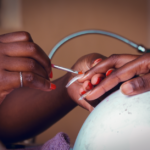



What Are the Risks of Gel Polish Removal?
Removal causes more nail damage than application for most people. Gel polish is removed by soaking in acetone, often for 10 to 15 minutes, sometimes longer.
Acetone strips oils from the nail plate and surrounding skin. Repeated exposure leaves nails dry, brittle, and prone to peeling. The skin around the nails can become irritated or cracked.
The bigger problem is physical damage. Picking, peeling, or biting off gel polish removes layers of the nail plate with it. This thins the nail and can leave it weak for months. Nail plates grow slowly, so damage takes time to grow out.
Aggressive filing during removal or prep can also thin the nail. Some salons use electric files, and improper technique can remove too much of the natural nail.
Signs that removal has gone wrong include:
- Nails that bend easily or break with normal use
- White patches or horizontal ridges on the nail surface
- Pain, redness, or swelling around the nail
- Separation of the nail from the nail bed
If the nail bed is exposed or the skin is broken, that’s an opening for infection. See a healthcare provider if you notice pus, increasing pain, or red streaks spreading from the finger.
Can Gel Polish Cause Nail Infections?
Gel polish itself doesn’t cause infections. The application and removal process can create conditions that make them more likely.
Moisture trapped under a lifted gel edge is a good environment for microbes. So is a nail plate that’s been thinned or a cuticle that’s been nicked during prep. Shared tools that aren’t properly sterilized can transfer organisms between clients.
Fungal nail infections and bacterial infections around the nail are both possible. Green discoloration under the nail usually indicates a bacterial problem, often Pseudomonas, and needs medical evaluation rather than another manicure.
Reduce risk by:
- Choosing salons that sterilize metal tools with an autoclave
- Not letting technicians cut or push back cuticles aggressively
- Removing gel polish if it lifts, rather than letting water get underneath
- Taking breaks between manicures to let nails recover
A note on salon regulations: licensing and sanitation rules vary by state, and enforcement varies too. Asking directly about sterilization practices is reasonable and not rude.
Who Should Be More Careful With Gel Nail Polish?
Some groups face higher risk or have less evidence to guide decisions.
People with known acrylate allergy should avoid gel polish entirely. That includes anyone who has reacted to dental composites, certain medical adhesives, or other nail products.
People with eczema, psoriasis, or sensitive skin may be more prone to irritation and are worth discussing the topic with a dermatologist before starting regular gel manicures.
Pregnant women: there is no strong evidence that gel polish causes harm during pregnancy, but there is also no robust safety data specific to this group. Acetone exposure during removal is a consideration, and salon ventilation varies. No clinical guidelines currently exist for gel polish use during pregnancy. Avoiding it is a reasonable precaution, not a medical requirement.
Children and teens: nail plates are thinner and the trend toward early and frequent gel manicures is relatively new. No clinical guidelines exist for this population either. The acrylate allergy concern applies at any age, and earlier repeated exposure means more years of potential sensitization.
People who get gel manicures every two to three weeks without breaks are the group most likely to develop cumulative problems. Nails need recovery time between applications.
How Can You Lower Your Risk?
Most of the risk from gel polish comes from how it’s applied, cured, and removed — not from the product sitting on your nail. That means most of it is manageable.
- Make sure polish doesn’t touch the skin around the nail. If it does, it should be cleaned off before curing.
- Cure fully. Under-cured polish leaves reactive monomers that can trigger allergy.
- Don’t peel or pick off gel polish. Soak it off properly or have it removed professionally.
- Take breaks. Going a few weeks without gel between manicures gives nails time to recover.
- Use sunscreen or UV-protective gloves during curing.
- Watch for early signs of allergy — itching, redness, or swelling around the nails — and stop if they appear.
The occasional gel manicure is unlikely to cause lasting harm for most healthy adults. Frequent, back-to-back manicures with rough removal are where problems tend to accumulate. If you notice a reaction, stop using the product and see a dermatologist. Continuing to expose sensitized skin tends to make the reaction worse, not better.
Frequently Asked Questions
Is gel nail polish safe during pregnancy?
There is no strong evidence that gel polish harms a pregnancy, but there is also no solid safety data specific to pregnant women. No clinical guidelines currently exist for this group, so avoiding it is a reasonable precaution rather than a requirement.
Can gel nail polish cause cancer?
The UV lamps used to cure gel polish emit small amounts of UVA compared to sunlight, and the added risk from occasional use is generally considered low. No large long-term study has directly measured cancer rates in regular gel manicure users, so the evidence relies on dose comparisons rather than outcomes.
Why does gel polish cause allergic reactions?
Gel polish contains acrylate compounds, and repeated skin contact with uncured product can trigger an allergic reaction that is usually lifelong. Once sensitized, a person may also react to acrylates used in dental work and medical adhesives.
How often is it safe to get gel manicures?
No official guidelines specify a safe frequency. Taking breaks between manicures and avoiding picking or peeling off polish reduces the cumulative damage that tends to build with frequent, back-to-back applications.
