
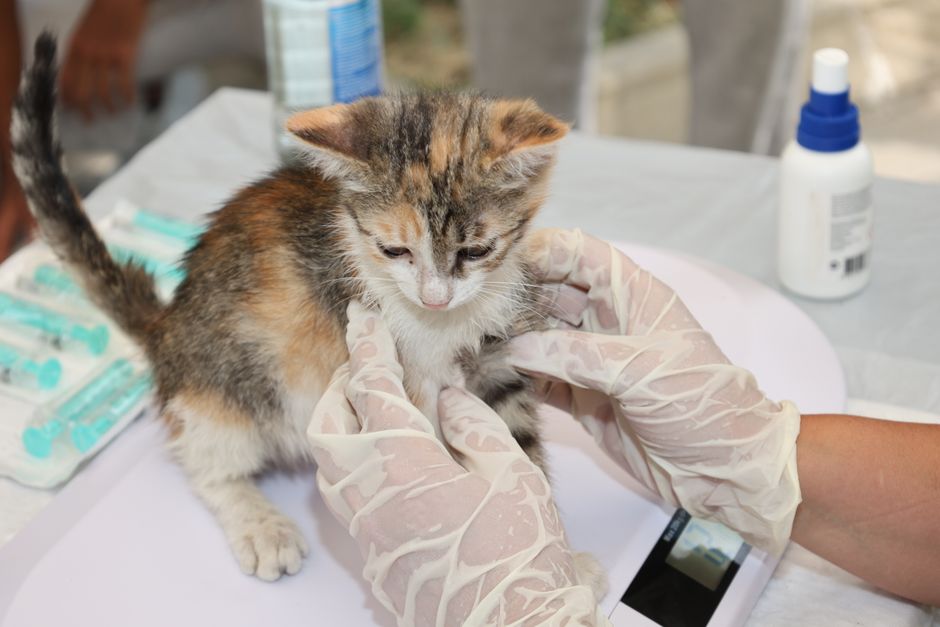
Fading kitten syndrome is not a disease. It is a term veterinarians use when a newborn kitten fails to thrive and dies within the first few weeks of life, and the question of whether the kitten suffers is one every caregiver asks. The honest answer has two parts. When a kitten fades because of an untreated infection, low body temperature, or dehydration, there is real distress, though a newborn’s nervous system is immature and the experience is not the same as an adult’s. When a kitten fades from a congenital defect incompatible with life, death often comes quietly and without obvious pain. Either way, fading is a medical emergency, not something a kitten simply outgrows.
What Is Fading Kitten Syndrome?
Fading kitten syndrome, sometimes shortened to FKS, describes a pattern rather than a single condition. A kitten that was nursing and gaining weight stops progressing. It may become quiet, cool to the touch, and unwilling to eat. Within hours or days, it can die.
The label covers many different underlying causes. Some are infections. Some are birth defects. Some are environmental, like a chilled nest or a mother who cannot produce enough milk. Because the causes vary so widely, two kittens with the same outward decline may be facing completely different problems.
This matters for the pain question. A kitten fading from a severe heart defect may slip away with minimal distress. A kitten fading from sepsis or starvation is likely uncomfortable. The term itself tells you the outcome, not the experience.
Is Fading Kitten Syndrome Painful for the Kitten?
Pain depends entirely on what is causing the fade, not on the syndrome label. There is no single answer because there is no single condition.
Newborn kittens do have working pain pathways. Research in veterinary neuroscience has shown that neonatal mammals can perceive noxious stimuli, though their responses differ from adults and their ability to interpret pain is still developing. So the idea that newborns feel nothing is not accurate.
What this means in practice:
- Infection or sepsis: A kitten fighting a systemic infection is likely experiencing some degree of discomfort, weakness, and malaise.
- Hypothermia and dehydration: A chilled, underfed kitten is in physiological distress. Whether it registers as pain in the human sense is uncertain, but it is not comfortable.
- Congenital defects: Some defects, like certain heart malformations, can cause relatively quiet death. Others, like a blocked or malformed intestine, can be painful.
- Fading of unknown cause: When no cause is identified, the level of distress cannot be known.
The most accurate statement is this: some fading kittens suffer, some do not, and the cause determines which. A caregiver should assume distress is possible and act to reduce it.
What Causes a Kitten to Fade?
The causes fall into a few broad groups. Knowing them helps a caregiver understand what might be happening, though a veterinarian is needed to sort out which applies.
Infections
Newborn kittens have immature immune systems. They can acquire infections before birth, during birth, or from the mother’s milk or environment. Common culprits include bacterial infections that spread through the bloodstream and certain viral infections. A kitten with an infection may stop nursing, become limp, and decline quickly.
Congenital Problems
Some kittens are born with defects that cannot be fixed. Heart malformations, incomplete development of the digestive tract, and other structural problems can make survival impossible regardless of care. These kittens often fade despite excellent nursing.
Environmental and Maternal Factors
Kittens cannot regulate their own body temperature for the first weeks of life. A nest that is too cool can cause hypothermia, which then suppresses feeding and digestion. A mother who is ill, malnourished, or unable to produce enough milk leaves kittens without adequate nutrition. Sometimes the mother rejects a kitten, and without intervention that kitten will fade.
Neonatal Isoerythrolysis
This is a specific and serious condition. It happens when a kitten with a certain blood type nurses from a mother whose colostrum contains antibodies against that blood type. The antibodies destroy the kitten’s red blood cells. Kittens affected this way can fade within the first day or two of life. It is one of the few causes that can be prevented with knowledge of the parents’ blood types.





What Are the Signs a Kitten Is Fading?
The signs of fading are often subtle at first and then progress fast. Early recognition matters because some causes can be treated if caught quickly.
Watch for:
- Weight loss or failure to gain weight. Newborn kittens should gain weight daily.
- Constant crying or, at the other extreme, unusual quietness.
- Feeling cool to the touch. A kitten’s body should feel warm.
- Refusing to nurse or pulling away from the mother.
- Weakness, limpness, or difficulty holding up the head.
- Being pushed away or ignored by the mother.
- Labored breathing or a distended belly.
- Discolored gums, which can signal poor circulation.
Any of these signs in a kitten under four weeks old is a reason to contact a veterinarian promptly. A kitten can go from slightly off to critically ill in a matter of hours.
Can Fading Kitten Syndrome Be Treated?
Some causes can be treated. Others cannot. The outcome depends on what is wrong, how early it is caught, and how strong the kitten is.
When the cause is something correctable, treatment focuses on supporting the kitten while addressing the underlying problem. That typically means warming the kitten gradually, providing fluids, and treating any infection. A veterinarian may recommend feeding support, oxygen, or other measures depending on the situation.
When the cause is a severe congenital defect or an overwhelming infection, treatment may not change the outcome. This is difficult to hear, but it is honest. Not every fading kitten can be saved, and no caregiver should carry guilt for a death that was not preventable.
Some causes, like neonatal isoerythrolysis, can be prevented in future litters once the blood types are known. This is one of the more useful things a breeder or caregiver can learn from a loss.
What Should You Do If a Kitten Is Fading?
Act quickly and get veterinary help. Fading is time-sensitive, and delay reduces the chance of a good outcome.
While arranging care, keep the kitten warm. A chilled kitten cannot digest food properly, so warming comes before feeding. Do not force food or fluids into a weak kitten’s mouth, because it can aspirate into the lungs. Do not try to treat the kitten with human medications, which can be toxic to cats.
Be honest with the veterinarian about what you have observed. The timeline, the kitten’s weight, whether it was nursing, and any signs you noticed all help identify the cause.
If the kitten dies, know that fading kitten syndrome is often not the caregiver’s fault. Many causes are genetic or infectious and cannot be prevented by better care alone. Grief after losing a kitten is real, even for a kitten you knew for only a few days.
Do Newborn Kittens Feel Pain?
Yes, newborn kittens have the capacity to feel pain, though their experience of it is not identical to an adult’s. Their nervous systems are still developing, and their behavioral responses to pain can look different, which is why pain in neonates is sometimes underestimated.
This is directly relevant to the fading question. Because newborns can perceive noxious input, a caregiver should not assume a fading kitten feels nothing. The level of distress varies with the cause, but the possibility of discomfort is real.
This is also why humane care matters even when a kitten cannot be saved. Keeping the kitten warm, comfortable, and with its mother when possible, and following veterinary guidance on whether treatment or humane euthanasia is appropriate, are the ways to reduce suffering.
Frequently Asked Questions
Do fading kittens suffer when they die?
Some do and some do not, depending on the cause. Kittens fading from infection or starvation are likely uncomfortable, while those with certain congenital defects may pass with little distress.
Is fading kitten syndrome always fatal?
No. Some causes can be treated if caught early, and some kittens survive with prompt veterinary care. Others fade from conditions that cannot be reversed.
How fast does fading kitten syndrome progress?
A kitten can decline over hours to a couple of days, and sometimes faster. Early signs like weight loss or feeling cool should prompt a call to a veterinarian right away.
Can fading kitten syndrome be prevented?
Some causes can be reduced with good maternal nutrition, a warm nest, and knowledge of the parents’ blood types. Many causes, including congenital defects and some infections, cannot be prevented.
