
Yes — ethyl alcohol and ethanol are the same chemical. The names are interchangeable, and both refer to the two-carbon alcohol with the formula C₂H₅OH. The confusion comes from the fact that “alcohol” is a broad chemical family, while “ethanol” is one specific member of it.
If you have ever read a beer label, a hand sanitizer bottle, or a gasoline pump, you have already encountered ethanol. It is the intoxicating compound in alcoholic drinks, the active ingredient in most hand sanitizers, and a common additive in fuel. Different industries simply use different names for the same molecule.
What follows explains how the naming works, why it matters, and where people most often mix up ethanol with other alcohols that are far more dangerous.
Why Does the Same Chemical Have So Many Names?
Chemical compounds often carry more than one accepted name, and ethanol is a clear example. The International Union of Pure and Applied Chemistry, which sets naming rules for chemists worldwide, recognizes ethanol as the systematic name. The term ethyl alcohol is a common or traditional name that describes the same structure: an ethyl group (two carbons) attached to a hydroxyl group (–OH).
The “ethyl” part tells you what the carbon backbone looks like. The “alcohol” part tells you which functional group is attached. Together they describe one specific molecule, not a category.
You will also see ethanol written as:
- Ethanol — the standard scientific name
- Ethyl alcohol — common in industry and older texts
- Grain alcohol — a traditional term, since it can be produced by fermenting grains
- Alcohol — shorthand in everyday speech, though technically inaccurate
- EtOH — an abbreviation used in medicine and chemistry
All of these describe the same compound. None of them describe methanol, isopropyl alcohol, or any other member of the alcohol family.
Is Ethyl Alcohol Ethanol in Everyday Products?
Yes. When a product label lists ethyl alcohol, it means ethanol. This matters because the two names can appear side by side in the same aisle of a store and confuse shoppers who assume they are different ingredients.
Common places ethanol shows up under either name include:
- Alcoholic beverages — beer, wine, and spirits all contain ethanol as the psychoactive ingredient
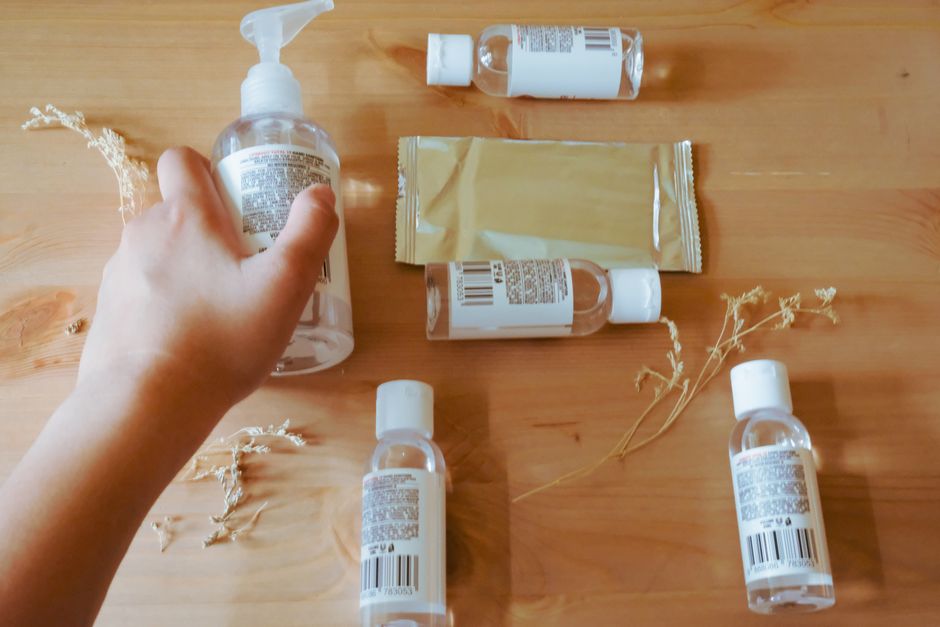
- Hand sanitizers — most effective products contain ethanol or isopropyl alcohol, often listed by percentage
- Mouthwash and some cosmetics — ethanol acts as a solvent and preservative
- Medications — some liquid medicines and tinctures use ethanol as a carrier
- Fuel — “gasohol” and E10 or E85 blends contain ethanol, usually made from corn or sugarcane
The US Food and Drug Administration and the World Health Organization both treat ethyl alcohol and ethanol as synonyms in their documentation. There is no regulatory distinction between the two terms.
One practical note: the concentration matters far more than the name on the label. A hand sanitizer listing “ethyl alcohol 60%” and one listing “ethanol 60%” contain the same active ingredient at the same strength.
How Is Ethanol Different From Other Alcohols?
Ethanol belongs to a family of chemicals that all share the same –OH group but behave very differently in the body. The word “alcohol” alone does not tell you which one you are dealing with, and that ambiguity has caused serious poisonings.
The three alcohols people most often confuse are:
| Name | Chemical Formula | Common Use | Safe to Drink? |
|---|---|---|---|
| Ethanol (ethyl alcohol) | C₂H₅OH | Beverages, sanitizer, fuel | Yes, in moderation for adults |
| Methanol (methyl alcohol) | CH₃OH | Industrial solvent, antifreeze | No — highly toxic |
| Isopropyl alcohol | C₃H₇OH | Rubbing alcohol, disinfectant | No — toxic if swallowed |
Methanol is the most dangerous of the three. The body metabolizes it into formaldehyde and formic acid, which can damage the optic nerve and cause blindness or death. Even small amounts — a few tablespoons — can be fatal without prompt medical treatment. This is why methanol is sometimes added to industrial ethanol to make it undrinkable, a practice called denaturing.
Isopropyl alcohol is also toxic when swallowed. It causes rapid intoxication, severe stomach pain, and can depress breathing. It is not the same as ethanol and should never be substituted for it in any drink or recipe.
The name on a bottle matters. “Alcohol” printed on a cleaning product almost never means ethanol.





Does the Body Treat Ethyl Alcohol and Ethanol Differently?
No. The body cannot tell the difference because there is no difference. Once ethanol enters the bloodstream, enzymes in the liver — primarily alcohol dehydrogenase — begin converting it into acetaldehyde, then into acetate, and finally into carbon dioxide and water.
The rate of this process is fairly consistent between people, though it varies with body size, liver health, genetics, and whether food is in the stomach. The liver can typically process only a limited amount of ethanol per hour, which is why drinking faster than the liver can keep up leads to rising blood alcohol levels.
Because the molecule is identical regardless of the name on the label, the effects, risks, and metabolism are identical too. A drink containing ethyl alcohol produces the same blood alcohol concentration as a drink containing the same amount of ethanol.
Is Ethanol Safe?
Ethanol is safe in specific contexts and dangerous in others. The distinction depends on how it is used, how much, and by whom.
In alcoholic beverages, ethanol is a psychoactive drug with well-documented risks. The Centers for Disease Control and Prevention notes that excessive drinking is linked to liver disease, certain cancers, heart problems, and injuries. There is no completely risk-free level of alcohol consumption, though many countries set low-risk drinking guidelines rather than claiming any amount is safe.
In hand sanitizers, ethanol is applied to the skin and evaporates quickly. It is not meant to be swallowed. The FDA has warned that some hand sanitizers have contained methanol instead of ethanol, which is dangerous because methanol can be absorbed through the skin and cause serious harm.
In medicines and mouthwash, ethanol appears in small amounts as a solvent. For most adults, this is not a concern. For children, pregnant women, and people recovering from alcohol use disorder, some clinicians recommend choosing ethanol-free alternatives when available. This is a reasonable precaution, though not a universal clinical requirement.
What is not safe is drinking any alcohol that is not intended for consumption. Denatured alcohol, rubbing alcohol, and methanol-containing products are toxic and have caused deaths.
Why Do People Confuse Ethanol With Other Alcohols?
The confusion is largely linguistic. In everyday speech, “alcohol” almost always means ethanol, because that is the alcohol people drink. In chemistry and industry, “alcohol” refers to an entire class of compounds, and ethanol is just one of them.
This gap between common usage and technical usage creates real problems. Someone might read that a product contains “alcohol” and assume it is safe to consume, when the label actually refers to isopropyl alcohol or methanol. Or they might see “ethyl alcohol” on a beverage and “ethanol” on a fuel label and assume they are different substances.
The naming also varies by country and industry. In some regions, “spirit” or “grain neutral spirit” is used on labels instead of ethanol. In others, “alcohol” is listed with a percentage. The underlying molecule is the same.
A useful rule: if a product is meant to be consumed, the alcohol is almost certainly ethanol. If a product is meant for cleaning, fuel, or industrial use, assume it is not ethanol unless the label specifically says so and the product is food-grade.
Does Ethanol Have Medical Uses?
Ethanol has a small number of established medical uses. It is used as an antiseptic for skin before some procedures, though its effectiveness is limited compared to other disinfectants in certain settings. It also appears in some injectable medications as a solvent or preservative.
Historically, ethanol was used in medicine as a sedative and antiseptic, but those uses have largely been replaced by safer alternatives. Today, its main medical role is as a disinfectant and as a solvent in pharmaceutical preparations.
Ethanol is also used in some treatments for methanol poisoning. Because ethanol competes for the same liver enzyme that metabolizes methanol, giving ethanol can slow the formation of toxic byproducts. This is a specialized medical treatment given under supervision, not something to attempt at home.
There is no evidence that drinking ethanol provides any medical benefit. Claims that moderate alcohol consumption improves heart health have been debated for decades, and more recent research suggests that any protective effect is small and may be outweighed by other risks. The evidence here is mixed, and no major health organization recommends drinking alcohol for health reasons.
What Should You Do If You Swallow the Wrong Alcohol?
If you or someone else swallows methanol, isopropyl alcohol, or any product not intended for drinking, treat it as a medical emergency. Call 911 or your local poison control center immediately. Do not wait for symptoms to appear.
Symptoms of methanol poisoning can be delayed by several hours and may include headache, dizziness, nausea, and vision changes. Isopropyl alcohol poisoning can cause rapid intoxication, vomiting, and difficulty breathing.
Do not induce vomiting unless a medical professional tells you to. Do not drink ethanol as a home remedy. Both can make the situation worse.
Prevention is straightforward. Store rubbing alcohol, antifreeze, and industrial solvents out of reach of children. Never transfer these products into drink containers. Read labels carefully, especially on hand sanitizers, and check for methanol contamination warnings from the FDA.
Frequently Asked Questions
Is ethyl alcohol the same as ethanol?
Yes, ethyl alcohol and ethanol are two names for the same chemical compound, C₂H₅OH. The difference is only in naming convention, not in the substance itself.
Can you drink ethyl alcohol?
Ethyl alcohol is the type of alcohol in beer, wine, and spirits, so it is consumed in those forms. Drinking pure ethyl alcohol or any product not intended for consumption is dangerous and can be fatal.
Is ethanol in hand sanitizer safe?
Ethanol in hand sanitizer is safe when used on the skin as directed. It should never be swallowed, and you should avoid products that contain methanol instead of ethanol.
What is the difference between ethanol and methanol?
Ethanol and methanol are different chemicals with different formulas and very different effects on the body. Methanol is highly toxic and can cause blindness or death even in small amounts.
