
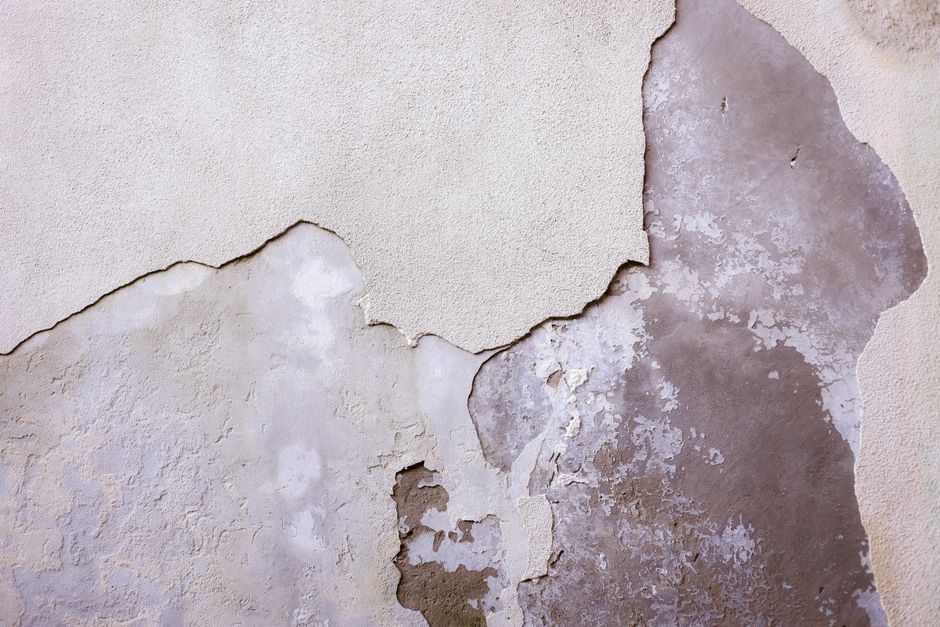
Crumbling plaster is only dangerous if the plaster contains asbestos, and in the United States most plaster used in homes after the mid-1980s does not. Asbestos was added to some plasters, patching compounds, and textured finishes in homes built roughly between the 1930s and the 1980s. If the plaster in your home was installed during that window, it may contain asbestos, and disturbing it can release fibers into the air. If it was installed later, or you have confirmed through testing that it is asbestos-free, crumbling plaster is mostly a structural and cosmetic problem rather than a health hazard.
Is Crumbling Plaster Dangerous Asbestos Dust Risks?
The danger depends on two things: whether the plaster contains asbestos, and whether it is being disturbed. Crumbling alone does not release much into the air. Crumbling that you touch, scrape, sand, or knock loose does.
Asbestos is a group of naturally occurring minerals made of long, thin fibers. Those fibers were mixed into building materials because they resist heat, fire, and chemical breakdown. When those materials stay intact, the fibers stay locked in place. When the material breaks down or gets worked on, fibers can become airborne and be inhaled.
The health risk comes from breathing the fibers in, not from touching the wall. Inhaled asbestos fibers can lodge deep in the lungs and, over many years, cause scarring and disease. This is why the concern is real for some homes and essentially nonexistent for others. The material matters. The disturbance matters. Everything else is secondary.
When Was Asbestos Used in Plaster and Wall Materials?
Asbestos appeared in a wide range of interior building products through much of the 20th century. In plaster specifically, it was sometimes added to give strength, improve fire resistance, and help the material hold together.
The material most people picture — the gray, rock-hard plaster over wood lath in older homes — is not the only place asbestos shows up. It was also used in:
- Joint compound and patching material used to smooth seams between drywall panels
- Textured paints and “popcorn” ceiling finishes
- Some acoustic ceiling tiles and their adhesives
- Certain wallboard and cement board products
- Insulation around pipes, boilers, and furnaces
Use in interior wall products declined sharply in the late 1970s and was largely phased out by the mid-1980s. That timeline is a general guide, not a guarantee. Older stock could be used later, and imported materials are a separate question. The only way to know what is in your wall is to have a sample tested by an accredited laboratory.
How Do I Know If My Plaster Contains Asbestos?
You cannot tell by looking at it, touching it, or smelling it. Asbestos fibers are microscopic. A crumbling wall that looks harmless and one that looks alarming can be chemically identical in risk.
Age is the best first clue. If your home was built or remodeled between roughly 1930 and 1985, treat suspect plaster as potentially asbestos-containing until proven otherwise. If it was built after the mid-1980s, the odds drop sharply, though not to zero.
Testing is straightforward. You collect a small sample — or, better, hire a licensed professional to collect it — and send it to an accredited lab. The key point is how the sample is taken. Scraping or breaking off a piece yourself can release fibers. Many health and safety agencies recommend that a qualified professional do the sampling, especially if the material is already damaged or friable.
If the result comes back negative, you can handle the crumbling plaster as ordinary debris. If it comes back positive, the next steps depend on the condition of the material and whether it is being disturbed.





What Makes Asbestos Plaster Dangerous?
Disturbance is the factor that turns a stable wall into a hazard. Intact asbestos material that is not being touched, sanded, or broken generally poses little risk because the fibers stay bound in the plaster.
The risk rises when the material becomes friable — meaning it crumbles easily and can be crushed by hand. Friable asbestos releases fibers far more readily than solid, intact material. Crumbling plaster is a sign that the material may be moving in that direction.
Activities that can release fibers include:
- Sanding, scraping, or wire-brushing a wall
- Removing wallpaper or tile and disturbing the plaster underneath
- Cutting or drilling into the material
- Demolition or major renovation
- Repeated impact or vibration in a damaged area
A wall that is quietly crumbling in a corner, untouched, is a different situation from a wall you are about to renovate. The first can often be monitored. The second usually calls for professional assessment before any work begins.
What Health Problems Can Asbestos Dust Cause?
Inhaled asbestos fibers can cause serious disease, but the risk is tied to how much you breathe in and over how long. This is the part where honesty matters more than alarm.
The best-established health effects are:
- Asbestosis — scarring of lung tissue that can cause shortness of breath and reduce lung function
- Lung cancer — elevated risk in people exposed to asbestos, especially those who also smoke
- Mesothelioma — a cancer of the lining around the lungs and abdomen that is strongly linked to asbestos exposure
These conditions generally develop over many years, often decades, after exposure. They are associated most strongly with occupational exposure — people who worked with asbestos daily in shipyards, construction, mining, or manufacturing. A single brief exposure around the home is not the same as years of workplace exposure, and the evidence does not support treating them as equivalent.
That said, “low” is not “zero.” The most widely accepted position in public health is that there is no known safe level of asbestos exposure. That does not mean any exposure causes disease. It means the safest approach is to avoid unnecessary exposure when you can.
What Should I Do About Crumbling Plaster in My Home?
Do not start by scraping, sanding, or tearing it out. That is the single most important piece of practical advice here.
If the plaster is intact and not being disturbed, the common approach is to leave it alone and monitor it. If it is crumbling and you are unsure whether it contains asbestos, the sensible order of operations is:
- Keep people, especially children, away from the area
- Avoid vacuuming or sweeping debris in a way that throws dust into the air
- Have a sample tested by an accredited lab, ideally collected by a professional
- If it tests positive, get an assessment from a licensed asbestos professional before any repair or removal
For minor damage, some contractors use encapsulation — sealing the material so fibers cannot escape — rather than removal. Encapsulation is widely used, but whether it is appropriate depends on the material’s condition and location. It is not a do-it-yourself project when asbestos is confirmed.
If removal is needed, it should be done by trained, licensed professionals using containment and protective equipment. This is not a task where shortcuts pay off. Improper removal can spread fibers through a home far more effectively than leaving the material in place.
Does a Little Crumbling Plaster Really Matter?
For most homes, the answer is no — and that is worth saying plainly, because fear around asbestos often outruns the actual risk.
Plaster crumbles for many reasons that have nothing to do with asbestos: water damage, settling, poor original workmanship, or simple age. A cracked or flaking wall in a home built in 2005 is almost certainly not an asbestos problem. A crumbling wall in a home built in 1955 deserves a closer look before anyone starts swinging a hammer.
The useful way to think about it is this: the material is only a problem when it is both asbestos-containing and being disturbed. Remove either condition and the risk drops. You cannot remove the disturbance risk without knowing what you are dealing with, which is why testing is the hinge point for the whole question.
If you are unsure, the conservative move is not to panic and not to ignore it. Test it, and let the result guide what happens next.
Frequently Asked Questions
Can crumbling plaster make you sick just by being in the room?
No. Asbestos fibers are only a health concern when they become airborne and are inhaled, and intact or lightly crumbled plaster generally does not release many fibers on its own. The risk rises when the material is disturbed through sanding, scraping, or demolition.
How do I know if my old plaster contains asbestos?
You cannot tell by appearance, so the only reliable method is laboratory testing of a sample. Because collecting a sample can release fibers, many health and safety agencies recommend having a licensed professional take it.
Is it safe to remove crumbling plaster myself?
Not if it may contain asbestos. Removal of confirmed asbestos material should be done by trained, licensed professionals, because improper removal can spread fibers through the home more than leaving the material in place.
What year did builders stop using asbestos in plaster?
Use in interior wall products declined sharply in the late 1970s and was largely phased out by the mid-1980s. That timeline is a general guide only, so homes built or remodeled in that era should be tested rather than assumed safe.
