
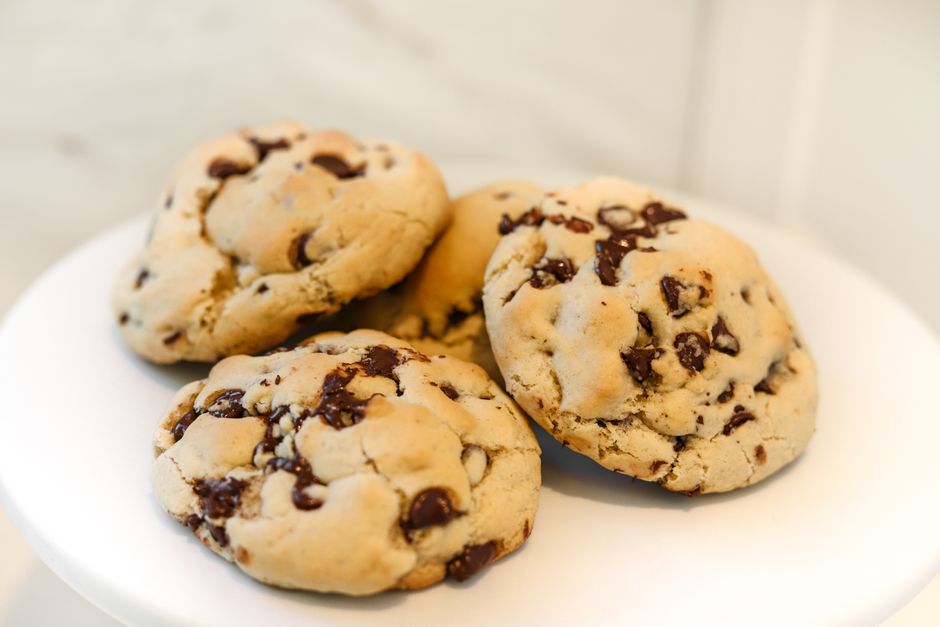
A single Crumbl cookie is a dessert, not a health food. Most varieties contain between 500 and 800 calories, with 25 to 45 grams of fat and 50 to 80 grams of sugar. Eating one occasionally fits into a balanced diet, but regular consumption can easily push you past daily calorie and sugar limits.
How Many Calories Are in a Crumbl Cookie?
Crumbl does not post full nutrition information on the box or in stores. You have to check their app or website for each weekly flavor. The numbers vary widely depending on the cookie.
A standard 4-ounce cookie is the baseline. Some flavors, especially those with frosting, filling, or toppings, come in closer to 6 ounces. That size difference matters more than the recipe itself.
Most plain and chocolate chip varieties land around 500 to 600 calories. Frosted cookies and those with caramel, peanut butter, or cheesecake fillings often exceed 700 calories. A few limited-time flavors have topped 800 calories.
For context, a typical adult needs about 2,000 to 2,500 calories per day. One large cookie can represent roughly one-third of your entire daily calorie intake. That is not inherently bad, but it leaves less room for other meals and snacks.
What Is the Sugar Content in a Crumbl Cookie?
Sugar is the main nutritional concern with these cookies. Most flavors contain between 50 and 80 grams of sugar. Some specialty flavors exceed 90 grams.
The American Heart Association recommends no more than 36 grams of added sugar per day for men and 25 grams for women. A single Crumbl cookie often contains two to three times that entire daily limit.
This matters because added sugar affects more than weight. High sugar intake raises triglycerides, contributes to insulin resistance over time, and increases risk for fatty liver disease. The body processes liquid and solid sugar differently, but the metabolic load is similar.
One important detail: Crumbl cookies use real sugar, not high-fructose corn syrup. That does not make them healthier. Your body metabolizes table sugar and high-fructose corn syrup through nearly identical pathways, and both contribute to the same health risks when consumed in excess.
Fat Content and Saturated Fat in Crumbl Cookies
Fat makes up a large portion of the calories in any Crumbl cookie. Most varieties contain 25 to 45 grams of total fat. Saturated fat typically ranges from 10 to 20 grams.
The Dietary Guidelines for Americans recommend limiting saturated fat to less than 10 percent of daily calories. For a 2,000-calorie diet, that is about 22 grams per day. A single frosted Crumbl cookie can nearly hit that limit on its own.
Butter is the primary fat source in these cookies. That gives them their texture and flavor. It also means the fat profile is mostly saturated rather than unsaturated. Replacing saturated fat with unsaturated fat from nuts, olive oil, or avocados is associated with lower cardiovascular risk, while replacing it with refined carbohydrates offers no benefit.
Trans fat is not a concern with Crumbl cookies. The FDA banned partially hydrogenated oils, the main source of artificial trans fat, from the US food supply in 2018. Crumbl does not use these oils.





Protein and Fiber: What Else Is in the Cookie?
Crumbl cookies are low in protein and fiber. Most flavors provide 5 to 8 grams of protein and 1 to 3 grams of fiber.
The protein comes mostly from eggs and dairy in the dough. The fiber comes from the wheat flour. Neither is present in meaningful amounts relative to the calorie load.
This matters because protein and fiber promote satiety. A food with 600 calories but only 2 grams of fiber and 6 grams of protein will not keep you full as long as a meal with the same calories but 15 grams of protein and 8 grams of fiber. This is why it is easy to eat a Crumbl cookie and still feel hungry shortly afterward.
There is no meaningful micronutrient content to discuss. These cookies are not a source of vitamins or minerals in amounts that matter for health.
Is Crumbl Cookie Bad For You Nutrition Breakdown: The Bottom Line
No single food makes you unhealthy. Your overall dietary pattern matters far more than any individual dessert. A Crumbl cookie eaten once a week or once a month is not going to derail your health.
The problem is frequency and portion. Crumbl markets a box of four cookies. The serving size on their website is one cookie, but the packaging encourages eating more. If you eat two or three cookies in one sitting, you are consuming 1,200 to 2,000 calories in a single snack.
Compare this to a standard restaurant dessert. A slice of cheesecake at a sit-down restaurant averages 400 to 500 calories. A Crumbl cookie is larger and more calorie-dense than most single-serving desserts you would buy elsewhere.
If you choose to eat Crumbl, treat it as an occasional treat rather than a regular snack. Consider splitting a cookie with someone or saving half for another day. Check the nutrition information on their app before you order so you know what you are getting.
For people with diabetes, prediabetes, or metabolic syndrome, these cookies pose a bigger concern. A single cookie can contain more carbohydrates than some people should eat in an entire meal. If you have a medical condition that affects blood sugar, talk to your doctor or a registered dietitian about how desserts fit into your plan.
How Does Crumbl Compare to Other Cookies?
Crumbl cookies are larger than most commercial cookies. A standard Chips Ahoy cookie has about 50 calories. You would need to eat 10 to 12 of them to match the calories in one Crumbl cookie.
Gourmet bakery cookies are the closest comparison. A large Levain Bakery cookie in New York contains roughly 600 to 700 calories. A Subway white macadamia nut cookie has about 200 calories. A Starbucks double chocolate chunk cookie has about 460 calories.
Crumbl is not uniquely unhealthy compared to other gourmet cookie brands. It is simply a large, indulgent dessert. The nutritional profile is similar to what you would find at any bakery that makes oversized cookies with butter and sugar.
The main difference is accessibility and marketing. Crumbl has stores in most US cities, releases new flavors weekly, and uses social media heavily. That makes it easier to eat these cookies regularly than it is to buy from a local bakery.
Practical Tips for Eating Crumbl Cookies Responsibly
If you enjoy Crumbl cookies, you do not need to give them up entirely. A few practical strategies can help you include them without compromising your overall diet.
- Check nutrition information before you go. The Crumbl app lists calories, fat, sugar, and other nutrients for current flavors.
- Buy a single cookie instead of a box. The four-pack is a better value per cookie, but it also makes it easier to eat more than you planned.
- Split a cookie with someone. Half of a 700-calorie cookie is 350 calories, which is a reasonable dessert portion.
- Store leftovers in the freezer. A frozen cookie can be reheated in the microwave for 15 to 20 seconds, which preserves the texture.
- Do not skip meals to “save up” for a cookie. This leads to overeating later and does not improve your overall nutrition.
These strategies are not medical advice. They are practical approaches that align with how dietitians typically counsel people about desserts.
The larger issue is not the cookie itself. It is the pattern of regular consumption. If you eat a Crumbl cookie every day, you are adding roughly 4,000 to 5,000 calories per week just from cookies. That will affect your weight and metabolic health over time.
Frequently Asked Questions
How many calories are in a Crumbl cookie?
Most Crumbl cookies contain between 500 and 800 calories depending on the flavor and size. Frosted and filled varieties tend to be at the higher end of that range.
Is Crumbl cookie healthy?
No, Crumbl cookies are not a health food by any standard definition. They are high in calories, sugar, and saturated fat with minimal protein, fiber, and micronutrients.
Can I eat Crumbl cookies on a diet?
Yes, you can include a Crumbl cookie in a weight loss plan if you account for the calories. One cookie can replace an entire meal’s worth of calories, so plan the rest of your day accordingly.
How much sugar is in a Crumbl cookie?
Most Crumbl flavors contain between 50 and 80 grams of sugar. This exceeds the American Heart Association’s recommended daily limit of 25 to 36 grams of added sugar in a single serving.
