
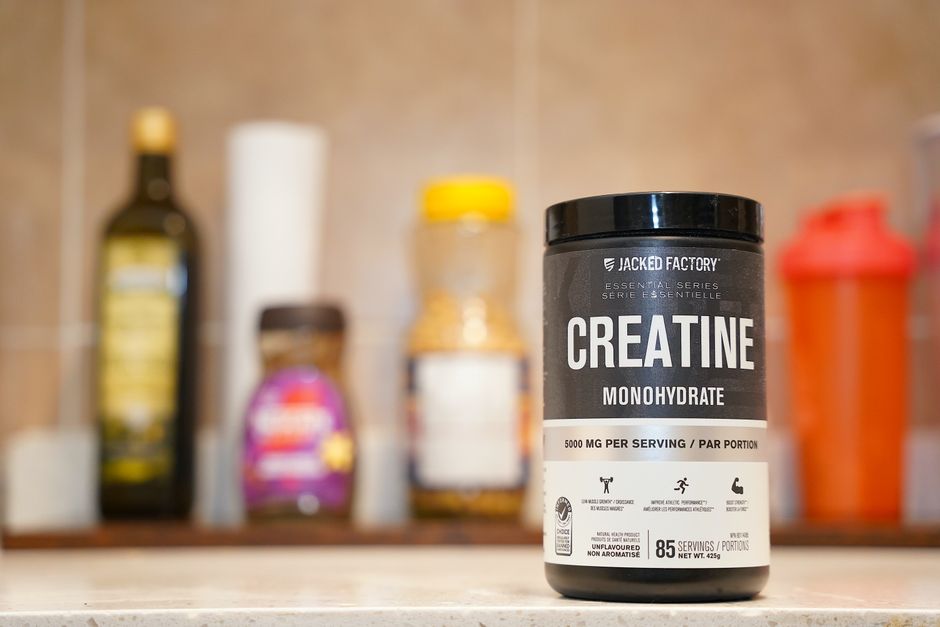
Creatine is not an essential amino acid. It is a nitrogen-containing compound made from three amino acids: arginine, glycine, and methionine. Your body produces it naturally, and you also get it from food, mostly red meat and seafood. The confusion makes sense because creatine is often grouped with amino acid supplements on store shelves. But chemically and functionally, it belongs to a different category.
What Exactly Is Creatine?
Creatine is a molecule your body makes in the liver, kidneys, and pancreas. About 95% of it is stored in skeletal muscle, and the rest is found in the brain and other tissues. In muscle, creatine exists mostly as phosphocreatine, which acts as a rapid reserve for regenerating ATP — the primary energy currency of your cells.
When you do short, intense work like sprinting or heavy lifting, your muscles use ATP quickly. Phosphocreatine donates a phosphate group to regenerate ATP, keeping you going for a few extra seconds. This is why creatine supplementation is well studied for strength and power athletes.
It is not a protein building block. Amino acids are the subunits that make proteins. Creatine does not fit into that role. It is better described as a derivative of amino acids or an amino acid metabolite.
What Makes an Amino Acid “Essential”?
An essential amino acid is one your body cannot make on its own. There are nine of them: histidine, isoleucine, leucine, lysine, methionine, phenylalanine, threonine, tryptophan, and valine. You must get these from food because your cells lack the enzymes to produce them.
The other 11 amino acids are called non-essential because your body can synthesize them from other molecules. Sometimes you will hear about “conditionally essential” amino acids, which means your body normally makes enough but may not in certain situations like illness or severe stress.
Creatine does not appear on either list. It is not required in the diet because your body can produce it — but it is also not an amino acid at all. It is a guanidino compound. This is a structural distinction, not a marketing one. The molecule simply has a different backbone than amino acids.
Is Creatine An Essential Amino Acid The Real Answer
The real answer is no. Creatine is not an essential amino acid, and it is not any kind of amino acid. It is a compound your body builds from amino acids, but it does not participate in protein synthesis. Calling it an amino acid is like calling a car a wheel because it has four of them.
This distinction matters for practical reasons. If you think of creatine as an amino acid, you may assume it behaves like one — that it helps build muscle protein directly. It does not. Creatine works by supporting energy production during exercise, which allows you to train harder. The muscle growth from creatine comes from improved training performance, not from the molecule itself being incorporated into muscle tissue.
Some supplement brands blur this line. They call creatine an “amino acid compound” or list it alongside branched-chain amino acids. This is not a lie, but it is misleading. Creatine is derived from amino acids, but it has its own distinct physiology.





How Is Creatine Different From Amino Acids?
Amino acids share a common structure: an amino group, a carboxyl group, and a side chain. Creatine does not have this arrangement. Its structure is more similar to compounds like guanidinoacetic acid, which is its immediate precursor in the body.
Functionally, the differences are clearer. Amino acids are used to build enzymes, hormones, and muscle tissue. Creatine is used for rapid energy regeneration. They are not interchangeable, and your body does not use creatine to make proteins.
The table below shows the key differences:
| Feature | Amino Acids | Creatine |
|---|---|---|
| Chemical class | Organic acids with amino group | Guanidino compound |
| Primary role | Protein building blocks | Energy regeneration |
| Essential in diet? | 9 are essential | Not essential |
| Made by the body? | Yes, for non-essential ones | Yes, from three amino acids |
| Stored in muscle? | Not stored in large amounts | Yes, about 95% in muscle |
Does Your Body Make Enough Creatine?
Your body produces about 1 to 2 grams of creatine per day. You also get roughly 1 to 2 grams from a typical diet that includes meat or fish. Vegans and vegetarians tend to have lower muscle creatine stores because they get little to no creatine from food. Their bodies still make it, but total levels may be lower.
This is why some research shows vegetarians respond more strongly to creatine supplementation. Their starting levels are lower, so the increase from supplementation is more noticeable. This does not mean vegetarians have a deficiency. It just means their baseline is different.
Your body regulates creatine levels tightly. When you take a supplement, your body reduces its own production to compensate. This is normal and not a cause for concern. When you stop supplementing, natural production returns to baseline over several weeks.
What Does Creatine Supplementation Actually Do?
Creatine monohydrate is the most studied sports supplement in history. Research consistently shows it improves performance in high-intensity, short-duration activities. This includes sprinting, weightlifting, and other explosive movements. The effect is modest but real — typically a 5% to 15% improvement in repeated sprint performance or strength output.
It also increases muscle water content, which can make muscles look fuller. This is not the same as muscle growth, but it contributes to the visible size increase some people notice. Over time, the ability to train harder translates into actual muscle protein synthesis.
Beyond sports, creatine has been studied for cognitive function, especially in sleep-deprived individuals and older adults. Some research suggests it may support brain energy metabolism. The evidence is promising but not as strong as the exercise performance data.
There is also ongoing research into creatine for conditions like sarcopenia (age-related muscle loss) and certain neurological disorders. Some studies show benefits, but clinical guidelines do not yet recommend creatine as a standard treatment for these conditions.
Is Creatine Safe?
Creatine is one of the most thoroughly studied supplements available. Decades of research have not found serious adverse effects in healthy people at recommended doses. The most common side effect is water retention, which is why some people see a quick weight gain of 2 to 4 pounds in the first week.
Gastrointestinal discomfort can occur, especially with large single doses. Taking creatine with food or splitting the dose throughout the day often helps. Some people experience no side effects at all.
The old concern about kidney damage has not been supported by research in healthy individuals. However, people with pre-existing kidney disease should not take creatine without medical supervision. If you have any kidney condition, talk to your doctor first.
No clinical guidelines exist for creatine use in pregnant or breastfeeding women. The research is simply not there. If you are pregnant or nursing, do not take creatine supplements.
How Much Creatine Should You Take?
The most common dosing strategy is a loading phase of 20 grams per day for 5 to 7 days, followed by a maintenance dose of 3 to 5 grams per day. Some people skip the loading phase and just take 3 to 5 grams daily. This works, but it takes longer — about 3 to 4 weeks — to saturate muscle stores.
These doses come from clinical research and are well established. Taking more than this does not provide additional benefit. Your muscles have a saturation point, and excess creatine is simply excreted in urine.
Timing does not seem to matter much. Some research suggests taking creatine near your workout is slightly better, but the difference is small. Consistency matters more than timing. Daily use is what saturates muscle stores.
Common Myths About Creatine
One persistent myth is that creatine is a steroid. It is not. Creatine is a natural compound found in food and made by your body. It works through a completely different mechanism than anabolic steroids.
Another myth is that creatine causes cramping or dehydration. Research has not supported this. Some studies actually suggest creatine may help reduce cramping by improving cellular hydration. The evidence is not definitive, but the idea that creatine causes cramps is not supported by data.
There is also confusion about creatine and hair loss. Some older studies hinted at a possible link, but more recent and better-designed research has not confirmed this. The evidence is too weak to draw conclusions. If you are concerned, the reasonable position is that no clinical evidence currently confirms this link.
Who Should Consider Creatine?
People doing regular high-intensity exercise are the clearest candidates. If you lift weights, sprint, play sports that require bursts of speed, or do CrossFit-style training, creatine may improve your performance. The effect is consistent across studies and populations.
Older adults may also benefit. Age-related muscle loss responds to resistance training, and creatine may enhance the effects of that training. Some research supports this combination, though results vary.
Vegans and vegetarians often see larger benefits because their baseline creatine levels are lower. If you eat no animal products, creatine supplementation is more likely to move your levels meaningfully.
If you do not exercise, creatine will not do much for you. It is not a general health tonic. It supports energy systems that you only stress during intense activity.
Frequently Asked Questions
Is creatine a protein?
No. Creatine is not a protein and does not help build protein directly. It supports energy production during exercise, which allows you to train harder and build more muscle over time.
Can I take creatine with amino acid supplements?
Yes. Creatine and amino acid supplements work through different mechanisms and do not interfere with each other. Many products combine them, though taking them separately is equally effective.
Do I need to cycle creatine?
No. Continuous use of 3 to 5 grams per day is safe and effective. Cycling is not necessary and provides no additional benefit.
Is creatine safe for women?
Yes. Creatine is safe for healthy women at recommended doses. It does not cause masculinization, and research shows similar performance benefits to those seen in men.
