
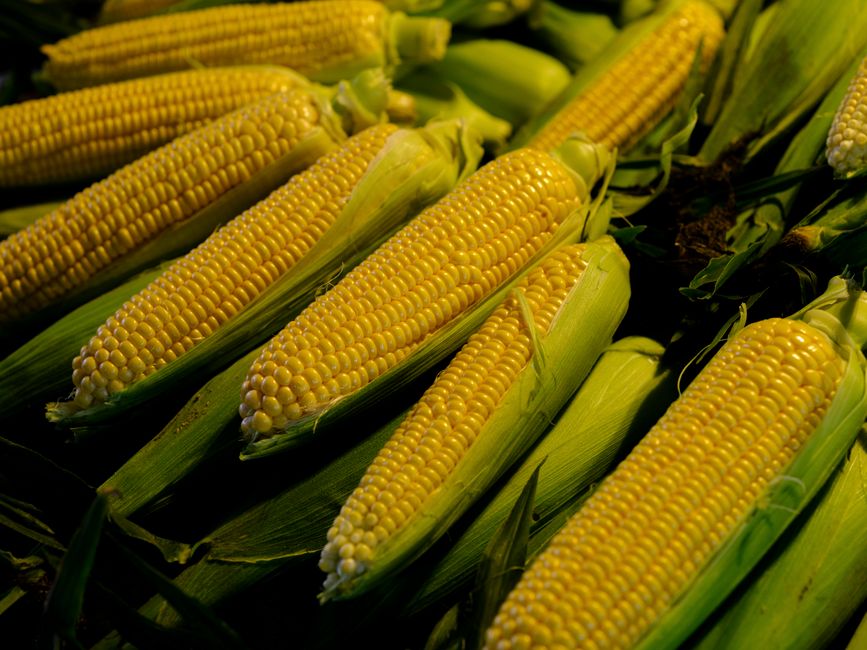
Corn on the cob is not inherently fattening. A medium ear of sweet corn has roughly 90 calories, about 3 grams of fiber, and only about 1 gram of fat. The corn itself is not what drives weight gain. What you put on it, and how much of it you eat, matters far more.
That answer surprises some people. Corn has a reputation problem. It gets lumped in with white bread, chips, and soda as a “bad carb.” But plain corn on the cob and a bag of corn chips are not the same food. One is a whole vegetable with fiber and water. The other is a processed product with added fat and salt.
Is Corn On The Cob Fattening?
No. Weight gain comes from eating more calories than your body uses over time. A single food does not cause it.
Sweet corn is a starchy vegetable. That means it carries more carbohydrate than, say, broccoli or spinach. One medium ear delivers about 90 calories and around 19 grams of carbohydrate. Most of that is starch, with a few grams of natural sugar.
Those numbers are modest. For comparison, a single slice of white bread is roughly 80 calories. A can of regular soda is about 150 calories with no fiber and no nutrients. Corn on the cob sits comfortably in the middle of the pack — not a diet food, not a problem food.
Here is the part that often gets missed. Corn is a whole food. The kernel keeps its fiber, its water content, and its natural structure. That combination affects how full you feel and how quickly your blood sugar rises. A whole ear behaves differently in your body than corn flour or corn syrup.
How Many Calories Are in Corn On The Cob?
A medium ear of sweet corn — about 6 to 7 inches long — contains roughly 90 calories. A large ear runs closer to 120 to 130 calories. These figures come from standard USDA nutrient data for cooked yellow sweet corn.
Most of the calories come from carbohydrate. Protein and fat make up a small share. That is normal for a starchy vegetable.
What changes the math is the topping. This is where corn gets its unfair reputation.
- One tablespoon of butter adds about 100 calories.
- Two tablespoons of butter adds about 200 calories — more than doubling the ear.
- Mayonnaise, cheese sauce, and flavored butter blends can add even more.
So a plain ear at 90 calories and a butter-loaded ear at 290 calories are the same corn. The difference is entirely in what went on top. If you are watching calories, the corn is rarely the issue.
Does Corn Raise Blood Sugar?
Corn does raise blood sugar, but moderately compared with refined starches. Sweet corn has a glycemic index in the moderate range, lower than white rice, white bread, or instant mashed potatoes.
Fiber and water slow the release of glucose into the bloodstream. A whole kernel still has its fiber attached. That is one reason whole corn behaves better than corn products stripped of their bran and germ.
This matters most for people with diabetes or prediabetes. For them, portion size and what else is on the plate matter more than whether corn is “allowed.” Corn is a carbohydrate, so it counts toward carbohydrate intake the same way rice or potatoes do. Pairing it with protein or fat — say, alongside chicken or beans — tends to blunt the blood sugar spike compared with eating it alone.
For people without blood sugar concerns, the moderate glycemic effect of a single ear is not a meaningful worry.




Why Does Corn Have a Reputation for Weight Gain?
Corn’s bad name comes from three places, and none of them are the cob.
The first is processed corn. High-fructose corn syrup, corn chips, corn dogs, and heavily sweetened corn products are common in ultra-processed foods. Those foods are linked to weight gain in large population studies. But the culprit is the processing, the added fat, and the added sugar — not the corn plant.
The second is corn-fed livestock. Most beef and dairy cattle in the US eat corn. Some people extend that to mean corn makes you fat too. That is a leap. The biology of a cow gaining weight on a high-energy grain diet does not transfer to a human eating one ear at a picnic.
The third is the low-carb era. Corn got swept up in the broad “avoid starches” messaging of the early 2000s. That framing treated all carbohydrates as equal. Modern nutrition research does not support that. Whole-food carbohydrates like corn, beans, and potatoes behave very differently from refined ones.
Is Corn Good for You?
Sweet corn offers real nutritional value. A single ear provides a few grams of fiber, plus vitamin C, several B vitamins, and minerals including magnesium and potassium. Yellow corn also contains lutein and zeaxanthin, two carotenoids that concentrate in the eye and are associated with eye health.
It is worth being precise here. Corn is nutritious, but it is not a nutritional powerhouse the way leafy greens or legumes are. It sits in the starchy vegetable category alongside peas and potatoes. That category is part of a healthy diet, but it is not the same as the non-starchy vegetable group.
One clarification that rarely gets made: corn is a whole grain. Botanically it is a grain, not a vegetable, even though it is eaten and classified as a starchy vegetable in dietary guidance. That means it can count toward whole grain intake, which is a point in its favor.
How Should Corn Fit Into a Weight-Conscious Diet?
Treat corn on the cob as what it is: a starchy carbohydrate, similar to a potato or a serving of rice. Build your plate so that non-starchy vegetables take up a larger share, and let corn fill the starch slot.
Practical approaches that align with general dietary guidance:
- Keep portions to one ear rather than two or three.
- Go light on butter, or use a measured amount instead of pouring.
- Try herbs, lime, chili powder, or a small amount of olive oil for flavor.
- Pair corn with protein — grilled chicken, fish, beans, or tofu — to stay full longer.
- Choose whole corn over corn chips, cornbread, or sweetened corn products.
None of this is a rule. It is simply how corn tends to fit into a diet that manages calories without cutting out foods people enjoy.
Does Corn Cause Belly Fat Specifically?
No single food targets belly fat. Where your body stores fat is driven mostly by genetics, hormones, overall calorie balance, and activity level — not by one vegetable.
Visceral fat, the fat around the organs, is more strongly linked to overall energy imbalance, alcohol intake, and physical inactivity than to any specific food. Cutting corn will not spot-reduce your waist. Reducing total excess calories and moving more is what shifts it.
If anything, filling up on fiber-rich whole foods like corn can help you eat less overall, because fiber and water add volume without adding many calories. That is a general pattern seen across whole-food diets, not a special property of corn.
What About Corn Syrup and Corn Starch?
These are different products and should not be confused with corn on the cob.
High-fructose corn syrup is a sweetener made from corn starch through industrial processing. It is roughly half fructose and half glucose, similar in composition to table sugar. Research on whether it is uniquely harmful compared with regular sugar is mixed. The stronger and more consistent finding is that high intakes of added sugar from any source are linked to weight gain and metabolic problems.
Corn starch is a refined powder used as a thickener. It has almost no fiber, vitamins, or minerals. It behaves much more like white flour than like a whole ear of corn.
The takeaway is straightforward. Whole corn and refined corn products share a name and little else. Judging corn on the cob by the reputation of corn syrup is like judging an apple by the reputation of apple juice concentrate.
Frequently Asked Questions
Is corn on the cob fattening?
No, plain corn on the cob is not fattening on its own. A medium ear has about 90 calories and roughly 3 grams of fiber, and weight gain depends on total calories over time, not one food.
How many calories are in an ear of corn with butter?
A plain medium ear has about 90 calories, and each tablespoon of butter adds roughly 100 more. So one ear with two tablespoons of butter lands near 290 calories.
Is corn a carb or a vegetable?
Botanically corn is a grain, and nutritionally it is classified as a starchy vegetable. Either way, it counts as a carbohydrate source in your diet, similar to potatoes or rice.
Can you eat corn on the cob on a diet?
Yes, corn can fit into a weight-conscious diet as your starch serving. Keep portions to about one ear and go easy on butter or creamy toppings, which are the main calorie sources.
