
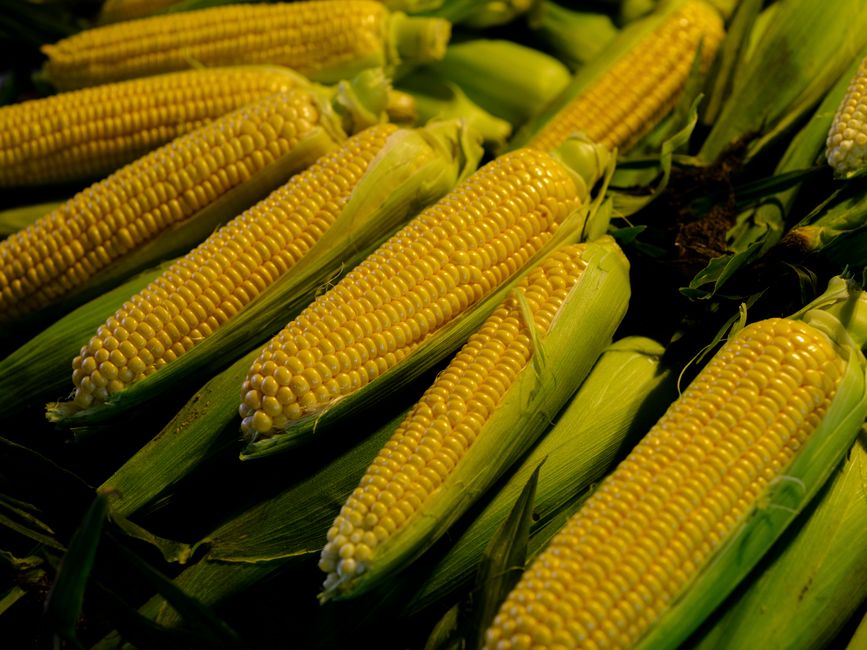
Yes, you digest corn — but not all of it. The yellow outer shell of a corn kernel is made of cellulose, a fiber humans cannot break down because we lack the enzyme to do it. That shell passes through your digestive tract largely intact and shows up in your stool looking much like it did on your plate.
The inside of the kernel is a different story. The starchy interior is digested and absorbed normally, just like the starch in potatoes or rice. So when you see whole corn in the toilet, you are looking at the shell that did its job — carrying fiber through your gut — not evidence that corn went to waste.
This is one of the most misunderstood everyday facts about digestion. Corn is not “indigestible.” Only part of it is.
Why Does Corn Come Out Looking the Same?
The hard outer layer of a corn kernel is called the pericarp. It is built mostly of cellulose and other structural fibers. Human digestive enzymes — amylase, protease, lipase — cannot break cellulose down. Neither can your stomach acid.
That is not a flaw. It is how dietary fiber works. Cellulose from corn, wheat bran, vegetables, and fruit all travel through the small intestine without being absorbed. They reach the colon, where some are fermented by gut bacteria and the rest is excreted.
What makes corn stand out is its shape. A kernel’s shell is tough enough to survive the trip and distinctive enough that you recognize it. Lettuce stems, tomato skins, and grape skins also pass through partially intact. You just do not notice them the same way.
Here is the part most people miss: the bright yellow color you see is not the shell itself. It is the inner kernel — the endosperm and germ — that got squeezed out through the chewed or broken shell. The shell is actually pale and translucent. So when you spot corn in your stool, you are seeing an empty fiber husk, not an undigested whole kernel.
What Part of Corn Do You Actually Digest?
The starchy interior of the kernel is highly digestible. Once chewing cracks the outer shell, digestive enzymes in the small intestine get to work on the starch and break it into glucose, which your body absorbs for energy.
Corn also supplies several nutrients your body does use:
- Starch, which converts to glucose for energy
- B vitamins, including thiamin and niacin
- Vitamin C in fresh corn (levels drop with processing and storage)
- Magnesium and potassium
- Carotenoids such as lutein and zeaxanthin
- Some plant protein
Sweet corn eaten fresh is nutritionally different from field corn made into tortillas, chips, or high-fructose corn syrup. Fresh sweet corn retains more water, sugar, and vitamin C. Dried and processed corn keeps the starch and much of the fiber but loses some heat-sensitive vitamins.
So the answer to “do you digest corn” splits cleanly: you digest the inside and pass the outside.
Does Chewing Make a Difference?
Chewing is the main variable you control. Every kernel you crack open releases starch that your gut can absorb. Whole kernels that slip down unbroken stay mostly sealed, so more of the interior escapes digestion too.
This is a mechanical issue, not a sign of a weak digestive system. Someone with perfectly healthy digestion will still pass intact shells if they swallow kernels whole. People who chew corn thoroughly tend to see less of it later.
There is also a processing effect. Masa, the dough used for tortillas, is made by soaking corn in an alkaline solution — a process called nixtamalization. This softens the pericarp and makes the kernel easier to break down. That is one reason you rarely notice whole corn in your stool after eating tortillas. It is also why nixtamalized corn is more nutritionally available: the process frees up niacin and improves protein quality.
Is Seeing Corn in Your Stool a Problem?
No. Passing corn shells is normal and does not mean your digestion is broken.
It can be a useful clue, though. If you suddenly see a lot of recognizable food in your stool — not just corn — that may point to fast transit time, meaning food is moving through your gut too quickly for full digestion. That can happen with a short-lived stomach bug or other causes of diarrhea.
What matters more than corn itself is what else is going on:
- Persistent diarrhea lasting more than a few days
- Blood or mucus in the stool
- Unintended weight loss
- Ongoing abdominal pain or cramping
- Greasy, floating stools that are hard to flush
Any of those warrant a conversation with a doctor. Corn alone does not.
One caution: if you have a condition that requires a low-fiber diet — such as certain phases of inflammatory bowel disease, or before a colonoscopy — whole corn kernels are typically restricted. That is a clinical instruction, not a general rule. Follow your care team’s guidance rather than applying it broadly.
Is Corn Hard to Digest Compared to Other Foods?
Corn is not uniquely difficult. Many plant foods contain parts humans cannot digest, and that is by design.
The table below compares how different parts of common foods behave in the human gut. Values describe general digestive behavior, not exact percentages.
| Food component | Digested by human enzymes? | What happens |
|---|---|---|
| Corn starch (inner kernel) | Yes | Broken into glucose and absorbed |
| Corn pericarp (outer shell) | No | Passes through as fiber; may be partly fermented in colon |
| Wheat bran | No | Passes through as fiber |
| Tomato and grape skins | No | Pass through as fiber |
| Potato starch | Yes | Broken into glucose and absorbed |
| Lactose (milk sugar) | Only if lactase enzyme is present | Without lactase, fermented by gut bacteria causing gas |
Notice the last row. Lactose intolerance is a true enzyme deficiency. Corn is not. Nobody lacks a “corn enzyme.” The fiber in corn is simply built from a material human enzymes were never designed to break, and that is true for every person on earth.
Does Corn Cause Digestive Symptoms?
For most people, corn causes no symptoms. But it can be a trigger for some.
Corn contains fermentable fibers and, in some people, can contribute to gas and bloating. This falls under the broader category of FODMAPs — fermentable carbohydrates that some people with irritable bowel syndrome react to. Corn appears on some low-FODMAP lists in limited amounts, though the details depend on the type and serving size.
Corn is also one of the more common food allergens, though true corn allergy is far less common than allergies to milk, eggs, peanuts, tree nuts, soy, wheat, fish, and shellfish. Corn allergy symptoms can include hives, itching, or in rare cases a more serious reaction. If you suspect a corn allergy, that is a medical question, not a self-diagnosis.
Corn that has been highly processed — high-fructose corn syrup, cornstarch, corn oil — behaves differently from whole kernels. Those are refined ingredients rather than the fibrous whole food, so the “indigestible shell” story does not apply.
What Does the Research Actually Show?
The core facts here are textbook physiology, not contested science. Human digestive enzymes do not include cellulase, the enzyme that breaks cellulose down. That is established.
Where research adds nuance is in what happens to corn fiber in the colon. Some cellulose and other corn fibers are fermented by gut bacteria into short-chain fatty acids, which the colon lining uses for energy. So “indigestible” is not quite the whole picture — part of that shell feeds your gut bacteria even though your own enzymes cannot touch it.
Research on nixtamalization is well documented. Soaking corn in an alkaline solution improves the availability of niacin and certain amino acids, which is why the process spread across Mesoamerica and remains standard for tortilla production today. It also makes the kernel easier to break down, which is why processed corn products are less likely to show up recognizably in stool.
What research does not support is the idea that corn is inherently bad for digestion or that it “passes right through you” without providing nutrition. The starch, vitamins, and minerals are absorbed. Only the shell is not.
Frequently Asked Questions
Do you digest corn at all?
Yes. You digest the starchy inside of the kernel and absorb its nutrients. Only the outer shell, made of cellulose, passes through undigested.
Why does corn come out whole in poop?
The outer shell is made of cellulose, which human digestive enzymes cannot break down. It passes through as fiber and shows up looking much like it did when you ate it.
Is it bad if I see corn in my stool?
No, it is normal and not a sign of poor digestion. It only becomes worth mentioning to a doctor if it comes with diarrhea, blood in the stool, weight loss, or ongoing pain.
Does chewing corn help you digest it?
Yes. Chewing cracks the outer shell, which lets digestive enzymes reach the starch inside. Kernels swallowed whole stay sealed and pass through more intact.
