
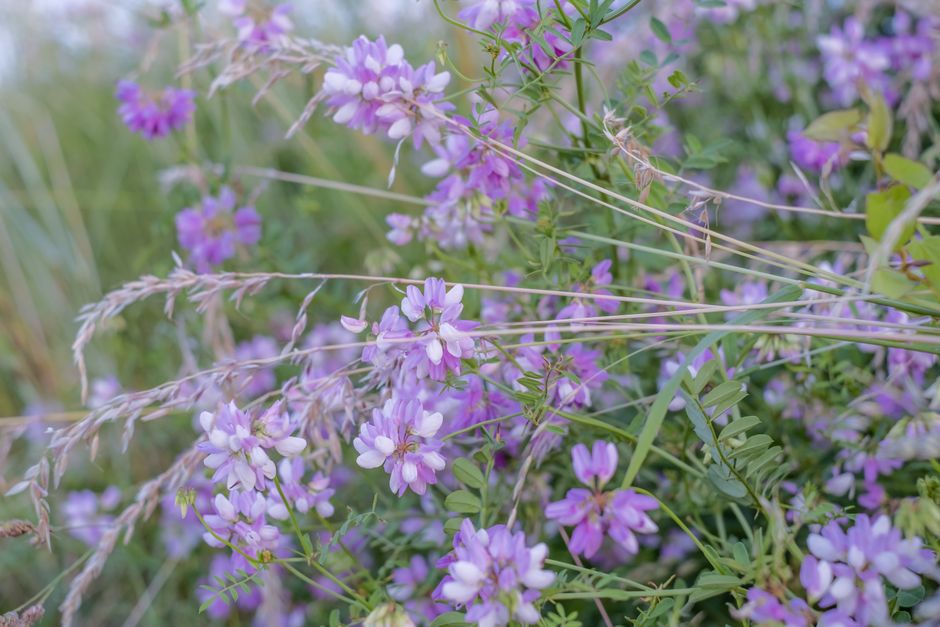
Common vetch (Vicia sativa) is edible for some animals but not safe for people to eat in any meaningful quantity. The seeds contain compounds that can cause serious poisoning in humans, and no established culinary tradition treats this plant as a human food. If you are asking whether you can forage or grow common vetch and eat it, the honest answer is no — this is a livestock forage crop, not a people food.
That answer surprises many people because vetch shows up in seed catalogs, cover crop guides, and permaculture forums. It is a useful plant. It fixes nitrogen in soil, feeds cattle and sheep, and grows aggressively in poor conditions. None of that makes it safe on your dinner plate. The confusion usually comes from mixing up common vetch with its relatives — some of which are eaten by humans, and some of which are not.
What Is Common Vetch and Why Do People Ask About Eating It?
Common vetch is a climbing legume in the same broad family as peas, beans, and lentils. Farmers plant it as a cover crop and as hay or silage for ruminant animals. It has purple or white flowers, curling tendrils, and small seed pods that look a little like tiny pea pods. That resemblance is exactly what gets people into trouble.
The plant has been grown for animal feed for thousands of years, especially in Mediterranean and Middle Eastern agriculture. It tolerates poor soil and cold weather, which made it valuable long before synthetic fertilizers existed. Its role has always been agricultural, not culinary.
People search for “is common vetch edible” for a few reasons. Some find it growing wild and wonder if it is a free food source. Others read that certain vetch species are eaten in some cultures and assume all vetch is the same. A third group sees it sold as “vetch” in seed mixes and assumes anything sold as seed must be food-grade.
None of those assumptions hold up. The genus Vicia contains dozens of species with very different toxicity profiles, and common vetch sits firmly on the “do not eat” side for humans.
Is Common Vetch Edible How To Eat It Safely — What Does the Evidence Actually Say?
There is no safe way to eat common vetch seeds as a regular food. The seeds contain compounds that can trigger a neurological condition called lathyrism when consumed in sufficient amounts over time, and they can also cause acute digestive and neurological symptoms.
The toxic compounds in vetch are broadly grouped as lathyrogens, with a substance called beta-ODAP (also written as ODAP) being one of the most studied. This compound affects motor neurons in the spinal cord. It does not cause immediate poisoning the way some plant toxins do. Instead, it damages nerves over weeks or months of repeated exposure, leading to progressive weakness and stiffness in the legs.
Lathyrism from vetch and related legumes is not a theoretical concern. It has been documented in human populations during food shortages, when people were forced to rely on vetch or grass pea as a staple because nothing else was available. That history is well established in medical literature. It is also the reason vetch is not considered a human food crop in any modern food system.
Some vetch species, including grass pea (Lathyrus sativus), are eaten in certain regions under careful processing and with awareness of the risk. Common vetch is not one of them. Even where grass pea is consumed, it is recognized as a food of last resort with known neurological risk, not a safe everyday staple.
So when someone asks how to eat common vetch safely, the accurate answer is that there is no established safe method for human consumption. Boiling, soaking, or fermenting may reduce some compounds, but no reliable home method has been shown to eliminate the risk entirely. Presenting any home processing method as safe would be irresponsible.
What Happens If a Person Eats Common Vetch?
The effects depend on how much was eaten, how often, and whether it was seeds, pods, or leaves. A single small taste is unlikely to cause lasting harm in a healthy adult, but that is not the same as saying it is safe.
Short-term exposure to vetch seeds can cause:
- Nausea and vomiting
- Abdominal cramping and diarrhea
- Headache
- Weakness or dizziness
Longer-term or repeated exposure is where the serious risk lies. The neurological damage from lathyrogens builds slowly. Early signs include leg weakness, a stiff or unsteady gait, and muscle cramps. Over time, this can progress to spastic paralysis of the lower limbs — meaning the legs become rigid and difficult to control. In documented outbreaks, this damage has often been permanent.
Children and malnourished people appear to be more vulnerable. That pattern has been observed in historical lathyrism outbreaks, though the reasons are not fully understood. It may relate to a developing nervous system, lower body weight relative to dose, or underlying nutritional deficiencies that offer less protection.
If you or someone else has eaten common vetch and develops vomiting, weakness, or unusual leg symptoms, contact a poison control center or seek medical care. Do not wait to see if symptoms pass. Bring a sample or photo of the plant if you can — it helps clinicians identify what was consumed.




Why Is Common Vetch Safe for Animals but Not for People?
This is one of the most common sources of confusion, and the answer is genuinely interesting. Ruminant animals like cattle and sheep have a digestive system that humans do not.
Cattle, sheep, and goats have a four-chambered stomach with a large fermentation chamber called the rumen. The rumen is packed with microbes that break down plant compounds humans cannot handle. Those microbes can detoxify or partially neutralize some of the compounds in vetch. The animal then absorbs what remains over a slower, more controlled process.
Humans have a single-chambered stomach and a different set of digestive enzymes. We cannot rely on microbial fermentation to break down lathyrogens the way a cow can. What a ruminant tolerates in its feed is not a guide to what a human can safely eat. This same principle applies to many plants — acorns, for example, are a staple for some wildlife but require extensive processing before people can eat them.
Even for livestock, vetch is not risk-free. Vetch seeds can cause toxicity in cattle, sheep, and horses when they make up too much of the diet, particularly in young or pregnant animals. Farmers manage this by limiting inclusion rates and monitoring their herds. The fact that it is used as feed does not mean it is harmless — it means the dose and the animal’s biology are managed carefully.
Common Vetch vs. Other Vetch Species People Actually Eat
The word “vetch” covers a lot of ground, and this is where most of the confusion starts. Some species are eaten by humans. Others are strictly animal feed or entirely toxic.
| Species | Human Edibility | Notes |
|---|---|---|
| Common vetch (Vicia sativa) | Not safe for humans | Contains lathyrogens; livestock forage only |
| Hairy vetch (Vicia villosa) | Not safe for humans | Cover crop; can be toxic to livestock in large amounts |
| Grass pea (Lathyrus sativus) | Eaten in some regions, with known risk | Linked to lathyrism; food of last resort, not a safe staple |
| Broad bean / fava (Vicia faba) | Edible when cooked | Unsafe for people with G6PD deficiency |
| Tuberous vetch (Lathyrus tuberosus) | Edible tubers | Roots historically eaten in parts of Europe |
Notice that the edible options in this table are either different species entirely or require specific conditions. Broad beans are a genuine food, but they carry their own risk for people with a genetic condition called G6PD deficiency, where eating them can trigger a dangerous breakdown of red blood cells. Grass pea is eaten in some parts of the world, but always with awareness of the lathyrism risk and usually as a survival food rather than a preferred one.
If you are foraging and you are not certain which vetch species you are looking at, do not eat it. Species identification from leaves and flowers alone can be genuinely difficult, and the consequences of getting it wrong are serious.
How Can You Tell Common Vetch Apart From Edible Legumes?
You often cannot, and that is the real problem. Common vetch looks like a lot of other small climbing legumes, including some that are safe to eat and some that are not. Field guides help, but they are not foolproof, especially for non-experts.
Common vetch typically has:
- Compound leaves with several pairs of narrow leaflets
- Curling tendrils at the end of each leaf
- Purple, pink, or white pea-like flowers
- Small pods, usually 3–6 cm long, holding several round seeds
The trouble is that wild peas, sweet peas, and other legumes share most of these features. Sweet pea, for example, is toxic and looks very similar. Relying on appearance alone to decide whether something is edible is how people end up in emergency rooms.
A safer approach is to learn a small number of unmistakable wild edibles and stick to those. If you want to forage legumes specifically, get guidance from a local expert or a foraging group familiar with your region. Do not use an app to make a life-or-death call on a plant you plan to eat.
What About Vetch in Supplements or Herbal Products?
Some herbal traditions use vetch species, and a few products marketed online claim vetch offers health benefits. There is no solid clinical evidence supporting these claims for common vetch.
When you see vetch in a supplement, check which species it actually is. Many products are vague about this, and some use names interchangeably. Without knowing the species, the dose, and the processing method, it is impossible to assess safety. No regulatory body has approved common vetch as a supplement ingredient for human consumption in the United States.
If a product claims vetch “supports” this or “promotes” that, treat it as marketing until you see real human trial data. Vague wellness language is not evidence.
The Bottom Line on Common Vetch
Common vetch is a valuable agricultural plant and a poor choice for your plate. Its seeds contain compounds linked to a serious, sometimes permanent neurological condition. Animals with specialized digestive systems can handle it in managed amounts. Humans cannot.
If you came here hoping for a safe preparation method, the accurate answer is that none has been established. Boiling, soaking, or fermenting may reduce some toxins, but no reliable home method has been shown to remove the risk entirely. That is not a cautious hedge — it is what the evidence supports.
If you are looking for a wild legume to eat, look elsewhere. If you are growing vetch as a cover crop, keep it in the soil and out of the kitchen. And if you have already eaten some and feel unwell, contact a poison control center or seek medical care right away.
Frequently Asked Questions
Can you eat common vetch seeds?
No. Common vetch seeds contain lathyrogens that can cause a serious neurological condition called lathyrism when eaten repeatedly. There is no established safe method for preparing them as human food.
Is common vetch the same as grass pea?
No. They are different species, though both belong to the legume family and both carry lathyrism risk. Grass pea is eaten in some regions as a food of last resort, while common vetch is not considered a human food at all.
What happens if a person eats common vetch?
A small taste may cause nausea, cramping, or diarrhea, while repeated exposure can lead to progressive leg weakness and stiffness. If you develop these symptoms after eating it, seek medical care or contact a poison control center.
Is common vetch safe for pets or livestock?
Ruminants like cattle and sheep can tolerate managed amounts because their digestive systems break down some of the toxic compounds. Even for them, vetch can cause poisoning if it makes up too much of the diet, especially in young or pregnant animals.
