
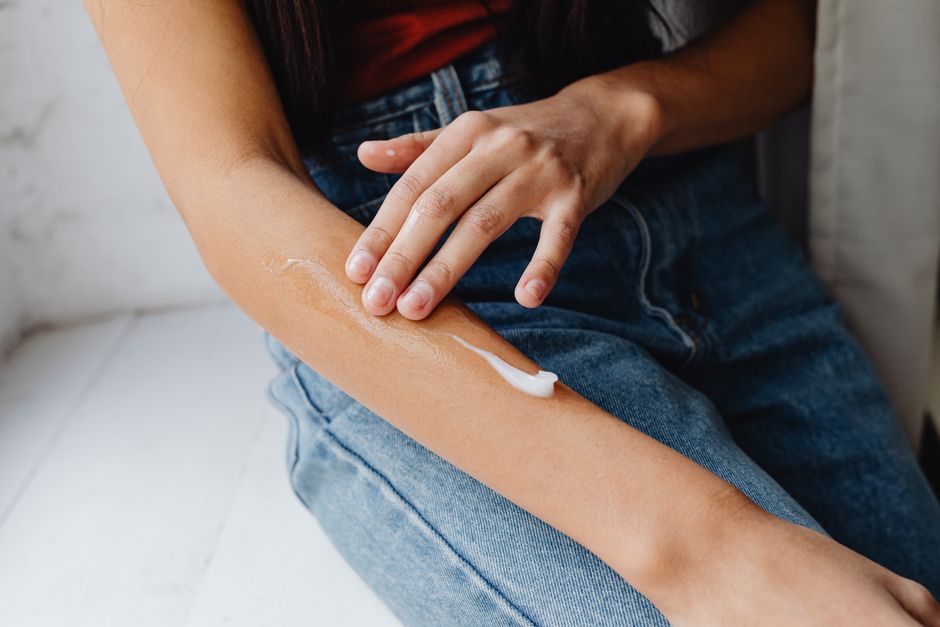
L-arginine is an amino acid your body uses to make nitric oxide, a molecule that helps blood vessels relax. Some people want to apply it to their skin in a cream, hoping to boost circulation or support wound healing. Making a safe, stable, and effective cream at home is harder than most online recipes suggest — and in some cases, it is not a good idea at all.
The short answer: you can mix L-arginine powder into a plain, fragrance-free moisturizer for personal use, but you cannot reliably control the dose, the pH, or bacterial contamination without lab equipment. There are no established guidelines for making this at home, and no strong human evidence that a homemade version does anything useful for your skin. If you have a wound, a skin condition, or poor circulation, that is a medical issue, not a DIY project.
What Does L-Arginine Actually Do In The Body?
L-arginine is a building block for proteins. It is also the raw material your body uses to produce nitric oxide, a gas that signals blood vessels to widen. This is well established physiology.
That vessel-widening effect is why L-arginine gets attention. When blood flow increases, more oxygen and nutrients reach tissues. In theory, that could help with wound healing, skin repair, and circulation problems.
But there is a gap between theory and results. Most of the research on L-arginine and blood flow involves oral supplements, not creams. Studies on oral L-arginine for cardiovascular conditions have produced mixed results, and even the positive findings do not automatically apply to a cream rubbed on your arm.
For skin specifically, the evidence is thin. A small number of studies have looked at L-arginine in wound-care products, often combined with other ingredients. These are not the same as a homemade cream, and they do not prove that DIY versions work.
Can L-Arginine Even Get Through Your Skin?
This is the question most homemade cream recipes skip entirely. Your skin is designed to keep things out.
The outer layer of skin, the stratum corneum, is a barrier of dead cells and lipids. Water-soluble molecules like L-arginine pass through it poorly. L-arginine is a charged, water-loving molecule, which makes it a bad candidate for skin absorption on its own.
Cosmetic chemists use delivery systems — liposomes, encapsulation, penetration enhancers — to push water-soluble ingredients deeper. A spoonful of powder stirred into lotion does none of this.
Some research suggests L-arginine can affect the skin’s surface when applied topically, possibly by interacting with enzymes in the outer skin layers. But how much reaches deeper tissue, and whether that produces any meaningful benefit, is not well established.
This is the honest position: no clinical evidence currently confirms that a homemade L-arginine cream delivers enough of the amino acid to change blood flow or speed healing in human skin.
How To Make L Arginine Cream At Home Safely
There is no standard recipe because there is no established safe or effective formulation. What follows describes what people commonly do, along with the real limitations. This is not a recommendation.
The basic approach is to combine L-arginine powder with a plain, unscented base cream or lotion. A common starting point is a small amount of powder — often described as roughly 1 to 2 grams — mixed into about 30 grams of base. There is no clinical guideline that establishes this as a correct or safe dose for skin. It is simply a ratio some people use.
Steps people follow:
- Choose a fragrance-free, preservative-containing base cream. Preservatives matter — they prevent mold and bacteria from growing in your jar.
- Weigh the powder with a kitchen scale that measures grams.
- Mix thoroughly until no clumps remain.
- Store in a clean, small container in a cool place, away from direct sunlight.
- Make small batches. Homemade creams have a short shelf life.
The biggest safety problem is contamination. The moment you open a jar of cream and dip into it, you introduce microbes. Commercial creams are made in sterile conditions with tested preservative systems. Your kitchen is not.
Signs a homemade cream has gone bad include a changed smell, separation, discoloration, or visible mold. Throw it out. Do not try to scoop off the top layer.





What Are The Risks Of DIY L-Arginine Cream?
The risks are real and mostly preventable. Knowing them is more useful than any recipe.
Infection. A contaminated cream applied to broken skin can cause a skin infection. This is the most serious concern.
Irritation and allergic reaction. L-arginine can irritate skin in some people. So can the base cream. Patch-test on a small area of your inner forearm and wait 24 hours before using it more widely.
Unpredictable dosing. You cannot know how much L-arginine is in each dab of cream. Mixing may not be uniform, so one application could contain far more or less than another.
Drug interactions. L-arginine can affect blood pressure and blood sugar. If you take medication for either, or take blood thinners, topical use is unlikely to cause the same effects as swallowing it — but the evidence is limited, and this has not been well studied.
Masking a real problem. If you are using a cream to treat a wound, a diabetic foot sore, or a circulation problem, you may delay proper medical care. That delay can cost you.
Who Should Not Try This?
Some people should skip this entirely. The risk is not worth any theoretical benefit.
- Anyone with an open wound, ulcer, or surgical incision
- People with diabetes, especially with foot sores or poor circulation
- People with eczema, psoriasis, or other active skin conditions
- Anyone taking blood pressure medication, blood thinners, or diabetes medication — check with a clinician first
- Pregnant or breastfeeding women — no clinical guidelines exist for topical L-arginine in these groups
- Children — no clinical guidelines exist for topical L-arginine in children
If you fall into any of these groups, talk to a doctor or pharmacist before putting anything homemade on your skin.
Are There Better Options Than A Homemade Cream?
If your goal is skin health or wound healing, there are approaches with more evidence behind them.
For general skin care, a plain moisturizer does most of the work. Keeping skin hydrated supports its barrier function. You do not need a special amino acid for that.
For wound healing, the evidence supports keeping wounds clean, moist, and protected. Medical dressings and clinician-guided care outperform anything you can mix in a kitchen.
For circulation problems, the fix is not a cream. It is diagnosing and treating the underlying cause with a clinician.
If you specifically want to try L-arginine, commercial topical products exist. They are made under controlled conditions with tested stability and preservation. Whether they work is a separate question — but at least they are not a contamination risk.
Oral L-arginine is another route, but it comes with its own issues. It can lower blood pressure, interact with medications, and cause stomach upset. It is not a casual supplement, and it should be discussed with a clinician.
Does Homemade L-Arginine Cream Actually Work?
No clinical evidence currently confirms that it does. That is the direct answer.
There is a plausible mechanism — L-arginine feeds nitric oxide production, and nitric oxide affects blood flow. But biological plausibility is not the same as demonstrated benefit. Many things that should work in theory fail in real human testing.
The studies that do exist on topical L-arginine use formulated products, often with other ingredients and delivery systems. They do not tell us anything reliable about a homemade cream.
If you make one anyway, go in with clear eyes. You are running a personal experiment with no data to guide you. Keep batches small, watch for irritation, and stop at the first sign of a problem.
Frequently Asked Questions
Is homemade L-arginine cream safe to use on my face?
It carries real risks, mainly bacterial contamination and irritation, because you cannot control sterility or dose at home. Patch-test first, and avoid it entirely if you have sensitive or broken skin.
How much L-arginine powder should I mix into a cream?
No clinical guideline establishes a correct amount for topical use, so any ratio you see online is not evidence-based. Common homemade recipes use roughly 1 to 2 grams per 30 grams of base, but this is not a validated dose.
Can L-arginine cream help with wound healing?
No strong human evidence shows that a homemade L-arginine cream speeds wound healing. Wounds need proper cleaning, moisture control, and medical care when serious.
What are the side effects of topical L-arginine?
Reported effects include skin irritation, redness, and allergic reactions in some people. A contaminated homemade cream can also cause a skin infection.
