
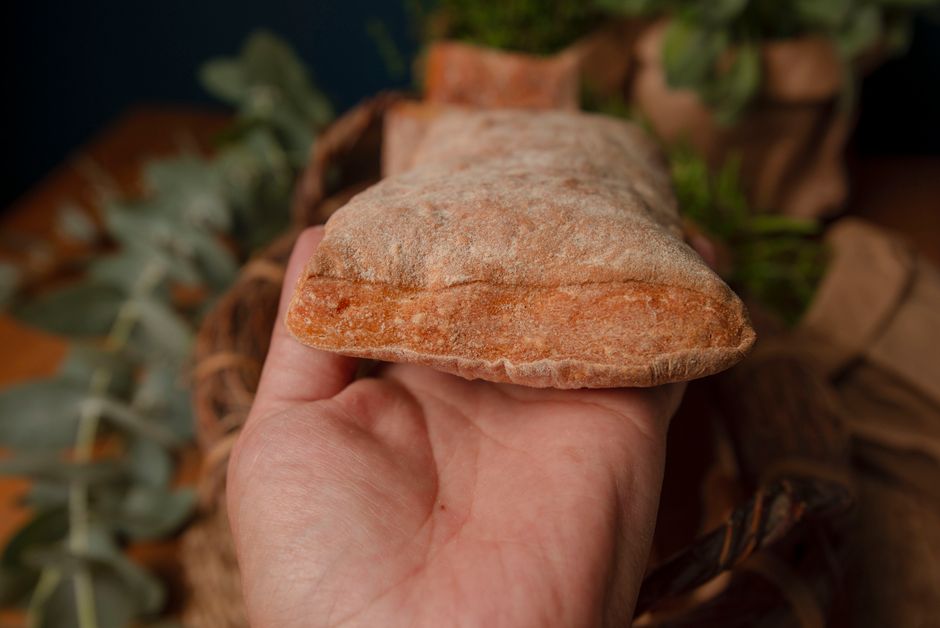
Ciabatta bread is not particularly good for you in a nutritional sense, but it is not the worst bread choice either. This Italian white bread is made from refined flour, which means it lacks the fiber, vitamins, and minerals found in whole grain options. However, ciabatta can still fit into a balanced diet if you pay attention to portions and what you eat with it.
What Is Ciabatta Made Of?
Ciabatta is a traditional Italian bread made from wheat flour, water, salt, yeast, and olive oil. The name means “slipper” in Italian, which describes its flat, elongated shape. Unlike some breads that use only white flour, many ciabatta recipes include a small amount of olive oil, which gives it a slightly softer texture.
Most commercial ciabatta you find in US grocery stores is made from refined white flour. This means the bran and germ have been removed during processing. What remains is mostly starch with some protein. The olive oil content is usually low — about one to two tablespoons per whole loaf — so it does not add significant healthy fats or calories.
Some artisanal bakeries make ciabatta with whole wheat flour or a blend of whole and white flour. These versions offer more fiber and nutrients. But the standard ciabatta at your local supermarket is almost always refined white bread.
What Are the Nutrition Facts for Ciabatta?
A standard serving of ciabatta is about one slice, which weighs roughly 55 to 60 grams. According to USDA data, one slice contains approximately 150 calories, 30 grams of carbohydrates, 3 grams of protein, 2 grams of fat, and less than 1 gram of fiber. It also provides about 300 milligrams of sodium.
Compare that to whole wheat bread. One slice of whole wheat bread has about 80 calories, 14 grams of carbs, 4 grams of protein, and 2 to 3 grams of fiber. The fiber difference is significant. Ciabatta has almost none, while whole wheat bread provides a meaningful amount.
The lack of fiber means ciabatta digests quickly. Your body breaks down the starches into sugar rapidly, which can cause blood sugar spikes. For people with diabetes or insulin resistance, this is a real concern. Even for healthy individuals, low-fiber foods do not keep you full as long.
| Nutrient | Ciabatta (1 slice, 55g) | Whole Wheat Bread (1 slice, 28g) |
|---|---|---|
| Calories | 150 | 80 |
| Carbohydrates | 30g | 14g |
| Fiber | <1g | 2-3g |
| Protein | 3g | 4g |
| Fat | 2g | 1g |
| Sodium | 300mg | 150mg |
Does Ciabatta Have Any Health Benefits?
Ciabatta does provide some energy in the form of carbohydrates, which your body needs for fuel. It also contains small amounts of B vitamins like thiamin and niacin from the enriched flour. Many commercial breads in the US are enriched with iron and folic acid, so ciabatta made from enriched flour offers those nutrients too.
The olive oil in traditional ciabatta adds a small amount of monounsaturated fat, which is the heart-healthy type. However, the quantity is too low to make a meaningful difference in your diet. You would get far more benefit from drizzling olive oil on your salad than from eating ciabatta.
Some people report that ciabatta feels more satisfying than other white breads because of its chewy texture and airy crumb. This is not a proven nutritional benefit, but if it helps you eat a smaller portion or feel more satisfied with a meal, that can be a practical advantage. The key is being honest with yourself about portion size.




Is Ciabatta Good For You Compared to Other Breads?
When comparing white breads, ciabatta is nutritionally similar to a French baguette or Italian bread. It is not better or worse than those options. All are made from refined flour and offer minimal fiber. The main difference is ciabatta often contains a little olive oil, while baguettes typically do not.
Compared to whole grain breads like whole wheat, rye, or sourdough made from whole grains, ciabatta falls short. Whole grain breads provide 3 to 5 grams of fiber per slice, which supports digestion, helps control blood sugar, and keeps you full longer. Sourdough made from whole grains also has the added benefit of fermentation, which may make some nutrients easier to absorb.
There is a common myth that ciabatta is healthier because it looks rustic or artisanal. That is not true. The appearance of a bread has nothing to do with its nutritional value. A dark, crusty loaf can be just as refined as a soft white sandwich bread. Always check the ingredient list and nutrition label, not the packaging design.
How to Make Ciabatta Healthier in Your Diet
If you enjoy ciabatta, you do not need to cut it out completely. The key is managing portions and pairing it with nutrient-dense foods. Stick to one slice per serving. A whole ciabatta roll can easily contain 300 to 400 calories, which is a significant portion of your daily intake for a single side item.
Pair ciabatta with protein and healthy fats to slow down digestion and blunt blood sugar spikes. For example:
- Top with grilled chicken, avocado, and tomato
- Use it for a sandwich with lean turkey, lettuce, and mustard
- Dip it in olive oil and balsamic vinegar instead of butter
- Serve it alongside a large salad with beans or grilled fish
Another practical tip is to look for ciabatta made with whole wheat flour or sprouted grains. Some bakeries and brands now offer these versions. They have more fiber and a lower glycemic impact. If you cannot find whole wheat ciabatta, consider using a whole grain sourdough instead. It has a similar texture and taste but better nutrition.
What Are the Downsides of Eating Ciabatta Regularly?
Eating ciabatta every day, especially in large amounts, can contribute to several health issues. The low fiber content means it does not support healthy digestion. A diet low in fiber is linked to constipation, hemorrhoids, and a higher risk of colorectal issues over time. The American Heart Association recommends 25 to 30 grams of fiber per day. One slice of ciabatta provides less than 1 gram.
The high glycemic index of ciabatta is another concern. Foods that spike blood sugar quickly can lead to energy crashes, cravings, and overeating later. Over months and years, frequent blood sugar spikes increase the risk of type 2 diabetes and metabolic syndrome. This is especially relevant for people who are already overweight or have a family history of diabetes.
Ciabatta also contains a moderate amount of sodium. One slice has about 300 milligrams, which is 13 percent of the daily recommended limit of 2,300 milligrams. If you eat two slices in a meal, that is over a quarter of your daily sodium from bread alone. For people with high blood pressure or heart concerns, this adds up fast.
Common Misconceptions About Ciabatta
A widespread belief is that ciabatta is healthier than white sandwich bread because it looks more natural. This is false. Both are made from refined flour. The only difference is ciabatta has a different shape and texture. Nutritionally, they are nearly identical per gram.
Another misconception is that the olive oil in ciabatta makes it a healthy fat source. As mentioned earlier, the amount is too small to matter. You would need to eat several entire loaves to get a meaningful dose of olive oil. The healthy fat benefit comes from adding olive oil to your meal separately, not from the bread itself.
Some people also think that artisan breads like ciabatta are lower in calories than commercial breads. In reality, artisan breads are often denser and can have more calories per slice because they contain more flour and oil. A slice of ciabatta typically has more calories than a slice of standard white bread because it is larger and heavier.
Frequently Asked Questions
Is ciabatta healthier than white bread?
No, ciabatta and standard white bread are nutritionally similar. Both are made from refined flour and contain minimal fiber.
Can I eat ciabatta on a low-carb diet?
No, ciabatta is high in carbohydrates with about 30 grams per slice. It is not suitable for low-carb or keto diets.
Does ciabatta have more calories than whole wheat bread?
Yes, a slice of ciabatta typically has more calories than a slice of whole wheat bread because it is larger and denser.
Is ciabatta gluten-free?
No, ciabatta is made from wheat flour and contains gluten. It is not safe for people with celiac disease or gluten sensitivity.
