

Bread sits somewhere between a staple and a suspect. It has fed humans for thousands of years, yet it now gets blamed for weight gain, blood sugar spikes, and digestive trouble. Whether a loaf counts as a whole food depends almost entirely on what went into it. Bread made from whole grains with few added ingredients is a whole food. Bread made from refined flour, sugar, and a long list of additives is a processed food. Most bread on store shelves falls somewhere between those two poles.
What Makes a Food “Whole”?
A whole food is one that is close to its natural state. It has not been stripped of its parts or loaded with ingredients a home cook would not recognize. The term describes a spectrum, not a strict category.
Whole grains contain three parts: the bran, the germ, and the endosperm. Refined flour strips away the bran and germ, leaving mostly the starchy endosperm. That process removes much of the fiber, B vitamins, vitamin E, and healthy fats. Some of these nutrients are added back through enrichment, but enrichment does not restore everything that was lost.
So a bread made from intact whole grains — where the bran and germ remain — sits much closer to the whole-food end of the spectrum. A bread made from white flour sits further away. Neither is poison. The distinction is about nutrient density and how the body processes what it eats.
One clarification worth making: “whole wheat” on a label does not automatically mean a whole food. A product can contain whole wheat flour and still carry added sugars, emulsifiers, and preservatives. The flour is one part of the picture. The full ingredient list is the rest.
Is Bread a Whole Food?
Some bread is a whole food and some is not. The answer lives in the ingredient list and the grain used, not in the word “bread” itself.
A traditional sourdough made from whole grain flour, water, and salt is a whole food by most reasonable definitions. A packaged white sandwich bread with a dozen ingredients — including sugar, oil, dough conditioners, and preservatives — is a processed food. Both are called bread. They behave differently in the body.
The key factors that separate a whole-food bread from a processed one:
- Grain type: Whole grain flour keeps the bran and germ. Refined flour does not.
- Ingredient count: Shorter lists generally mean less processing.
- Added sugar: Many commercial breads contain sugar, honey, or high-fructose corn syrup.
- Additives: Emulsifiers, dough conditioners, and preservatives are common in mass-produced loaves.
- Fermentation: Long-fermented sourdough changes the bread’s structure in ways that may affect digestion.
None of these factors makes a bread “good” or “bad” on its own. They are the variables that determine where a loaf lands on the whole-food spectrum.
How Do Different Breads Rank?
Ranking breads means weighing grain quality, processing level, and added ingredients. A bread can score well on one and poorly on another. The table below reflects general patterns, not universal rules — individual products within each category vary widely.
| Bread Type | Grain | Processing Level | Typical Added Sugar |
|---|---|---|---|
| 100% whole grain sourdough | Whole | Low | None to minimal |
| 100% whole wheat | Whole | Low to moderate | Often some |
| Sprouted grain bread | Whole | Low to moderate | Often none |
| Rye bread (whole grain) | Whole | Low to moderate | Varies |
| Multigrain bread | Mixed | Moderate | Varies |
| White sourdough | Refined | Moderate | Minimal |
| White sandwich bread | Refined | High | Often high |
Sprouted grain breads are worth a note. The grains are allowed to sprout before milling, which changes some of the grain’s composition. Whether this produces meaningful health advantages over regular whole grain bread is not firmly established. The evidence is limited.
Multigrain is another label that can mislead. “Multigrain” simply means more than one grain was used. Those grains can all be refined. It says nothing about whether the bran and germ are present.




Does Whole Grain Bread Actually Matter for Health?
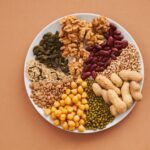
Whole grain intake is consistently linked to better health outcomes in large population studies. Research has found associations between higher whole grain consumption and lower rates of cardiovascular disease, type 2 diabetes, and some cancers. These are observational findings, which means they show a relationship, not proof of cause and effect.
The fiber in whole grains is a major reason for the interest. Fiber slows digestion, feeds gut bacteria, and helps with blood sugar control and satiety. Most adults in the US fall short of recommended fiber intake. Whole grain bread can contribute, though it is rarely the main source in a typical diet.
Refined bread is not the same story. It digests faster and has less fiber, so it has a gentler effect on blood sugar only in the sense that it does not spike as slowly — it tends to spike faster. For people managing blood sugar, the difference between whole grain and refined bread can be noticeable. For everyone else, it is one factor among many.
A non-obvious point: the glycemic response to bread varies between individuals. Some research suggests that people can have quite different blood sugar responses to the same bread. That does not mean bread rankings are meaningless — they are a reasonable starting point — but it does mean personal response is not fully predictable from the label alone.
What About Sourdough and Gluten?
Sourdough fermentation uses wild yeast and bacteria rather than commercial yeast. The process produces acids that change the bread’s structure. Some studies suggest that long fermentation can reduce certain compounds that trigger digestive discomfort in some people.
This does not make sourdough safe for celiac disease. Celiac disease is an autoimmune condition triggered by gluten, and sourdough still contains gluten. Anyone with celiac disease should avoid all bread containing wheat, barley, or rye unless it is certified gluten-free. No fermentation process makes regular bread safe for celiac disease.
For people with mild non-celiac gluten sensitivity, the picture is less clear. Some report tolerating sourdough better than regular bread. The evidence here is mixed and the condition itself is not well understood. It is reasonable to describe this as uncertain rather than settled.
Gluten-free breads are a separate category. Many are made from refined starches and can be lower in fiber and protein than their wheat counterparts. Some newer products use whole grain gluten-free flours, which improves the nutritional profile. The label still matters.
How Should You Read a Bread Label?
The ingredient list is the most useful tool. Ingredients are listed by weight, so what appears first is present in the largest amount. If “whole wheat flour” is the first ingredient, the bread is mostly whole grain. If “enriched wheat flour” or “wheat flour” leads, it is mostly refined.
Watch for the word “wheat” alone. It does not mean whole wheat. Only “whole wheat” or “whole grain” confirms the bran and germ are present. The Whole Grains Council’s stamp is one signal, though products can carry it with varying amounts of whole grain.
Sugar content is worth checking. Some breads contain several grams of added sugar per slice. That adds up across a day. Sodium is another consideration — commercial bread can be a meaningful source of dietary sodium.
None of this requires perfection. Bread is one part of an overall diet. A person eating mostly whole foods can include a refined bread now and then without undoing anything. The pattern matters more than any single slice.
Frequently Asked Questions
Is whole wheat bread a whole food?
Whole wheat bread can be a whole food if it is made from whole grain flour with few added ingredients. Many commercial whole wheat breads contain added sugar, oils, and preservatives, which moves them toward the processed end.
Is sourdough bread healthier than regular bread?
Sourdough fermentation may make some nutrients more available and may be easier to digest for some people. The evidence for broad health advantages over other whole grain breads is limited and mixed.
Can I eat bread on a whole foods diet?
Yes, if the bread fits the whole-food definition — whole grains, minimal processing, and few additives. Refined commercial breads are generally excluded or limited on a whole foods approach.
Is multigrain bread the same as whole grain bread?
No. Multigrain means multiple grains were used, but they can all be refined. Whole grain means the bran and germ are still present, which multigrain does not guarantee.
