
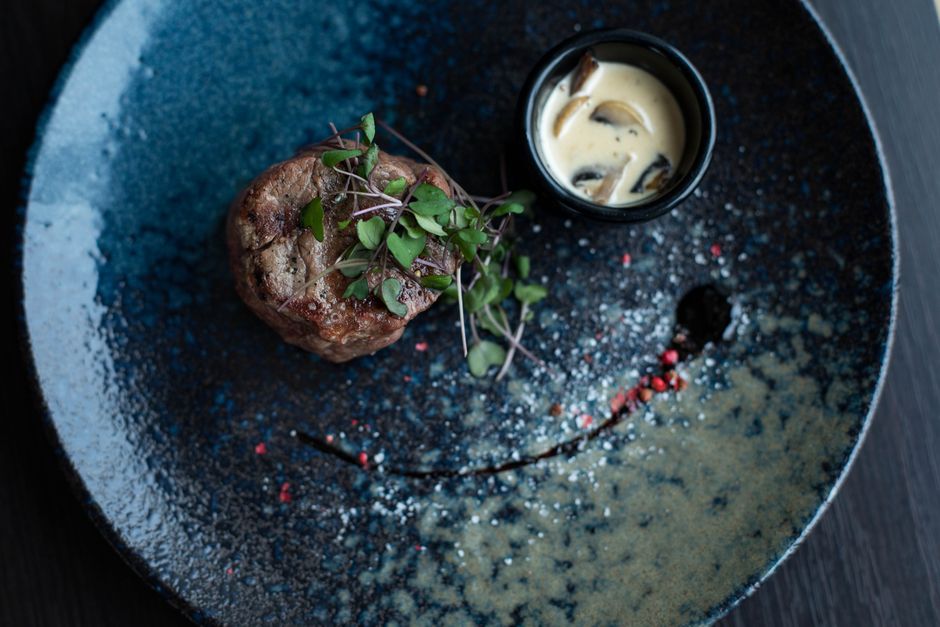
Ordering a steak “black and blue” means the outside is seared hard enough to char while the inside stays essentially raw. It is a real restaurant order, not a fad, and it has been served in steakhouses for decades. The short answer on safety: whole cuts of beef are generally safer to eat undercooked than ground beef, but “safer” is not the same as “risk-free,” and the risk depends heavily on how the meat was handled before it reached your plate.
What Does Black And Blue Steak Actually Mean?
Black and blue describes a cooking method, not a cut of meat. The “black” refers to a dark, heavily seared crust. The “blue” refers to an interior that is still cool, red, and raw at the center.
In practice, a black and blue steak is cooked very briefly over extremely high heat. The goal is a charred exterior with a core temperature that stays well below what you would see in a rare steak. Some kitchens use a technique called a Pittsburgh sear, named after the steelworkers who reportedly liked their meat charred outside and raw inside. The two terms are often used interchangeably, though they are not strictly identical.
This is different from a rare steak, where the center is warm and red but has spent more time on heat. A blue steak is closer to raw beef with a cooked crust.
Is Black And Blue Steak Actually Safe To Eat?
For intact whole cuts of beef, the food safety concern is mostly on the surface, not the interior. That is the key fact behind the whole debate.
Bacteria like E. coli and Salmonella generally live on the outside of a cut of beef, not inside the muscle tissue. Muscle is considered sterile in a healthy animal. When you sear the outside of a whole steak at high heat, you are killing the bacteria where they actually are. That is why a blue steak is not automatically dangerous the way a rare hamburger would be.
Ground beef is different. When beef is ground, surface bacteria get mixed throughout the meat. Now the bacteria are in the middle, and a brief sear does not reach them. This is why public health guidance tells people to cook ground beef all the way through, while whole steaks can be cooked to lower internal temperatures.
So the honest position is this: a black and blue steak made from a clean, intact whole cut carries a lower risk than many people assume. But lower risk is not zero risk. The safety depends on factors the diner usually cannot see.
Where Does The Real Risk Come From?
The risk comes from three places: the surface of the meat, the handling before it is cooked, and the person preparing it.
If a whole cut is contaminated on the surface and then pierced, tenderized with needles, or mechanically blade-tenderized, bacteria can be pushed into the interior. Once inside, a quick sear will not reach them. This is a genuine concern, and it is one reason some public health agencies treat mechanically tenderized beef more like ground beef for cooking purposes. If you do not know whether your steak was blade-tenderized, you cannot assume the interior is clean.
Handling matters just as much. Cross-contamination in a kitchen, a cut left too long at room temperature, or a surface that was not properly seared all raise the risk. A steak that looks charred on the outside may have undercooked patches if the pan or grill was not hot enough or the meat was crowded.
People with weaker immune systems face more risk from any undercooked meat. That includes older adults, pregnant women, young children, and anyone with a condition or medication that suppresses immune function.




Is There A Safe Internal Temperature For Blue Steak?
There is no internal temperature that makes a blue steak “safe” in the way a well-done steak is safe, because the whole point of the order is to keep the center raw.
Government food safety guidance for whole cuts of beef generally centers on cooking to an internal temperature of at least 145°F (about 63°C) with a rest time, which produces a medium-rare result, not a blue one. A blue steak is cooked well below that. So if you are following official temperature guidance, a blue steak does not meet it.
This is where biology and official guidance point in slightly different directions. The biology says surface searing addresses the main bacterial risk on intact whole cuts. The guidance says cook to a temperature that a blue steak never reaches. Both are true. The guidance is written to protect everyone, including people at higher risk, and it does not carve out an exception for blue steak.
What this means practically: a blue steak is a personal risk decision, not a guaranteed-safe choice. The evidence supports that intact whole cuts are lower risk than ground beef. It does not support calling a raw-centered steak safe for everyone.
How Does Blue Steak Compare To Other Doneness Levels?
The table below shows roughly how doneness relates to internal temperature and to bacterial risk on a whole cut. Temperatures reflect general cooking standards. Risk descriptions reflect the surface-versus-interior principle, not a guarantee for any specific steak.
| Doneness | Approximate internal temperature | Interior risk on intact whole cut |
|---|---|---|
| Blue (black and blue) | Well below 145°F | Low if the cut is intact and clean; higher if tenderized or mishandled |
| Rare | Around 125°F | Low on intact whole cuts |
| Medium rare | Around 135°F | Low on intact whole cuts |
| Medium | Around 145°F | Very low |
| Well done | 160°F and above | Very low |
Ground beef is not on this table for a reason. Its risk profile does not follow the same pattern, because the bacteria are distributed through the meat rather than sitting on the surface.
What Should You Know Before Ordering One?
If you are generally healthy and eating at a reputable restaurant, a black and blue steak is a choice many people make without getting sick. That is a fair statement of what happens in practice. It is not the same as saying the practice is risk-free.
A few things genuinely reduce risk:
- Ask whether the steak is a whole cut or has been blade-tenderized or needle-injected. If it has, the interior is no longer protected by the sear.
- Eat at a place with a strong food safety record. You are trusting the kitchen, not just the cut.
- Skip the blue order if you are pregnant, older, very young, or immunocompromised. For these groups, the risk from undercooked meat is higher and the guidance is clearer: cook it through.
- Do not assume a charred crust means the whole surface reached a safe temperature. Char and safety are not the same thing.
One point worth clarifying: color is not a reliable indicator of doneness or safety. The red color in a blue steak comes largely from a protein called myoglobin, not blood. Myoglobin stays red even at temperatures where bacteria would already be dead, and it can look pink even in safely cooked meat. Judging safety by color alone can mislead you in both directions.
Does Freezing Or Marinating Make Raw Beef Safer?
Freezing does not reliably kill the bacteria that cause foodborne illness. It can reduce some parasites, but the main bacterial threats in beef survive freezing and become active again as the meat thaws. So a frozen-then-thawed blue steak is not meaningfully safer than a fresh one.
Marinating does not sterilize meat either. Acidic marinades can affect surface bacteria to some degree, but they do not make a raw-centered steak safe, and they do not reach the interior of a whole cut in any reliable way. Treat marinades as flavor, not as a safety step.
The one thing that reliably reduces bacterial risk is heat. That is the trade-off at the center of the blue steak question. You are choosing flavor and texture over the margin of safety that thorough cooking provides.
Frequently Asked Questions
Is black and blue steak safe to eat?
It carries a lower risk than many people assume when it is made from an intact whole cut, because bacteria mostly sit on the surface and the sear kills them there. It is not risk-free, especially if the meat was blade-tenderized or mishandled.
Is blue steak the same as rare steak?
No. A blue steak has a charred exterior and a raw, cool center, while a rare steak is cooked longer and has a warm red interior. Blue is the less cooked of the two.
Can you get food poisoning from a blue steak?
It is possible, though the risk is lower on intact whole cuts than on ground beef. The danger rises if the steak was mechanically tenderized, left out too long, or prepared with poor kitchen hygiene.
Should pregnant women eat black and blue steak?
No. Public health guidance advises pregnant women and other higher-risk groups to avoid undercooked meat and cook beef through, because the consequences of infection are more serious for them.
