
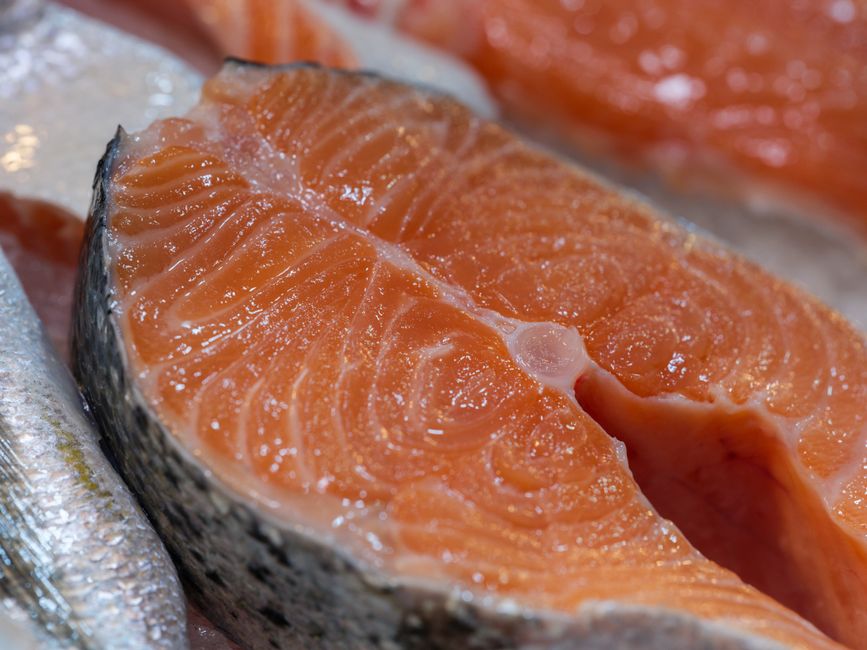
Almost all Atlantic salmon sold in stores and served in restaurants is farm-raised, not wild-caught. Wild Atlantic salmon is a protected species in the United States, and commercial fishing for it is banned. If you are buying Atlantic salmon, you are buying farmed fish. This is true whether the label says fresh, frozen, or organic.
Why Is Wild Atlantic Salmon Banned?
Wild Atlantic salmon populations collapsed decades ago. Overfishing, dam construction, and habitat loss pushed the species to the brink. By the 1990s, the numbers were so low that the U.S. government listed them under the Endangered Species Act.
Today, the only wild Atlantic salmon that return to U.S. rivers are part of protected populations. Catching them is illegal. The commercial fishery that once operated in Maine is closed. This is why you will never see genuinely wild Atlantic salmon in a U.S. grocery store.
Canada still has some limited wild Atlantic salmon fisheries, but the catch is small and rarely exported. Almost all of it stays local. The Atlantic salmon you find in a typical supermarket or seafood counter is farmed, almost certainly from Norway, Chile, Scotland, or Canada.
What Is the Difference Between Farmed and Wild Salmon?
Farmed salmon are raised in ocean pens or land-based tanks. They are fed processed feed made from fish meal, fish oil, and plant ingredients. They live their entire lives in controlled environments designed for growth.
Wild salmon live in open oceans and rivers. They eat natural food like krill, shrimp, and smaller fish. They migrate thousands of miles and develop different muscle structure and fat content because of that active life.
The most visible difference is color. Farmed salmon get their pink color from synthetic pigments added to their feed. Wild salmon get their color naturally from eating krill and shrimp. Without added pigments, farmed salmon meat would be gray.
Is Farmed Atlantic Salmon Safe to Eat?
Yes. Farmed Atlantic salmon is safe to eat and is one of the most studied seafood products in the world. It is a good source of protein, omega-3 fatty acids, vitamin D, and B vitamins.
That said, there are legitimate concerns about how some salmon is farmed. Open-net pens can spread sea lice to wild fish. Waste and antibiotics can enter surrounding waters. Some studies have raised questions about contaminant levels in farmed salmon, though levels have dropped in recent years as feed formulas improved.
If you want to reduce these concerns, look for salmon certified by programs like the Aquaculture Stewardship Council or Best Aquaculture Practices. These certifications require farms to meet environmental and health standards. They are not perfect, but they are a reasonable starting point.




What About Omega-3 Levels?
Farmed Atlantic salmon actually contains more omega-3 fatty acids than most wild salmon. This sounds backward, but it makes sense. Farmed salmon are fed a diet high in fish oil, which is rich in omega-3s. They also eat more consistently than wild fish.
However, the omega-3 content of farmed salmon has declined over the past decade. Feed producers have replaced some fish oil with plant oils to cut costs and reduce pressure on wild fish stocks. The levels are still respectable, but not what they were in the early 2000s.
Wild salmon like sockeye and chinook still have strong omega-3 profiles. The exact amount varies by species, season, and what the fish ate. Both farmed and wild salmon are good sources. Neither is a bad choice nutritionally.
What Should You Buy Instead?
If you want wild-caught salmon, you need to buy Pacific salmon. The main species are sockeye, king (chinook), coho, pink, and chum. These are harvested in Alaska and parts of the Pacific Northwest under strict management.
Alaskan salmon fisheries are considered some of the best managed in the world. They are certified sustainable by the Marine Stewardship Council. The populations are healthy, and the fishing methods cause minimal habitat damage.
Here is a quick comparison of your options:
| Type | Source | Flavor | Typical Price |
|---|---|---|---|
| Farmed Atlantic | Norway, Chile, Scotland, Canada | Mild, soft texture | Lower |
| Wild Sockeye | Alaska | Rich, deep red | Higher |
| Wild King (Chinook) | Alaska, Pacific Northwest | Buttery, high fat | Highest |
| Wild Coho | Alaska | Milder than sockeye | Moderate |
| Wild Pink | Alaska | Light, delicate | Lower for wild |
Frozen wild salmon is often a better value than fresh. Most wild salmon is flash-frozen on the boat within hours of being caught. Frozen fish is frequently fresher than “fresh” fish that has spent days in transit and on ice.
How Can You Tell What You Are Buying?
Reading labels carefully is the first step. In the U.S., the Food and Drug Administration requires seafood to be labeled with both the species and whether it is wild-caught or farm-raised. If the label says “Atlantic salmon,” it is farmed. If it says “wild,” it must be a Pacific species.
Be suspicious of vague labels. Terms like “fresh salmon” or “premium salmon” tell you nothing about the source. Some stores sell salmon without clear labeling, especially at service counters. Ask the fishmonger directly. They should be able to tell you the species and whether it is farmed or wild.
Color is not a reliable indicator. Farmed salmon can be dyed to look like wild salmon. The pigment is added to feed, and the color develops over time. A deep red filet does not mean the fish was wild.
Is Farmed Salmon Ever Labeled as Wild?
Mislabeling happens, but it is less common than it used to be. Several studies over the past decade found that a percentage of salmon sold as “wild” was actually farmed. This is more common in restaurants than in grocery stores, where labeling rules are stricter.
If you are eating out, ask how the salmon is sourced. A reputable restaurant should know. If the server cannot answer, that is a red flag. The price is also a clue. Wild salmon costs significantly more than farmed. If the price seems too good for “wild” salmon, it probably is.
Is Atlantic Salmon Ever Wild Caught?
In rare cases, yes. A small commercial fishery exists in the Faroe Islands and parts of Europe. Some wild Atlantic salmon are also caught recreationally in Canada and Iceland. But these fish are almost never exported to the U.S. market.
The numbers are tiny. The wild Atlantic salmon catch worldwide is a fraction of one percent of the farmed Atlantic salmon production. For practical purposes, if you are buying Atlantic salmon in the United States, it is farmed. Anyone selling it as “wild Atlantic salmon” is either misinformed or misleading you.
Some restaurants in Europe feature wild Atlantic salmon on their menus when it is in season. This is rare and expensive. It is not something you will find at a typical American seafood restaurant.
Frequently Asked Questions
Is Atlantic salmon ever wild caught?
Rarely. A tiny commercial fishery exists in the Faroe Islands and parts of Europe, but wild Atlantic salmon is protected in the U.S. and almost never exported to American markets.
What is the difference between Atlantic and Pacific salmon?
Atlantic salmon is almost always farmed, while Pacific salmon is typically wild-caught. They are different species with different flavors, textures, and production methods.
Is farmed salmon less healthy than wild salmon?
Both are nutritious. Farmed salmon often has more omega-3s but can have higher levels of contaminants. Wild salmon has fewer contaminants but varies in omega-3 content by species and season.
How can I tell if salmon is farmed or wild?
Check the label. U.S. law requires seafood to state whether it is farm-raised or wild-caught. If it says Atlantic salmon, it is farmed. Wild salmon will be labeled as a Pacific species like sockeye or king.
