
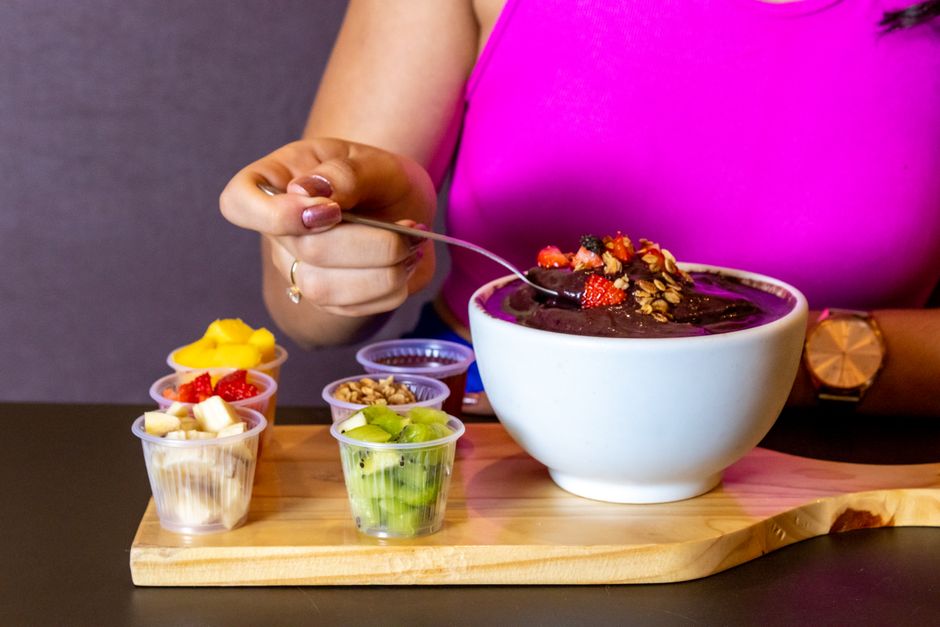
An acai bowl can be a healthy meal, but it depends entirely on what goes into it. The acai berry puree itself is rich in antioxidants and healthy fats, yet most bowls are loaded with added sugar from fruit juices, granola, and sweet toppings. A typical restaurant acai bowl can contain 50 to 80 grams of sugar, which is more than double the American Heart Association’s recommended daily limit for added sugar.
What Is Actually in an Acai Bowl?
An acai bowl starts with frozen acai pulp. Acai berries grow on palm trees in the Amazon rainforest. The pulp is blended until it reaches a thick, sorbet-like consistency. This base is then topped with granola, fresh fruit, nut butter, coconut flakes, honey, or agave syrup.
The problem is that most commercial acai blends are not pure acai. Many frozen packets sold in stores contain added sugar or apple juice as a second ingredient. Some restaurants use pre-sweetened blends to keep the texture smooth and the taste palatable. This means you may be getting significantly more sugar than you realize before any toppings are added.
The acai berry itself is not sweet. It has an earthy, slightly tart flavor similar to dark chocolate or unsweetened blackberry. To make it palatable, manufacturers and cafes almost always add sweeteners.
Is An Acai Bowl Healthy for Daily Consumption?
Eating an acai bowl every day is not inherently unhealthy if you control the ingredients. A homemade bowl with unsweetened acai puree, plain yogurt, and a modest amount of fruit can be a genuinely nutritious breakfast. The concern arises when you rely on restaurant versions that resemble dessert more than a meal.
Acai is genuinely nutritious. The berries contain anthocyanins, which are the pigments that give them their dark purple color. These compounds act as antioxidants in the body. Acai also contains healthy unsaturated fats, fiber, and small amounts of calcium and vitamin A.
However, the health benefits of acai are often overstated. Many marketing claims suggest acai can boost energy, promote weight loss, or slow aging. The clinical evidence for these specific claims is limited. Some small studies suggest antioxidant effects in the blood after consumption, but no large human trials have confirmed meaningful weight loss or anti-aging benefits from acai alone.
How Much Sugar Is in a Typical Acai Bowl?
A typical store-bought acai bowl contains 40 to 80 grams of sugar. That is the equivalent of 10 to 20 teaspoons of sugar. The American Heart Association recommends no more than 36 grams of added sugar per day for men and 25 grams for women. Even the lower end of a typical acai bowl’s sugar content exceeds these limits.
Not all of that sugar is added. Bananas, berries, and other fruits naturally contain sugar. But many cafes add honey, agave, or sweetened granola on top, which pushes the added sugar content up substantially. A bowl with a banana, a handful of berries, and a sprinkle of unsweetened granola will have far less sugar than one drizzled with honey and loaded with sweetened coconut flakes.
For comparison, a can of regular cola contains about 39 grams of sugar. Some acai bowls contain more sugar than two cans of cola. This is not to say acai bowls are as unhealthy as soda — they contain fiber, vitamins, and antioxidants that soda lacks — but the sugar load is worth taking seriously.





Are the Antioxidants in Acai Worth the Calories?
Yes, but with context. Acai berries contain antioxidant compounds that are absorbed by the body. Research published in the Journal of Agricultural and Food Chemistry found acai pulp has high antioxidant capacity in laboratory tests. The body does absorb some of these compounds, as shown by studies measuring antioxidant levels in blood after consumption.
What the research does not show is that acai is superior to other berries. Blueberries, blackberries, and strawberries all contain similar anthocyanin compounds with comparable antioxidant activity. Acai is not a unique superfood in this regard. It is one of many berries with genuine nutritional value.
The calories matter. A typical acai bowl contains 400 to 600 calories. If you are eating it as a meal replacement, that is reasonable. If you are eating it as a snack on top of regular meals, the extra calories can contribute to weight gain over time. The antioxidant benefit does not cancel out excess calories or sugar.
How to Build a Healthy Acai Bowl at Home
Making your own acai bowl gives you full control over the ingredients. Start with unsweetened acai puree. Check the ingredient label — it should list acai as the only ingredient. Some brands add sugar, citric acid, or fruit juice concentrates. Avoid those.
Blend the acai puree with a small amount of liquid. Water, unsweetened almond milk, or plain yogurt all work well. Avoid fruit juice as the blending liquid, since it adds significant sugar without much fiber. A splash of juice for flavor is fine, but it should not be the main liquid.
For toppings, choose unsweetened options. Fresh berries, sliced banana, unsweetened coconut flakes, chia seeds, hemp seeds, or a small spoonful of almond butter all add nutrition without excess sugar. Granola is the biggest variable — many commercial granolas contain 10 to 15 grams of sugar per serving. Look for granola with under 6 grams of sugar per serving, or skip it entirely and use nuts and seeds for crunch.
Portion size matters. A reasonable serving is about one cup of blended acai base with modest toppings. Many restaurant bowls are double that size. Eating half of a restaurant bowl and saving the rest for later is a practical approach if you are eating out.
What About Acai Bowls as a Post-Workout Meal?
Acai bowls can work as a post-workout meal if balanced properly. After exercise, your body needs carbohydrates to replenish glycogen stores and protein to repair muscle tissue. A bowl with fruit, acai, and granola provides carbohydrates. Adding Greek yogurt or a scoop of protein powder provides the protein component.
The timing matters less than the total daily nutrient intake. Eating a balanced meal within a few hours after exercise is sufficient for most people. The idea that you must eat within 30 minutes of finishing a workout is not strongly supported by evidence for recreational athletes. Eating a reasonable meal when you are hungry is more important than racing the clock.
For intense endurance training, the carbohydrate content of an acai bowl is genuinely useful. For a moderate gym session or a light jog, a large acai bowl may contain more calories than you burned. Pay attention to your actual energy needs rather than assuming any post-workout food is automatically justified.
Are Acai Bowls Suitable for People with Diabetes?
People with diabetes can eat acai bowls, but portion control and ingredient selection are critical. The high sugar content of typical bowls can cause rapid blood glucose spikes. Choosing a smaller portion with unsweetened acai, minimal fruit, and protein-rich toppings like nuts or Greek yogurt can help moderate the glycemic response.
No clinical guidelines specifically address acai bowls for diabetes management. The general principles of carbohydrate counting and balanced meals apply. If you have diabetes and want to try an acai bowl, checking your blood glucose after eating can help you understand how your body responds. Some people find that pairing the bowl with protein and fat reduces the blood sugar spike compared to eating fruit alone.
Frequently Asked Questions
Is an acai bowl healthy for weight loss?
An acai bowl can fit into a weight loss plan if it is portion-controlled and made with unsweetened ingredients. Restaurant bowls are often 500 to 600 calories and can exceed your entire meal budget, so homemade versions with modest toppings are safer for weight management.
How many calories are in an acai bowl?
Homemade bowls typically range from 300 to 500 calories depending on toppings. Restaurant bowls often contain 500 to 800 calories because of large portions, sweetened granola, and added honey or agave.
Can you eat acai bowls every day?
You can eat acai bowls daily if you control the sugar and calorie content. Unsweetened acai puree, limited fruit, and no added sweeteners make it a reasonable daily meal. Store-bought versions with high sugar are better treated as an occasional treat.
Is acai better than other berries?
Acai has comparable antioxidant content to blueberries and blackberries but is not clearly superior. It is a nutritious choice, but there is no strong evidence that acai provides unique health benefits that other berries do not.
