
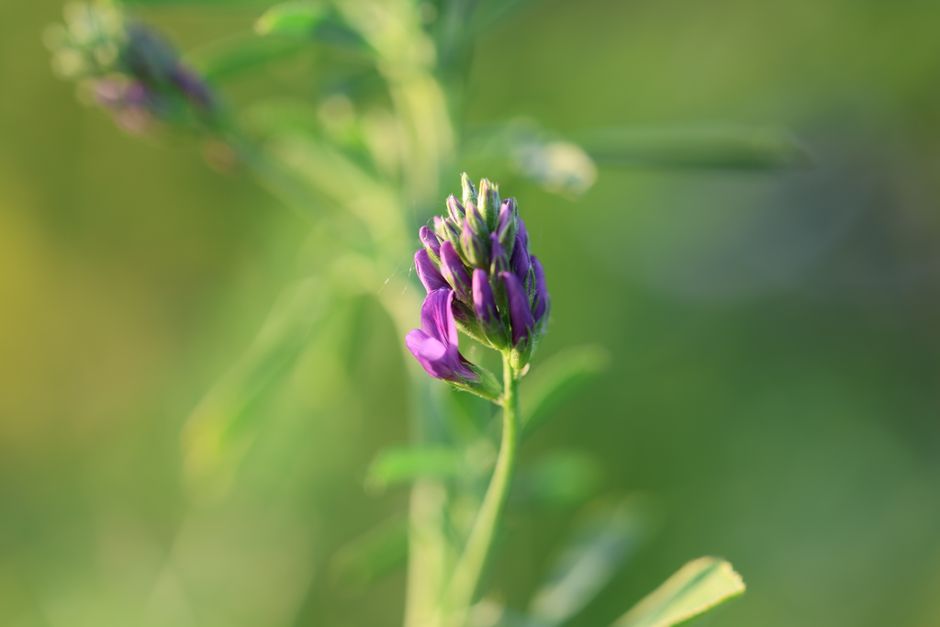
Alfalfa is not considered safe in supplement form during pregnancy. The concentrated tablets, capsules, and powders sold as herbal remedies are the main concern, not the small amounts of alfalfa sprouts you might eat in a salad. The form matters enormously here, and most online advice blurs that distinction.
Alfalfa (Medicago sativa) is a legume. Its leaves and seeds contain compounds that have raised questions in pregnancy, and the way those compounds are processed changes the risk profile. A garnish and a daily capsule are not the same exposure.
This guide breaks down alfalfa by form — sprouts, leaves, tea, and concentrated supplements — and explains what is established, what is uncertain, and where guidance simply does not exist.
Why Alfalfa Raises Concerns During Pregnancy
Alfalfa contains several biologically active compounds, and two of them are the main reasons clinicians caution against concentrated alfalfa in pregnancy.
The first is canavanine, an amino acid analog found in alfalfa seeds and sprouts. Canavanine is not a nutrient your body uses. It can interfere with normal amino acid handling in cells, and animal studies have raised questions about its effects on development at high exposures. Human pregnancy data are essentially absent. That absence of data is the reason for caution, not proof of harm.
The second is phytoestrogen content. Alfalfa contains coumestans and other plant compounds that can interact with estrogen receptors. Some clinicians advise limiting high intakes of phytoestrogen-rich herbs during pregnancy because the hormonal environment is delicate and the long-term effects of high-dose exposure are not well studied. The evidence for harm in humans from food-level intake is weak. The evidence for concentrated supplemental intake is also weak — but it is missing rather than reassuring.
Alfalfa also contains saponins and, in seeds, measurable levels of L-canavanine that vary widely by cultivar and growing conditions. There is no standardized dose, which means a supplement label does not reliably tell you what you are getting.
Is Alfalfa Safe During Pregnancy Risks By Form?
The short answer is that risk rises with concentration. Sprouts eaten as food are a different category from capsules taken daily.
Here is how the forms compare based on what is known and what is not:
| Form | Typical exposure | Main concern | Evidence status |
|---|---|---|---|
| Raw sprouts | Small amounts in food | Bacterial contamination (Salmonella, E. coli, Listeria) | Well documented for sprouts generally |
| Cooked alfalfa leaves | Culinary amounts | Low; heat reduces some compounds | Limited data, generally viewed as low risk in food amounts |
| Alfalfa tea | Infusions | Variable strength; phytoestrogens | Little pregnancy-specific data |
| Capsules, tablets, powder | Concentrated, daily | Canavanine, phytoestrogens, unknown dose | No established safe dose in pregnancy |
| Alfalfa seed | Variable | Highest canavanine content | Not recommended in pregnancy |
The most established risk in this table is not a chemical one. It is infection from raw sprouts.
Are Alfalfa Sprouts Safe to Eat While Pregnant?
Health agencies in the United States and other countries advise pregnant women to avoid raw sprouts, including alfalfa sprouts. This is one of the clearest recommendations in prenatal nutrition.
The reason is contamination, not alfalfa itself. Sprout seeds can carry Salmonella, E. coli, and Listeria. The warm, humid conditions used to sprout seeds are also ideal for bacterial growth. Washing does not reliably remove the bacteria because they can be present inside the seed and throughout the sprout tissue.
Listeria is the specific concern in pregnancy. It is uncommon, but pregnant women are more susceptible to listeriosis than the general population, and infection can lead to serious complications including miscarriage and preterm birth. This is why the advice on raw sprouts is firm rather than cautious.
Cooked sprouts are a different matter. Cooking kills bacteria, and thoroughly cooked alfalfa in a dish is not the same risk. The chemical concerns with sprouts are also lower than with concentrated supplements because the amount consumed is small.



What About Alfalfa Supplements and Capsules?
There is no established safe dose of alfalfa supplement in pregnancy. That statement is the honest bottom line, and it is why most clinicians advise against them.
Alfalfa tablets are marketed for cholesterol, menopause symptoms, and general “detox” purposes. None of these uses has strong clinical trial support in pregnancy, and pregnancy is not a population in which these products have been studied. The label “natural” does not change that.
Two practical problems make supplements hard to assess:
- Concentration varies widely between products, and canavanine content is not standardized or listed.
- Herbal supplements are not held to the same pre-market approval standards as drugs in the US, so purity and potency can differ from what the label states.
If you are taking an alfalfa supplement and you are pregnant or trying to conceive, the appropriate step is to tell your clinician rather than to decide alone. Do not stop a prescribed medication based on this article — this is about herbal supplements, not prescription drugs.
Does Alfalfa Tea Carry the Same Risk?
Alfalfa tea sits in a gray zone. It is less concentrated than capsules, but the strength depends entirely on how much leaf is used and how long it steeps.
There is no reliable data on alfalfa tea in pregnancy. Some herbal references list it among herbs to use with caution or avoid in pregnancy, largely because of phytoestrogen content and the lack of safety data. Others treat occasional culinary use as low concern.
Given the uncertainty, the conservative position is to avoid regular or daily alfalfa tea during pregnancy. An occasional cup is unlikely to be harmful based on what is known, but “unlikely” is not the same as “established as safe,” and this is a case where the honest answer is that the evidence does not exist either way.
What Should You Do If You Have Already Taken Alfalfa?
Do not panic. A single serving of sprouts or one cup of tea is very unlikely to cause harm, and there is no evidence that occasional food-level exposure is dangerous.
The concern in this article is about concentrated, repeated supplementation, not a salad you ate last week. If you have been taking alfalfa capsules regularly, mention it at your next prenatal visit so your clinician has a complete picture. They can advise on whether any monitoring is appropriate for your situation.
Watch for signs of infection if you ate raw sprouts — fever, chills, muscle aches, nausea, or diarrhea. Listeria infection can also cause no symptoms at all, which is part of why prevention matters more than symptom-watching. If you develop a fever during pregnancy, contact your clinician promptly.
Better-Supported Alternatives for Common Reasons People Take Alfalfa
Most people reach for alfalfa for one of a few reasons. Here is where the evidence actually sits for those goals in pregnancy.
For constipation, fiber from food and adequate fluids are the standard approach, and your clinician can advise on pregnancy-appropriate options. Alfalfa is not a first-line choice.
For cholesterol, dietary patterns and, where indicated, medications your clinician prescribes are the evidence-based routes. Herbal alfalfa has not been shown in trials to be an appropriate substitute in pregnancy.
For general nutrition, a prenatal vitamin recommended by your clinician covers the nutrients with established pregnancy requirements, including folate and iron. Alfalfa is not a reliable or recommended source of these.
For any supplement during pregnancy, the practical rule is simple: check with your clinician before starting, and treat “natural” as a marketing word rather than a safety claim.
Frequently Asked Questions
Is alfalfa safe during pregnancy?
Alfalfa supplements are not considered safe during pregnancy because there is no established safe dose and they contain concentrated canavanine and phytoestrogens. Raw alfalfa sprouts should also be avoided due to bacterial contamination risk.
Can I eat alfalfa sprouts while pregnant?
Health agencies advise pregnant women to avoid raw sprouts, including alfalfa sprouts, because of Salmonella, E. coli, and Listeria risk. Thoroughly cooked sprouts are a lower-risk option.
Is alfalfa tea safe in pregnancy?
There is no reliable safety data on alfalfa tea in pregnancy, so regular or daily use is best avoided. Occasional culinary amounts are unlikely to be harmful, but safety is not established.
What happens if you eat alfalfa while pregnant?
A single small serving is very unlikely to cause harm, and there is no evidence that occasional food-level exposure is dangerous. If you have been taking alfalfa capsules regularly, tell your clinician at your next prenatal visit.
