
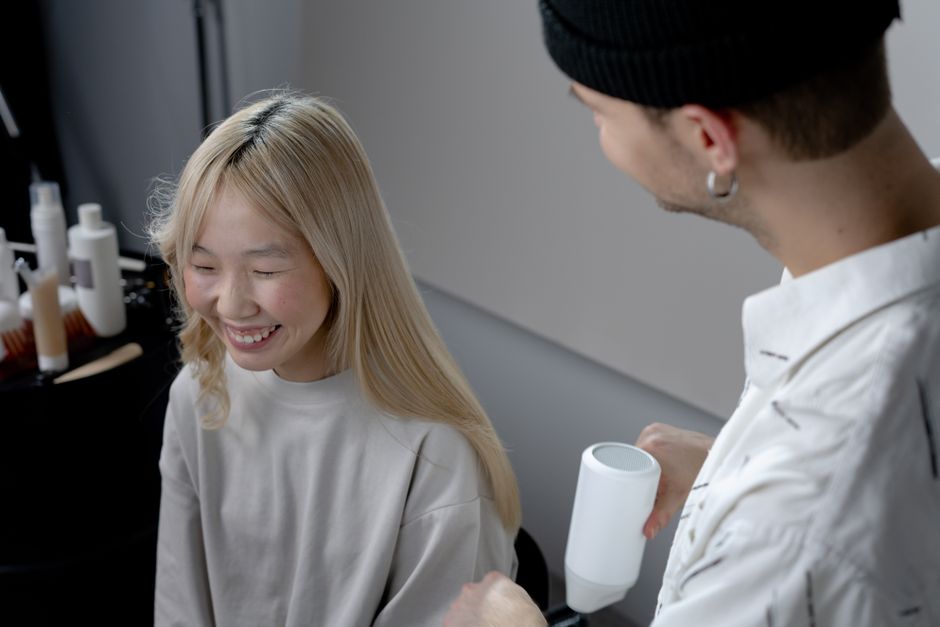
Air drying your hair is not inherently bad, but it is not automatically better than blow drying either. The truth depends on how long your hair stays wet, your hair type, and what you do while it dries. Leaving hair wet for too long can weaken it, while aggressive blow drying can cause heat damage. The healthiest approach is usually a middle ground that limits both prolonged wetness and high heat.
What Happens to Hair When It Is Wet?
Hair is surprisingly fragile when wet. The outer layer of each strand, called the cuticle, swells and lifts when it absorbs water. This makes the hair more elastic and easier to stretch.
Stretching wet hair is risky. When wet hair is pulled, brushed, or wrapped tightly, it can stretch beyond its natural limit and snap. This is why hair breakage is more common after a shower than at any other time.
The inner structure of the hair also changes. The cortex, which gives hair its strength, becomes softer and less organized when saturated. Repeated cycles of wetting and drying can slowly wear down the protective cuticle, leaving hair looking dull and feeling rough.
None of this means wet hair is doomed. It simply means wet hair needs gentler handling than dry hair.
Does Air Drying Damage Hair?
Air drying itself does not damage hair. The water is not the problem. The problem is how long the hair stays wet.
Hair that takes hours to dry stays swollen and soft for an extended period. During that time, any friction — against a pillow, a collar, or even a towel — can cause the cuticle to lift or break. Sleeping on wet hair is especially hard on strands because tossing and turning creates friction for hours.
There is also a hygiene consideration. A damp scalp is a favorable environment for fungi and bacteria. Some research suggests that going to bed with wet hair and a wet scalp may increase the risk of scalp conditions, though this is not a well-studied area.
The main takeaway is that air drying is safest when your hair dries reasonably quickly. If your hair takes several hours to dry, the prolonged wet state can be more damaging than a careful blow dry.
Is Blow Drying Worse Than Air Drying?
Blow drying is not automatically worse. The heat can damage hair, but the damage depends on temperature, distance, and technique.
High heat can vaporize water inside the hair shaft. This creates bubbles inside the strand, which weakens the hair from within. This process is called “bubble hair” and is a recognized form of heat damage.
However, blow drying done correctly is generally safe. Keeping the dryer moving, holding it several inches from the hair, and using a medium or low heat setting reduces the risk significantly. Many dermatologists consider a careful blow dry less damaging than sleeping on wet hair.
Some studies have compared air drying and blow drying directly. Research published in the Journal of Cosmetic Science found that air drying caused more damage to the inner structure of the hair than blow drying at a safe distance. The researchers noted that the prolonged swelling from air drying was a key factor. This does not mean air drying is bad for everyone. It means the “gentler” option is not always the gentler option in practice.


What Is the Best Way to Dry Hair?
The ideal approach depends on your hair type and how long it takes to dry. There is no single method that works for everyone.
For people with fine, thin hair that dries in 30 minutes, air drying is a reasonable choice. The hair is not wet long enough for the prolonged swelling to cause significant issues.
For people with thick, curly, or coily hair that takes hours to dry, a different strategy is better. Letting this hair air dry completely can mean hours of fragile, swollen strands. Using a blow dryer on a low heat setting with a diffuser attachment may be safer for the hair overall.
The most important rule is to never handle wet hair roughly. Avoid vigorous towel rubbing. Instead, gently squeeze excess water out with a microfiber towel or an old cotton t-shirt. These fabrics create less friction than a standard bath towel.
Do not brush wet hair with a fine-tooth comb or a tight brush. Use a wide-tooth comb or your fingers, and start from the ends before working up to the roots.
Practical Tips for Healthier Drying
- Blot hair with a microfiber towel or t-shirt instead of rubbing it.
- Use a wide-tooth comb on wet hair, never a fine-tooth brush.
- If blow drying, keep the dryer at least 6 inches from the hair.
- Use the lowest heat setting that actually dries your hair in a reasonable time.
- Apply a heat protectant before blow drying — this is well supported by research.
- Do not sleep on wet hair if you can avoid it. The friction is hard on strands.
- Let hair air dry halfway, then finish with a blow dryer on low heat.
Does Hair Type Change the Answer?
Yes, hair type matters more than most people realize. Straight, fine hair dries quickly because the cuticle lies flat and water runs off easily. Curly and coily hair has a more uneven surface, so water is retained longer and drying takes much more time.
The longer the drying time, the longer the hair stays in its weakened, swollen state. This is why curly hair is often more prone to breakage and frizz than straight hair. It is not that curly hair is naturally weaker. It is that it stays wet longer, and wet hair is more fragile.
If you have curly or coily hair, air drying may not be the safest choice. A diffuser on low heat can dry the hair faster without concentrating heat on one spot. The goal is to reduce the total time the hair spends wet.
For straight, fine hair, the opposite is often true. This hair type dries quickly, so air drying rarely causes problems. Blow drying on high heat, however, can damage it because fine hair has less protective mass.
Are There Any Benefits to Air Drying?
Air drying does have genuine advantages. It uses no electricity, produces no heat damage, and is the simplest option available.
For people who do not use styling products, air drying can leave hair looking softer and more natural. Heat styling often removes moisture from the hair shaft, which can make hair feel dry over time. Air drying avoids this entirely.
There is also a cost benefit. Blow dryers use significant electricity, and heat styling tools wear out hair over months and years. Air drying is free and requires no equipment.
Some people find their hair holds a style better when air dried. This is especially true for wavy and curly hair, where heat can flatten the natural pattern. The trade-off is that air dried hair may have less volume at the roots.
What About Scalp Health and Air Drying?
The scalp is often overlooked in the air drying debate. A wet scalp for a short time is not a problem. A wet scalp for hours may be.
Damp environments encourage the growth of Malassezia, a yeast that naturally lives on the scalp. When it overgrows, it can contribute to dandruff and itching. Some dermatologists recommend blow drying the scalp area specifically to reduce this risk.
There is limited research on this topic, so the guidance is based on clinical experience rather than large trials. Still, it makes sense to avoid letting the scalp stay damp for extended periods, especially if you are prone to dandruff or scalp sensitivity.
If you prefer air drying, you can dry the scalp area first with a blow dryer on a cool or low setting, then let the rest of the hair air dry. This reduces scalp moisture without exposing the lengths of your hair to heat.
Should You Air Dry or Blow Dry?
There is no universal answer. The decision should be based on your hair type, your drying time, and your routine.
Air drying is a good choice if your hair dries in under an hour and you are gentle with it while it is wet. It is also fine if you are at home and not going to sleep or exercise with wet hair.
Blow drying is a better choice if your hair takes hours to dry, if you need to style your hair, or if you are going to bed soon. Use the lowest heat setting that works and keep the dryer moving.
The worst option is not air drying or blow drying. The worst option is leaving hair wet for hours, especially overnight, and then handling it roughly when it is finally dry.
For most people, a hybrid approach works best. Let the hair air dry partially, then finish with a blow dryer on low heat. This reduces both the time hair spends wet and the total heat exposure.
Frequently Asked Questions
Is it bad to sleep with wet hair?
Yes, sleeping with wet hair is generally not recommended. The friction of moving your head on a pillow while hair is swollen and fragile increases the risk of breakage and can irritate the scalp.
Does air drying cause frizz?
Air drying can cause frizz because the hair cuticle stays lifted while it is wet, allowing moisture to enter and swell the strand unevenly. This is more common in humid environments and for people with naturally wavy or curly hair.
How long is it safe to leave hair wet?
There is no exact time limit, but shorter is generally better. If your hair takes more than two hours to dry, it may be safer to use a blow dryer on low heat to reduce the time the hair stays swollen and fragile.
Is cold air blow drying better than air drying?
Cold air blow drying is a good middle ground. It uses airflow to dry the hair without heat damage, which means the hair spends less time wet without being exposed to high temperatures.
