

If you have a 3D printer, you have probably looked at a spool of ABS filament and wondered if it is safe to use around food. The short answer is no. ABS filament is not food safe, and the reasons go beyond just the plastic itself. The printing process creates microscopic gaps where bacteria can grow, and the material can harbor toxins in ways that make it unsuitable for plates, cups, or utensils.
What Is ABS Filament Made Of?
ABS stands for Acrylonitrile Butadiene Styrene. It is a common thermoplastic used in everything from LEGO bricks to car parts. In 3D printing, it is valued for being strong, durable, and resistant to heat.
The material itself is a petroleum-based plastic. In its raw pellet form, it is not classified as food grade. The chemical components—acrylonitrile, butadiene, and styrene—are not substances you want leaching into your food or drink.
Some manufacturers sell ABS filament labeled as “food safe” or “FDA approved.” That label usually refers to the raw material passing certain chemical tests. It does not mean a printed object made from that filament is safe to eat from.
Why 3D Printed ABS Is Not Food Safe
Even if you buy the most expensive “food safe” ABS filament on the market, the printed object still presents risks. The 3D printing process lays down plastic in thin layers. Those layers do not fuse perfectly together.
Under a microscope, a 3D printed surface looks like a series of ridges and valleys. These microscopic gaps trap food particles and moisture. Bacteria such as Salmonella and E. coli can thrive in those tiny spaces.
Washing the object does not solve the problem. Dish soap and hot water cannot reach into those microscopic crevices. Over time, bacteria colonies can build up inside the print. This makes even a single-use printed plate a potential health risk.
Can Toxins Leach From ABS Into Food?
Yes, but the risk depends on the conditions. ABS contains styrene, which is a chemical of concern. Research has shown that styrene can migrate out of plastic when it comes into contact with certain foods or liquids.
Heat increases this migration. If you pour hot coffee into an ABS printed mug, the heat can cause more chemicals to release into the liquid. Acidic foods and drinks, like tomato sauce or citrus juice, can also increase chemical leaching.
This does not mean one sip will make you sick. The concern is about repeated exposure over time. Styrene is classified as a possible human carcinogen by some health agencies. The question is not whether a single use is dangerous, but whether regular use is wise.



What About Bacteria Growth on Printed Parts?
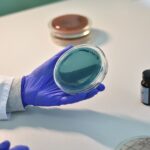
Bacteria growth is a separate issue from chemical toxicity. Even if a filament contained zero toxic chemicals, the printed object would still be unsafe for food due to bacteria risk.
The layer lines in a 3D print create a porous surface. These pores are large enough for bacteria to enter but too small for cleaning tools to reach. Studies have shown that bacteria can survive on 3D printed surfaces even after washing.
Some people try to solve this by coating their prints with food-safe resin or epoxy. This can fill the gaps and create a smooth surface. However, the coating must be applied perfectly and maintained over time. Any scratch or chip in the coating exposes the porous plastic underneath again.
Is ABS Safe for Food Contact in Any Form?
Commercially manufactured ABS products can be food safe. The difference is in how they are made. Injection-molded ABS parts have a smooth, non-porous surface because they are formed under high pressure in a mold.
That manufacturing process creates a surface that can be cleaned and sanitized. A 3D printer cannot replicate that smooth surface. The layer-by-layer deposition method is the fundamental problem.
Even professional-grade 3D printers with very fine layer heights still produce microscopic gaps. They are smaller than what a hobby printer produces, but they are still present. No FDM 3D printer, regardless of quality, can produce a truly non-porous surface.
What Filament Types Are Safer for Food Contact?
No 3D printed object should be considered truly food safe without post-processing. However, some materials are less concerning than others.
| Filament Type | Food Safety Concern | Notes |
|---|---|---|
| ABS | High | Styrene leaching, porous surface |
| PLA | Moderate | Biodegradable, but still porous |
| PETG | Moderate | Less toxic, but same porosity issue |
| Nylon | High | Absorbs water and bacteria readily |
PLA is often discussed as a food-safe option because it is made from cornstarch or sugarcane. The raw material is generally recognized as safe. But printed PLA objects have the same layer-line problem as ABS.
PETG is another common choice. It is used for food containers in its injection-molded form. But again, the printed version has the same porous surface issues.
There is no 3D printer filament that eliminates the fundamental problem of layer lines. The material chemistry is only half the equation.
Can You Make a 3D Print Food Safe?
Yes, with significant post-processing. The goal is to seal the porous surface completely. This requires filling every microscopic gap and then coating the surface with a food-safe sealant.
The process involves several steps. First, the print must be smoothed. For ABS, this can be done with acetone vapor. For other filaments, sanding and filling are required. Then a food-safe epoxy or resin is applied in multiple thin coats.
Even after this process, the object is not permanently food safe. The coating can degrade with washing, especially in a dishwasher. Scratches from utensils can expose the porous plastic underneath. The object would need regular inspection and re-coating.
Most food safety experts recommend a different approach entirely. If you need a food-contact item, buy one that is commercially manufactured. Use your 3D printer for things that do not touch food.
What Can You Safely Print With ABS?
ABS is excellent for many non-food applications. It is strong, impact-resistant, and can withstand higher temperatures than PLA. This makes it suitable for functional parts around the house.
You can safely print things like cable clips, tool handles, brackets, or enclosures for electronics. These items do not come into contact with food or drink, so the chemical and bacterial risks do not apply.
One caution: ABS produces fumes during printing. The printing process releases styrene and other volatile organic compounds. Print in a well-ventilated area or use an enclosure with proper filtration, especially if you have respiratory conditions.
If you want to print items that will be near food but not touching it, like a cookie cutter mold used on dough that will be baked, the heat of baking may kill surface bacteria. But chemicals can still migrate. When in doubt, keep printed plastic away from anything you eat.
Frequently Asked Questions
Can I eat from a 3D printed ABS plate if I seal it?
Sealing with food-safe epoxy can reduce risks, but the coating requires perfect application and regular maintenance. Any damage to the coating exposes porous plastic that can harbor bacteria.
Is PETG filament safer than ABS for food contact?
PETG has less toxic chemical components than ABS, but printed PETG has the same porous layer-line structure. No printed filament is food safe without significant post-processing.
Does acetone smoothing make ABS food safe?
Acetone vapor smoothing reduces surface roughness but does not eliminate all microscopic gaps. It can also leave chemical residue, so it does not make ABS food safe.
What is the safest 3D printing material for food items?
No filament is truly food safe when printed with an FDM printer. For food-contact items, use commercially manufactured products or print a mold and cast with food-safe silicone instead.
