
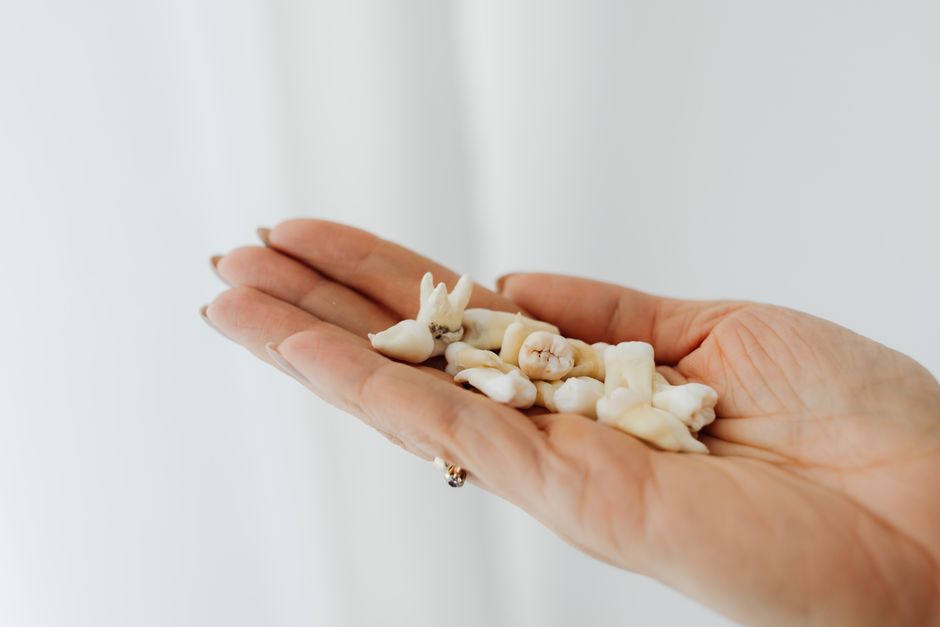
No, a tooth is not a bone. It is a hard, mineralized structure that shares some building blocks with bone, but it differs in how it forms, what it is made of, how it repairs itself, and how it connects to the rest of your body.
That distinction matters more than most people realize. Bones are living tissue packed with cells and blood vessels, constantly tearing down and rebuilding themselves. Teeth are mostly mineral, with a limited ability to repair. Understanding the difference explains why a broken bone can heal on its own but a broken tooth usually cannot, and why your dentist watches your teeth and your doctor watches your bones.
What Is the Difference Between a Tooth and a Bone?
The core difference comes down to composition and blood supply. Bone is living tissue throughout. A tooth is a layered structure with a hard outer shell and a soft living core.
Bone is roughly one-third organic material (mostly the protein collagen) and about two-thirds mineral, largely a calcium-phosphate compound called hydroxyapatite. That mix gives bone a small amount of flexibility along with its strength. Bone also contains marrow, where blood cells are made, and a dense network of blood vessels and nerves.
A tooth has three main layers:
- Enamel — the hard outer coating on the crown. It is about 96 percent mineral, which makes it the hardest substance in the human body. Enamel has no living cells and no blood supply.
- Dentin — the layer beneath enamel. It is softer than enamel, slightly more like bone in composition, and contains microscopic tubules that connect toward the tooth’s center.
- Pulp — the soft center containing nerves, connective tissue, and blood vessels. This is the only part of a tooth with a real blood supply, and it stays inside the tooth.
So a tooth does contain living tissue, but only in its core. The visible part you brush is not living. That is a fundamental difference from bone, which is living tissue all the way through.
Why Do People Think Teeth Are Bones?
Teeth and bones look similar and both depend heavily on calcium and other minerals. Both show up on X-rays. Both are hard. That surface resemblance leads many people to lump them together.
There is a deeper reason too. Teeth and bones share some of the same mineral chemistry and some of the same cells. The cells that build tooth dentin, called odontoblasts, and the cells that build bone, called osteoblasts, are related in origin. But sharing a family tree is not the same as being the same structure.
The confusion is understandable. It is also why so many people assume that if they take care of their bones, their teeth will follow automatically, or the reverse. The two systems overlap, but they age, break down, and repair in different ways.
Can Teeth Heal Themselves Like Bones Do?
Bones heal. Teeth mostly do not.
When you break a bone, cells called osteoblasts move in and build new bone to bridge the gap. Over weeks, the break is filled and remodeled. Bones also rebuild continuously throughout life through a cycle of breakdown and formation.
Enamel is different. Once enamel is lost, the body does not make more of it. The cells that form enamel, called ameloblasts, are gone by the time a tooth erupts into the mouth. Enamel cannot regenerate.
Dentin has a limited repair capacity. If dentin is injured, odontoblasts can lay down a small amount of new dentin, called tertiary dentin, to wall off the injury. This is a defensive response, not true regeneration. It does not replace lost enamel, and it does not rebuild a broken crown.
This is why a cavity does not heal on its own. It is also why a chipped tooth stays chipped. The body has no mechanism to regrow the missing mineral.



How Are Teeth and Bones Connected to the Rest of the Body?
Teeth are anchored to bone, but they are not part of the skeleton. Each tooth sits in a socket in the jawbone and is held in place by the periodontal ligament, a thin layer of fibers that acts like a shock absorber. That ligament is what lets a tooth move slightly under pressure. A bone-to-bone joint does not work this way.
Teeth also do not connect to the skeleton the way bones connect to each other. There is no cartilage, no joint fluid, no marrow inside a tooth. The pulp inside a tooth is a closed chamber. Once a tooth’s blood supply is cut off, the pulp can die, and the tooth will not get a new blood supply on its own.
This closed-off design has a consequence. An infection inside a tooth’s pulp cannot easily be reached by the immune system or by antibiotics circulating in the blood. That is a major reason deep tooth infections often need to be treated directly, with a root canal or extraction, rather than with medication alone.
Do Teeth and Bones Age the Same Way?
They age differently, and the differences are visible.
Bone mass tends to decline with age, especially after menopause in women, when bone loss can accelerate. This is why osteoporosis becomes more common later in life. Bones can become thinner and more prone to fracture.
Teeth do not lose mass the way bones do, but the structures around them change. Gums can recede, exposing the softer root surface. Jawbone can shrink over time, especially where teeth have been lost. The enamel itself does not thin from age alone, but years of wear, acid, and grinding take a toll.
One important overlap: the health of the jawbone affects whether teeth stay anchored. If the bone around a tooth is lost, the tooth can loosen. So while a tooth is not a bone, it depends on bone to stay in place.
What Does This Mean for Your Health?
The practical takeaway is that teeth and bones need different kinds of care, even though they share some nutritional needs.
Both rely on minerals like calcium and phosphate, and both are affected by vitamin D, which helps the body absorb calcium. But you cannot protect your teeth by only tending to your bones, or the reverse.
For teeth, the main risks are decay, gum disease, and enamel wear. These are driven largely by what happens in your mouth day to day — bacteria, sugar, acid, and hygiene. Fluoride, which strengthens enamel and helps prevent decay, works on teeth, not bones.
For bones, the main risks are loss of density and fracture, driven by age, hormones, nutrition, and activity. Weight-bearing exercise and adequate calcium and vitamin D support bone health. These habits do not directly rebuild enamel.
There is one connection worth knowing. Some conditions and medications affect both. For example, certain treatments can influence bone turnover and, in some cases, have effects on the jaw. This is one reason dental and medical care sometimes overlap. If you take medications that affect bone, your dentist may want to know.
The honest position is that teeth and bones are related but distinct systems. Treating them as the same thing can lead to gaps in care. Treating them as separate, each with its own risks and its own prevention, is more accurate and more useful.
Frequently Asked Questions
Is a tooth a bone or not?
A tooth is not a bone. It is a separate mineralized structure with a different composition, no marrow, and a very limited ability to repair itself.
Are teeth harder than bones?
Tooth enamel is the hardest substance in the human body, harder than bone. But hardness is not the same as toughness, and enamel is brittle and cannot regrow once lost.
Can a tooth heal itself like a broken bone?
No, a tooth cannot heal itself the way a bone can. Enamel does not regenerate, and dentin can only form a small amount of protective new tissue in response to injury.
Why do teeth and bones both need calcium?
Both use calcium and phosphate minerals to build their hard structure, so both depend on adequate mineral intake. But getting enough calcium supports bone strength and does not rebuild lost enamel.
