
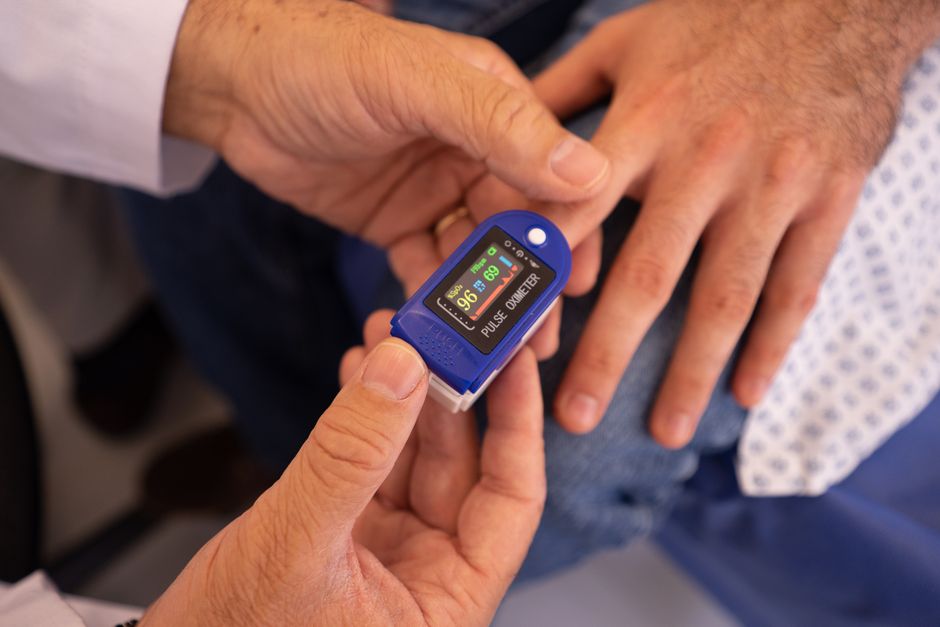
A blood oxygen level of 95% is generally considered normal for a healthy adult at sea level. Pulse oximeters typically read between 95% and 100% in people with healthy lungs and hearts. A reading of 95% sits at the low end of that normal range — it is not usually a sign of a problem on its own, but it is worth watching if it comes with symptoms or keeps dropping.
What matters more than a single number is the pattern. One reading of 95% in a person who feels fine usually means little. The same number in someone who is short of breath, or in someone whose baseline is normally 98%, tells a different story.
What Do Blood Oxygen Numbers Actually Mean?
Pulse oximeters estimate how much of your hemoglobin — the protein in red blood cells that carries oxygen — is bound to oxygen. That estimate is called SpO2. A small device clips onto your finger and shines light through the tissue. Oxygen-rich blood absorbs light differently than oxygen-poor blood, and the device calculates a percentage from that difference.
For healthy adults breathing normal room air at sea level, a normal reading is generally 95% to 100%. Many clinicians treat anything at or above 95% as reassuring. Some guidelines and clinical references use 94% as the lower cutoff of normal. Mildly low readings between 90% and 94% fall into a gray zone that depends heavily on context.
Below 90% is the point where most clinicians take notice. That level is called hypoxemia — low oxygen in the blood — and it usually warrants medical attention, especially if it persists or comes with symptoms.
One thing people often miss: pulse oximeters are estimates, not measurements. They can be off by a few percentage points in either direction. That margin of error matters at the edges, which is why a single reading of 95% is not treated as a diagnosis of anything.
Is 95 Blood Oxygen Good When Its Normal Vs Low?
A reading of 95% is good if you feel well and it matches your usual baseline. It is a normal value for most healthy adults. The number only becomes a concern when it is lower than your own normal, is falling, or is paired with symptoms like breathlessness, chest pain, confusion, or a bluish tint to the lips.
Here is where the “normal vs low” question gets practical. If your oximeter usually reads 98% and today it reads 95%, that three-point drop may be more meaningful than the absolute number suggests. If your device always reads around 95% and you feel fine, that is likely just your baseline.
Context changes the interpretation more than the number itself:
- Feeling well, stable reading: 95% is generally fine.
- Feeling unwell with shortness of breath: 95% deserves a call to a clinician, because symptoms and numbers should be read together.
- Reading falling over hours: a downward trend is more concerning than a single value.
- Known lung or heart disease: your target range may be different, and your clinician is the right person to define it.
The key point: 95% is not a red flag by itself. Symptoms and trends carry more weight than one isolated number.
What Causes a Blood Oxygen Reading of 95%?
Many things can pull a reading to 95% without any disease being present. Cold fingers, poor circulation, dark nail polish, and even the way the device sits on your finger can lower a reading. Movement during measurement is another common cause of an inaccurate result.
When the number reflects your actual oxygen level, common causes include:
- Being at high altitude, where there is less oxygen in the air
- Mild lung conditions such as a cold, flu, or bronchitis
- Sleep apnea, which can cause repeated drops during sleep
- Chronic lung diseases like COPD or asthma
- Heart conditions that affect how well blood circulates
- Anemia, which reduces the blood’s oxygen-carrying capacity
Anemia is a useful example of why the number alone can mislead. In severe anemia, there may be fewer red blood cells overall, but the percentage of those cells carrying oxygen can still look normal. The oximeter measures the percentage, not the total amount of oxygen delivered to your tissues.



When Should You Worry About a Low Reading?
You should seek medical attention if your reading falls below 90%, keeps dropping, or comes with symptoms like shortness of breath, chest pain, confusion, dizziness, or bluish lips or face. Those signs suggest your body may not be getting enough oxygen, and that is not something to monitor at home alone.
For readings between 90% and 94%, the right response depends on how you feel and whether the number is stable. A brief dip that corrects itself is different from a reading that stays low. If you are unsure, calling a clinician is reasonable — that is what they are for.
Some people are told to watch for specific numbers by their own doctors, especially those with chronic lung disease. Those individual targets come from your care team and should be followed over general rules of thumb.
Emergency warning signs that warrant calling emergency services rather than waiting include severe trouble breathing, lips or face turning blue or gray, inability to speak in full sentences, and confusion or fainting.
How Accurate Are Pulse Oximeters?
Pulse oximeters are useful screening tools, but they are not perfectly accurate. Readings can be off by a few percentage points, and accuracy varies between devices and between people.
Accuracy can be affected by several factors:
- Cold hands or poor circulation
- Dark nail polish or artificial nails
- Movement during the reading
- Very low blood pressure
- Skin pigmentation, which can affect some devices
The skin pigmentation issue deserves attention. Research has found that pulse oximeters can be less accurate in people with darker skin, sometimes reading higher than the true blood oxygen level. This has been documented in clinical settings and is a recognized limitation, not a rare fluke. If you have darker skin and your reading seems inconsistent with how you feel, trust your symptoms and get checked.
A single reading is a snapshot. Taking a few readings over time, on a warm hand, without nail polish, gives a clearer picture than one number.
Does a 95% Reading Mean You Need Oxygen?
No. A reading of 95% in a person who feels well does not mean you need supplemental oxygen. Oxygen therapy is a medical treatment prescribed for specific conditions, and it is not based on a single home oximeter reading.
Supplemental oxygen is generally prescribed when a clinician has confirmed low blood oxygen through proper testing and when the underlying condition calls for it. Using oxygen without medical guidance is not recommended — too much oxygen can cause problems of its own in some situations.
If you are concerned about your readings, the useful step is to talk to a clinician about what your numbers mean for you specifically. Home devices are helpful for tracking, but they do not replace an evaluation.
What Should You Do If Your Reading Is 95%?
If you feel fine, take a breath and recheck in a few minutes. Warm your hands, remove nail polish if you have it, and sit still during the reading. Often the number comes up simply because the measurement was better.
If the reading stays at 95% and you feel well, it is generally not a cause for alarm. Keep an eye on whether it changes over the next day or two, and note whether you have any symptoms.
If you have symptoms — breathlessness, chest tightness, unusual fatigue, confusion — get medical advice regardless of the number. Symptoms and readings together tell a fuller story than either one alone. And if the reading drops below 90% or you develop severe breathing trouble, seek emergency care.
Frequently Asked Questions
Is 95 oxygen level normal?
Yes, 95% is generally considered a normal blood oxygen level for a healthy adult at sea level. Normal readings typically fall between 95% and 100%.
Is 95 blood oxygen too low?
Not usually. A reading of 95% is at the low end of normal and is not typically a concern in someone who feels well. It becomes more meaningful if it is lower than your usual baseline, is falling, or comes with symptoms.
What oxygen level is dangerously low?
Below 90% is generally considered low and warrants medical attention, especially if it persists or comes with symptoms like shortness of breath or confusion. Severe breathing trouble or bluish lips is an emergency.
Can anxiety cause low blood oxygen readings?
Anxiety does not usually lower true blood oxygen, but it can cause rapid breathing and a feeling of breathlessness that makes you check your reading more often. If you feel short of breath, get evaluated rather than relying on the device alone.
