
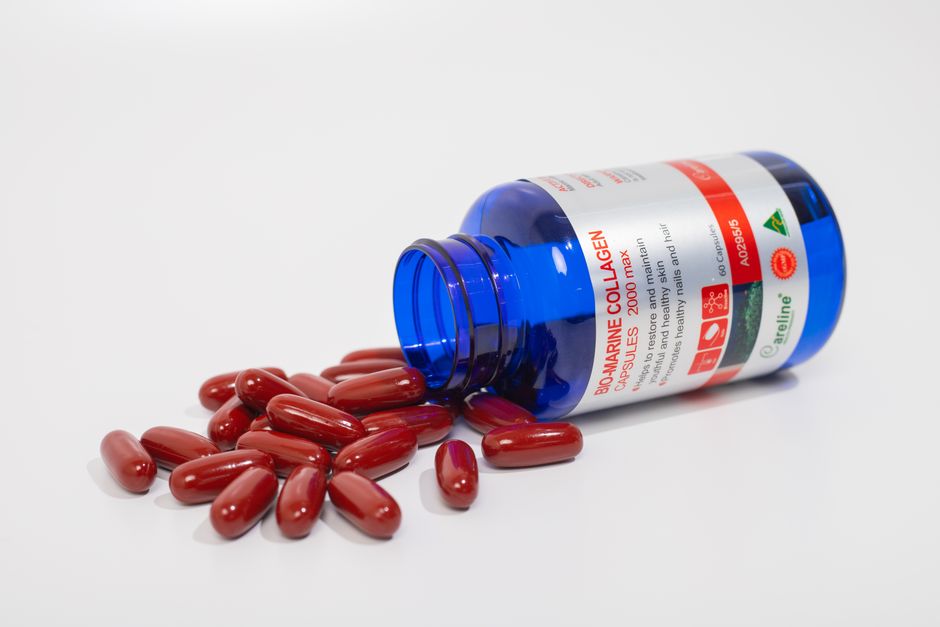
Many people start taking collagen powder hoping to improve their skin and ease joint discomfort. The most common serving size on supplement labels is 5 grams, often called one scoop. For skin, the research is fairly consistent that 5 grams daily can make a difference. For joints, the evidence points to a higher amount, typically around 10 grams daily, though some studies show benefits at lower doses. The short answer is that 5 grams is a reasonable starting point for skin health, but it may not be enough for significant joint support.
What Does the Research Say About 5 Grams for Skin?
Collagen is the main structural protein in your skin. It provides firmness and elasticity. As you age, your body produces less collagen, which contributes to fine lines and thinner skin.
Several clinical trials have tested collagen peptides for skin aging. Many of these studies used doses between 2.5 and 10 grams per day. A significant number of them used 5 grams. Results generally show improvements in skin hydration, elasticity, and roughness after 8 to 12 weeks of daily use.
These studies measure skin changes with specialized devices, not just how people feel. The improvements are modest but measurable. Researchers believe the peptides stimulate fibroblasts, the cells that make new collagen. This is not a replacement for the collagen you lose with age, but it appears to support the skin’s natural production.
If your goal is skin hydration and elasticity, 5 grams per day is supported by clinical evidence. It is not a guarantee of dramatic results, but it is a dose that has shown benefits in controlled studies.
Is 5 Grams Enough for Joint Health?
Joint cartilage is mostly collagen. The idea behind taking collagen for joints is to provide building blocks and stimulate cartilage repair. The evidence here is different from the skin data.
Research on collagen peptides for joint pain and function often uses higher doses. Many studies on knee osteoarthritis or exercise-related joint pain have used 10 grams per day. Some have used as much as 15 grams. These studies report reduced pain and improved function compared to placebo.
A few studies show benefits at 5 grams daily for joint comfort, especially in active individuals. However, the larger body of evidence for joint-specific benefits leans toward 10 grams. If you are taking 5 grams for skin and hoping it will also fix joint pain, the dose may be too low to notice a real effect.
One important detail: collagen is a protein, and your body breaks it down into amino acids. It does not go directly to your joints. The peptides appear to accumulate in cartilage over time, but the process is gradual and dose-dependent. Higher intake generally means more available building blocks.
What Is the Difference Between Collagen Types?
Not all collagen is the same. There are at least 28 types of collagen in the human body, but supplements focus on a few.
Type I collagen is the most abundant in your body. It is found in skin, bones, tendons, and ligaments. Most skin-focused collagen supplements are primarily Type I. Type II collagen is the main type in cartilage. Some joint supplements use Type II, but often in a different form called undenatured collagen, which is taken in much smaller doses.
Most collagen peptide powders contain Type I and Type III collagen. These come from bovine (cow) or marine (fish) sources. They are hydrolyzed, meaning the collagen is broken down into smaller peptides that are easier to absorb.
For skin, Type I is the key player. For joints, the research is more mixed. Some studies use Type I collagen peptides for joint pain with positive results. Others use Type II. The dose matters more than the type in most studies. A 10-gram dose of Type I collagen peptides has shown joint benefits, even though Type II is the primary collagen in cartilage.





How Much Collagen Is in Food vs. Supplements?
Food sources of collagen include bone broth, chicken skin, pork skin, and fish skin. These foods contain collagen, but the amount varies widely. A cup of bone broth may contain anywhere from 1 to 10 grams of collagen, depending on how it is made. There is no standard measure.
Eating collagen-rich foods provides the same amino acids as supplements. Your body does not know the difference between collagen from food and collagen from a scoop of powder. The advantage of supplements is consistency. You know exactly how much you are getting.
Your body also makes collagen from amino acids in any protein source. You do not need to eat collagen to make collagen. Eating eggs, meat, fish, or dairy provides the building blocks. However, collagen is rich in specific amino acids like glycine and proline, which are less common in other proteins.
For practical purposes, a supplement is the most reliable way to hit a specific daily dose. Food can contribute, but you cannot easily track how much collagen you are consuming from a bowl of soup.
What Happens if You Take More Than 5 Grams?
Collagen is generally considered safe. It is a protein, and your body processes it like any other protein. Taking 10 or even 15 grams per day is unlikely to cause harm for most healthy adults.
Some people report digestive discomfort with higher doses. This is usually mild and temporary. Starting with 5 grams and increasing gradually can help your digestive system adjust.
There is no established upper limit for collagen intake. Clinical trials have used doses up to 15 grams daily for extended periods without serious side effects. The main concern is not toxicity but cost and whether the extra amount provides additional benefit.
More is not necessarily better. The body can only use so much protein at one time for collagen synthesis. Excess amino acids are used for energy or other purposes. There is no evidence that taking 20 grams daily gives you double the skin benefit of 10 grams.
How Long Before You See Results?
Collagen is not a quick fix. Your body needs time to absorb the peptides and incorporate them into tissue. Most studies measure results after 8 to 12 weeks of daily use.
For skin, visible changes in hydration and elasticity typically appear after 8 weeks. Some people notice changes sooner, but 3 months is a realistic expectation for noticeable improvement.
For joints, the timeline is similar or longer. Studies often run 12 to 24 weeks. Joint pain relief may take longer to feel because cartilage is slow to repair. It has no blood supply, so nutrients reach it through diffusion.
Consistency matters more than dose timing. Taking collagen every day is more important than taking a larger amount occasionally. The peptides do not stay in your body for long. They are absorbed and either used or excreted within hours.
Should You Take Collagen With Vitamin C?
Vitamin C is required for collagen synthesis in the body. Your body cannot make collagen without it. This is an established biological fact.
Some supplement brands add vitamin C to their collagen products. Others suggest taking vitamin C alongside. The logic is sound: vitamin C is a cofactor for the enzymes that stabilize collagen molecules.
Most people get enough vitamin C from their diet. Citrus fruits, berries, and vegetables provide it. If you eat a reasonably balanced diet, you likely do not need extra vitamin C for collagen to work.
If you want to be thorough, taking your collagen with a glass of orange juice or a serving of fruit is a simple way to ensure adequate vitamin C. There is no harm in this, and it may support the process.
What About Collagen Powders vs. Capsules?
Collagen powders are more common than capsules. A single capsule typically contains 500 to 1,000 milligrams of collagen. To reach 5 grams, you would need to take 5 to 10 capsules per day. That is impractical for most people.
Powders allow you to take a larger dose in one serving. They dissolve in water, coffee, or smoothies. The taste is generally neutral.
Liquid collagen shots are another option. These usually contain 2.5 to 5 grams per bottle. They are convenient but more expensive per gram than powder.
The form does not affect absorption. Your body digests collagen the same way regardless of whether it comes from powder, capsules, or liquid. Choose the form that fits your routine and budget.
Frequently Asked Questions
Can I take 10 grams of collagen for both skin and joints?
Yes, 10 grams per day is safe and may cover both goals. This dose is well within the range used in clinical trials for joint health.
Is it better to take collagen on an empty stomach?
No evidence shows that timing matters for absorption. Taking it with food or on an empty stomach both appear to work.
Will 5 grams of collagen cause weight gain?
Collagen has about 35 calories per 10-gram serving. It is unlikely to cause weight gain at this dose.
How long does a 5-gram daily dose last before seeing results?
Most studies show measurable skin changes after 8 to 12 weeks of daily use. Joint benefits may take up to 24 weeks.
