
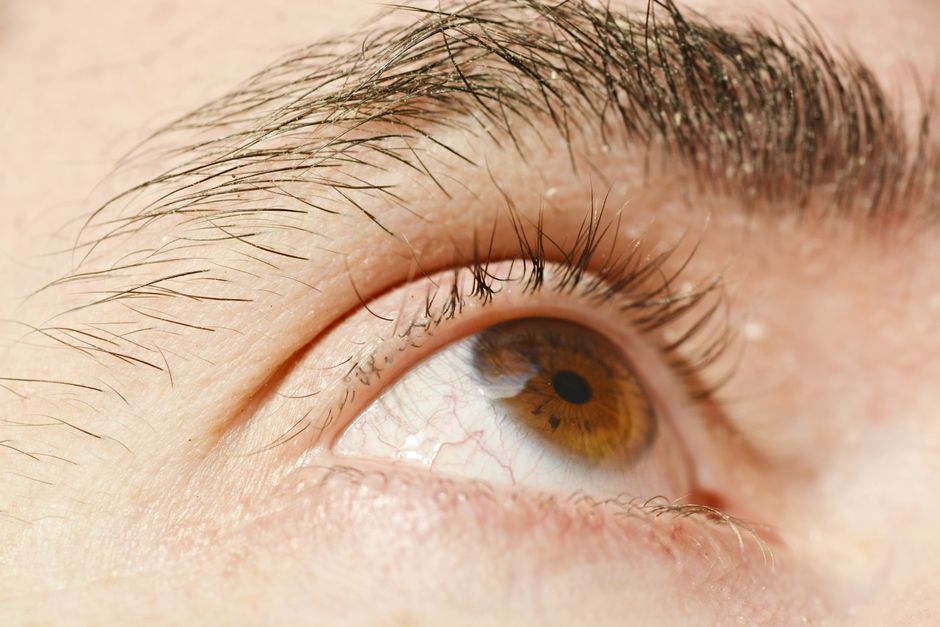
A -3.5 prescription means you have moderate myopia, or nearsightedness. It is not considered severe vision loss, but it is a level that requires corrective lenses for clear distance vision. At this level, objects become blurry beyond about a foot from your face, and you would not be able to drive or read a whiteboard without glasses or contacts.
What Does a -3.5 Prescription Actually Mean?
The number on your prescription is measured in diopters. A minus sign means you are nearsighted, which is the medical term for myopia. The higher the number after the minus sign, the stronger the prescription and the worse your distance vision is without correction.
A -3.5 prescription is considered moderate myopia. For reference, mild myopia typically ranges from -0.25 to -3.00. Moderate myopia generally falls between -3.25 and -6.00. High myopia begins around -6.00 or higher.
With a -3.5 prescription, you can see close objects clearly, like a book or your phone. Distance vision is the problem. Without glasses or contacts, faces become hard to recognize across a room, and road signs are unreadable from a normal driving distance.
How Blurry Is -3.5 Vision Without Glasses?
At -3.5 diopters, your natural clear focus point is roughly 28 to 29 centimeters from your eyes. Anything beyond that distance becomes progressively blurry. In practical terms, this means you can read a book held normally, but the television across the room is a fuzzy blur.
Driving without correction at this level is unsafe. Standard vision requirements for a driver’s license in most U.S. states expect corrected vision of at least 20/40. A -3.5 prescription usually corresponds to uncorrected vision around 20/200 or worse, meaning you see at 20 feet what someone with normal vision sees at 200 feet.
This is a common level of myopia. Many people function well with this prescription by wearing glasses full-time or using contacts. The key point is that -3.5 is not a rare or extreme prescription, but it does require consistent correction for most daily activities.
Is -3.5 Considered a High Prescription?
No, -3.5 is not considered high myopia. Eye care professionals classify high myopia as -6.00 or greater. That distinction matters because high myopia carries increased risks for eye health problems later in life, including retinal detachment, glaucoma, and macular degeneration.
Moderate myopia like -3.5 does carry some increased risk compared to having no myopia at all, but the risks are substantially lower than with high myopia. This is not a level that requires special monitoring beyond your regular eye exams.
Your eye doctor will typically recommend an eye exam every one to two years. This allows them to check that your prescription is stable and to look for any changes in the health of your retina and optic nerve.




What Causes Myopia to Reach -3.5?
Myopia develops when the eyeball grows slightly too long from front to back. This causes light to focus in front of the retina instead of directly on it. The retina is the light-sensitive tissue at the back of the eye, and when light misses it, images appear blurry.
Genetics play a strong role in myopia. If one or both parents are nearsighted, you are more likely to be nearsighted as well. However, genetics are not the whole story. Environmental factors also matter.
Research consistently shows that time spent outdoors during childhood reduces the risk of developing myopia. Conversely, excessive near work, like prolonged reading or screen time, is associated with myopia progression in children and teenagers. The prescription typically stabilizes in the early twenties once eye growth stops.
Can You Fix -3.5 Vision Without Glasses?
Contact lenses and glasses are the standard correction for -3.5 myopia. Both work by bending light so it focuses exactly on the retina. Neither changes the underlying shape of your eye, but both fully correct the blur.
Refractive surgery is a longer-term option. LASIK and PRK reshape the cornea, the clear front surface of the eye, to correct the focusing error. A -3.5 prescription is well within the typical range for these procedures, and many people with this level of myopia are good candidates.
Not everyone qualifies for laser eye surgery. Corneal thickness, age, and overall eye health all factor into candidacy. An eye surgeon can determine whether you are a candidate after a thorough evaluation.
Orthokeratology is another option. This involves wearing specially fitted rigid contact lenses overnight that temporarily flatten the cornea. The effect wears off over a day or two, so the lenses must be worn every night. This approach is more commonly used in children to slow myopia progression.
There is no evidence that eye exercises, dietary supplements, or vision training can reduce a -3.5 prescription. These methods do not change the physical length of the eyeball, which is the root cause of myopia.
Does a -3.5 Prescription Get Worse Over Time?
For most adults, a -3.5 prescription is stable. Myopia typically stops progressing in the early twenties as the eye finishes growing. Once stable, most people stay within a quarter or half diopter of their current prescription for years.
Some adults do experience slight changes, often in their forties. This is usually related to presbyopia, the age-related hardening of the eye’s lens that makes close-up work difficult. Presbyopia does not make myopia worse. Instead, it creates a need for reading glasses in addition to distance glasses, or for progressive lenses that handle both distances.
If you notice your distance vision worsening more rapidly, see your eye doctor. A sudden change in prescription can sometimes signal other eye health issues that deserve attention.
When Should You See an Eye Doctor?
If you have a -3.5 prescription and wear glasses or contacts, you should have a comprehensive eye exam every one to two years. This is true even if your vision feels fine. The exam checks for conditions that have no early symptoms, like glaucoma and diabetic retinopathy.
See an eye doctor sooner if you experience any of the following:
- Sudden flashes of light in one eye
- A sudden increase in floaters
- A shadow or curtain blocking part of your vision
- Sudden blurriness that does not clear with blinking
- Eye pain or redness
These symptoms can indicate a retinal tear or detachment, which requires prompt treatment. While the risk is low at -3.5, it is not zero, and rapid response matters for preserving vision.
What Is the Difference Between -3.5 and Other Prescriptions?
Understanding where -3.5 sits on the scale helps put it in context. Here is a simple breakdown of prescription ranges:
| Category | Diopter Range | Typical Experience |
|---|---|---|
| Mild myopia | -0.25 to -3.00 | Blurry distance vision, may need glasses only for driving or class |
| Moderate myopia | -3.25 to -6.00 | Consistent need for correction, glasses or contacts for most activities |
| High myopia | -6.00 and above | Strong correction needed, higher risk of eye health complications |
Your prescription number is just one part of the picture. Your eye doctor also considers your age, eye health, and lifestyle. A -3.5 prescription may feel significant if you have never needed glasses, but it is a very manageable level of myopia.
Can -3.5 Vision Be Corrected to 20/20?
Yes. With the correct glasses or contact lenses, most people with -3.5 myopia achieve 20/20 vision or very close to it. The prescription is straightforward to correct because the refractive error is uniform and moderate.
If you do not reach 20/20 with your current prescription, tell your eye doctor. This can happen if the prescription is slightly outdated or if you have an additional condition like astigmatism that is not fully corrected. In most cases, a small adjustment resolves the issue.
Refractive surgery also aims for 20/20 or better. Most people who undergo LASIK or PRK with a -3.5 prescription achieve excellent uncorrected vision. Results vary by individual, and your surgeon will discuss realistic expectations before the procedure.
Frequently Asked Questions
Is -3.5 eyesight bad enough to need glasses all the time?
Most people with -3.5 myopia need glasses or contacts for all distance activities, including driving, watching television, and recognizing faces. Close-up tasks like reading may be possible without correction, but consistent wear is the norm for comfort and safety.
Can -3.5 vision be corrected with LASIK?
Yes, -3.5 is well within the typical range for LASIK and PRK. Most people with this prescription are good candidates, though final approval depends on corneal thickness, age, and overall eye health.
Is -3.5 the same as 20/200 vision?
Not exactly, but they are roughly similar. A -3.5 prescription often corresponds to uncorrected vision around 20/200, meaning you see at 20 feet what a person with normal vision sees at 200 feet. The exact equivalent varies between individuals.
Does a -3.5 prescription get worse with age?
For most adults, a -3.5 prescription is stable after the early twenties. Age-related changes in the forties are usually due to presbyopia, which affects near vision and is a separate condition from myopia.
