
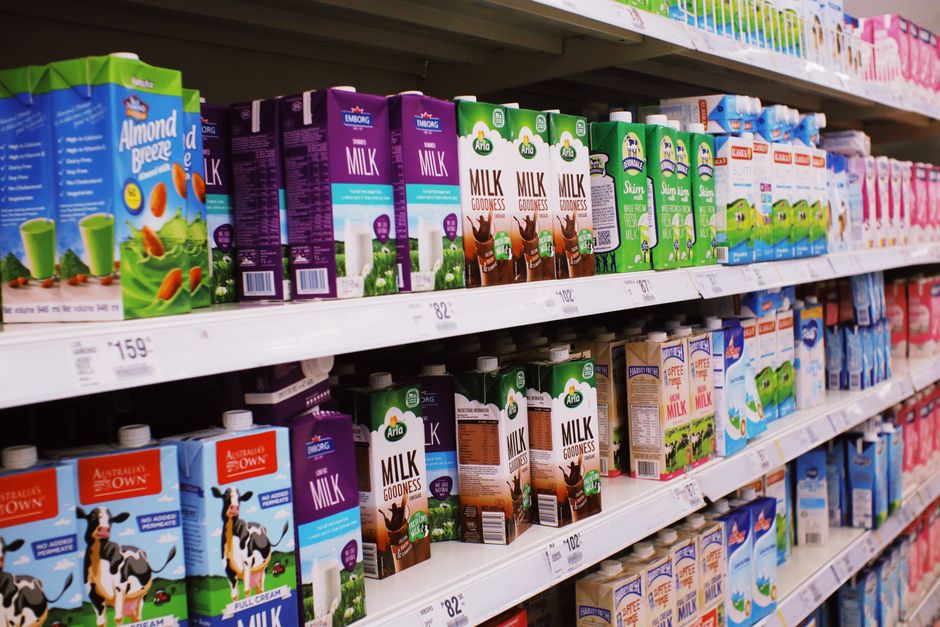
Walk down any dairy aisle and you will see jugs labeled whole, 2%, 1%, and skim. The number on the label refers to the percentage of milk fat by weight, not by calories. So yes, 2% milk is low fat by the official definition, but the label can still confuse people. The term “2%” tells you that milk fat makes up 2% of the total weight of the milk. That is a fact about the product, but it does not tell you everything about how it fits into a healthy diet.
What Does the 2% on the Label Actually Mean?
The percentage on a milk jug is the weight of the milk fat divided by the total weight of the milk. For 2% milk, that means 2 grams of fat per 100 grams of milk. This is a measurement by weight, not by volume or by calories.
Here is where the label gets tricky. Even though 2% sounds like a small number, fat makes up a much larger share of the calories in the milk. That is because fat has more calories per gram than protein or carbohydrates. In a standard glass of 2% milk, fat provides roughly 35% of the total calories. So the milk is 2% fat by weight, but it is not 2% fat by calories.
This distinction matters for people counting calories or tracking macronutrients. The label is technically accurate, but it can mislead someone who assumes the number reflects the share of calories coming from fat.
Is 2% Milk Considered Low Fat by Official Standards?
Yes. The Food and Drug Administration has specific rules for how dairy products can be labeled. Under those rules, low-fat milk must contain between 0.5% and 2% milk fat. That means 2% milk sits right at the top of the low-fat category.
Reduced-fat milk, by comparison, contains at least 25% less fat than whole milk. Since whole milk contains about 3.25% milk fat, 2% milk qualifies as both reduced-fat and low-fat under the official definitions.
Skim milk, also called nonfat milk, must contain less than 0.5% milk fat. It is the only milk that contains virtually no fat. Whole milk is not low-fat at all, even though its fat content of about 3.25% still sounds modest.
How Does 2% Milk Compare to Whole, 1%, and Skim?
The differences between milk types come down to fat content, calories, and how the milk feels in your mouth. Fat carries flavor and gives milk its creamy texture. Removing fat changes both.
Here is a straightforward comparison of the standard options available in most US grocery stores:
| Milk Type | Milk Fat by Weight | Fat Calories per Cup | Total Calories per Cup |
|---|---|---|---|
| Whole | 3.25% | About 70 | About 150 |
| 2% | 2% | About 45 | About 120 |
| 1% | 1% | About 20 | About 100 |
| Skim | Less than 0.5% | About 0 | About 80 |
These are standard USDA nutritional values for unflavored cow’s milk. The exact numbers can vary slightly by brand, but the pattern is consistent. Each step down in fat removes about 20 to 25 calories per cup.
Protein and calcium levels stay roughly the same across all types of milk. Removing fat does not remove the protein or the calcium. That is an important point for people who worry that low-fat milk is less nutritious.





What Nutrients Do You Lose When You Choose 2% Milk?
Fat-soluble vitamins are the main nutritional difference. Vitamins A, D, E, and K dissolve in fat. When manufacturers remove fat from milk, they remove some of these vitamins with it.
In the United States, most commercial milk is fortified with vitamin A and vitamin D. This fortification applies to 2%, 1%, and skim milk. So in practice, you get comparable levels of these vitamins regardless of which milk you choose. The fortification is required by law in many states.
Whole milk naturally contains more of these vitamins before fortification. But because of the fortification process, the practical difference between whole and 2% milk is small for vitamin A and D intake.
Does 2% Milk Help With Weight Management?
Choosing 2% milk over whole milk saves you about 30 calories per cup. Over a week, that adds up to roughly 200 calories if you drink a cup a day. That is a modest difference, not a dramatic one.
Some research suggests that full-fat dairy may be associated with lower body weight, but the evidence is mixed and the studies are observational. That means researchers see a connection, but they cannot prove that milk fat causes the difference. People who drink whole milk may have other habits that explain the association.
What the evidence does support is simpler: weight management comes down to total calorie balance. If 2% milk helps you stay within your calorie goals, it is a reasonable choice. If whole milk fits your budget and you enjoy it, the difference in calories is small enough that it likely does not matter much for most people.
No study has shown that any single type of milk causes weight loss. Milk is a food, not a weight-loss tool.
Is 2% Milk a Good Choice for Heart Health?
Saturated fat is the main concern with full-fat dairy. The Dietary Guidelines for Americans recommend limiting saturated fat to less than 10% of daily calories. That is about 22 grams per day for someone eating 2,000 calories.
A cup of whole milk contains about 4.6 grams of saturated fat. A cup of 2% milk contains about 3 grams. Choosing 2% over whole saves you roughly 1.5 grams of saturated fat per cup.
For someone with high cholesterol or a family history of heart disease, that difference can matter. But the evidence on dairy fat and heart disease is not straightforward. Some recent studies suggest that full-fat dairy may not increase heart disease risk as much as once thought. Other studies show a modest increase in risk. The research is genuinely mixed.
What is clear is that replacing saturated fat with unsaturated fat, like the fat in olive oil or nuts, is more beneficial than simply swapping whole milk for 2%. The type of fat you eat matters as much as the amount.
Who Should Choose 2% Milk Over Other Options?
Children between the ages of 1 and 2 are the main group where whole milk is specifically recommended. The American Academy of Pediatrics recommends whole milk for this age group because young children need the fat for brain development. After age 2, children can transition to low-fat or reduced-fat milk.
For adults, the choice depends on your overall diet. If you eat a diet rich in saturated fat from other sources, choosing 2% or 1% milk can help you stay within the recommended limits. If your diet is already low in saturated fat, whole milk is unlikely to cause problems.
People with lactose intolerance should know that the fat content does not affect lactose levels. All types of cow’s milk contain the same amount of lactose. Choosing 2% milk will not help with lactose intolerance. Lactose-free milk is the option for that condition.
People managing their calorie intake may prefer 1% or skim milk to save additional calories. People who find skim milk too watery often prefer the texture of 2%. Taste preference is a legitimate factor. The best milk is the one you will actually drink consistently.
What About Plant-Based Milk Alternatives?
Plant-based milks like almond, soy, and oat milk have complicated the dairy aisle. These products are not milk by the FDA definition, but they are marketed as alternatives. Their fat content varies widely.
Unsweetened almond milk has very little fat and very few calories. Soy milk has a fat profile closer to 2% milk. Oat milk is typically higher in carbohydrates. None of these are nutritionally identical to cow’s milk.
Cow’s milk provides naturally occurring protein, calcium, and B vitamins. Plant-based milks are often fortified to match these levels, but the fortification varies by brand. If you choose a plant-based milk, check the label for calcium and vitamin D content. Some brands contain significantly less than cow’s milk.
Frequently Asked Questions
Is 2% milk really low fat?
Yes, 2% milk qualifies as low-fat under FDA labeling rules, which define low-fat milk as containing between 0.5% and 2% milk fat. It sits at the upper limit of that category.
How many calories are in a glass of 2% milk?
A standard 8-ounce cup of 2% milk contains about 120 calories. About 45 of those calories come from fat.
Is 2% milk better for you than whole milk?
It depends on your overall diet and health goals. 2% milk has less saturated fat and fewer calories, but whole milk contains more naturally occurring fat-soluble vitamins.
Can you lose weight drinking 2% milk?
No single food causes weight loss. Choosing 2% milk over whole milk saves about 30 calories per cup, which can help with a calorie deficit but will not cause weight loss on its own.
