

Attention deficit hyperactivity disorder can be diagnosed in children as young as 4 years old, and in some cases even younger, under specific clinical conditions. The American Academy of Pediatrics has long recommended that evaluation for ADHD may begin at age 4. For children under 4, diagnosis is possible but uncommon and generally reserved for severe, unmistakable symptoms that cause clear impairment across multiple settings.
What makes early diagnosis tricky is that the behaviors defining ADHD overlap heavily with normal toddler and preschool development. A 3-year-old who cannot sit still through a story is not necessarily showing signs of a disorder. A 3-year-old who cannot sit still at all, in any setting, for any activity, and who injures themselves or others because of it, is a different picture entirely.
What Does the Research Say About Diagnosing ADHD Before Age 4?
Diagnosing ADHD before age 4 is possible but uncommon. The core challenge is that the diagnostic criteria themselves were designed with older children in mind, and many of the behaviors listed as symptoms are developmentally normal in toddlers.
The Diagnostic and Statistical Manual of Mental Disorders, Fifth Edition (DSM-5), which is the standard reference used by clinicians in the United States, describes ADHD symptoms in ways that assume a certain level of developmental maturity. A child must show at least six symptoms of inattention, or six symptoms of hyperactivity and impulsivity, for a diagnosis — and those symptoms must be present before age 12, persist for at least six months, and cause problems in more than one setting.
For children under 4, those thresholds become harder to apply. A 2-year-old who climbs on furniture, runs instead of walks, and cannot wait for anything is behaving like a 2-year-old. The question clinicians ask is not whether the behavior exists — it is whether the behavior is far outside what is expected for that child’s age and whether it causes real harm or dysfunction.
Some research suggests that ADHD can be identified in children as young as 2 or 3 when symptoms are severe and pervasive. But these diagnoses are made cautiously, usually by specialists in developmental pediatrics or child psychiatry, and often with the understanding that the picture may change as the child grows.
Why Is It So Hard to Diagnose ADHD in Toddlers and Preschoolers?
The brain changes fast in early childhood. A child who seems impossibly impulsive at 2 may look completely different at 4. That does not mean early symptoms are meaningless — it means the diagnosis has to be made with an eye on how the brain develops.
Several factors make early diagnosis difficult:
- Developmental overlap. Inattention, impulsivity, and high activity levels are normal parts of toddler behavior. The line between “active” and “hyperactive” is not always clear.
- Language and self-report limits. Young children cannot describe their own experience. Clinicians rely entirely on parent and caregiver observations.
- Setting variability. A child might behave differently at home than at daycare. Symptoms must show up in more than one environment to meet diagnostic criteria.
- Sleep and other conditions. Chronic sleep problems, hearing issues, language delays, and anxiety can all produce behavior that looks like ADHD.
- Rapid developmental change. The prefrontal cortex, which governs attention and impulse control, is still forming rapidly. A snapshot at age 3 may not predict the child at age 6.
None of this means early diagnosis is impossible. It means it requires more caution, more observation time, and more input from multiple caregivers than diagnosis in an older child.
How Young Can ADHD Be Diagnosed Age 4 And Under in Clinical Practice?
In clinical practice, age 4 is the most common lower boundary for a formal ADHD diagnosis. The American Academy of Pediatrics recommends that primary care clinicians evaluate children for ADHD starting at age 4. Below that age, most clinicians are reluctant to assign the diagnosis unless the symptoms are extreme and clearly impairing.
That said, some specialists do diagnose ADHD in 3-year-olds. The key factors that push a clinician toward an early diagnosis include:
- Symptoms that are severe, not mild or borderline
- Impairment in multiple settings — home, daycare, playground, family gatherings
- Behavior that puts the child or others at risk of injury
- Symptoms that have been present consistently for at least six months
- No better explanation — such as a sleep disorder, hearing problem, or developmental condition — for the behavior
When a child under 4 receives an ADHD diagnosis, it is usually because the symptoms are not subtle. These are children who cannot participate in any structured activity, who hurt themselves or others regularly, and whose families are in significant distress. In those cases, waiting until age 4 or 5 may not serve the child well.
For children under 3, a formal ADHD diagnosis is rare. Some clinicians use the term “regulatory disorder” or describe the symptoms without assigning the ADHD label, preferring to monitor development and revisit the question later.
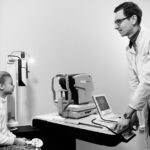




What Does the Diagnostic Process Look Like for a Young Child?
There is no blood test, brain scan, or single checklist that can diagnose ADHD. The process is clinical — it depends on gathering information from multiple sources and ruling out other explanations.
For a young child, the evaluation typically includes:
- Parent and caregiver interviews. Clinicians ask detailed questions about behavior across different settings and times of day.
- Standardized rating scales. Tools like the Conners Rating Scales or the Vanderbilt Assessment Scale are commonly used. These are not diagnostic on their own but help organize observations.
- Developmental screening. This checks whether the child is meeting milestones for language, motor skills, and social development.
- Observation. Some clinicians observe the child directly in a structured setting.
- Medical history. Sleep patterns, hearing, vision, and any history of trauma or stress are all relevant.
The goal is not just to see if the child meets criteria for ADHD. It is to understand the whole child and make sure nothing else is driving the behavior.
What Are the Risks of Diagnosing Too Early or Too Late?
Both early and delayed diagnosis carry risks. The goal is to get it right, not to get it fast.
Diagnosing too early — before symptoms are clearly outside the range of normal development — can lead to unnecessary treatment and stigma. A child labeled with ADHD at 2 or 3 may carry that label through school even if the symptoms resolve. Some children with early behavior problems do not go on to have ADHD.
Diagnosing too late means a child may struggle unnecessarily. Preschoolers with severe ADHD are at higher risk of injury, expulsion from daycare or preschool, and family stress. Early intervention — whether behavioral therapy, parent training, or in some cases medication — can make a real difference.
The American Academy of Pediatrics recommends that for children ages 4 and 5, behavioral therapy — specifically parent training in behavior management — should be the first line of treatment before medication is considered. This is a well-established recommendation based on evidence that behavioral approaches can be effective in this age group.
What Treatment Options Exist for Very Young Children?
For children under 6, the first-line treatment is behavioral, not pharmaceutical. Parent training in behavior management is the most studied approach and is recommended by major clinical guidelines.
This type of therapy teaches parents specific strategies — clear routines, consistent consequences, positive reinforcement, and structured environments — to help manage their child’s behavior. It does not blame parents for the child’s symptoms. It gives them tools.
Medication is sometimes used in children ages 4 to 5 when behavioral therapy alone is not enough and symptoms are severe. The evidence for medication in this age group is more limited than in older children, and side effects can be more pronounced. Decisions about medication in very young children are typically made by specialists and monitored closely.
For children under 4, there is no standard treatment protocol specifically for ADHD. Most clinicians focus on behavioral strategies, parent support, and close developmental monitoring. No clinical guidelines currently exist for ADHD medication in children under 4.
When Should a Parent Seek an Evaluation?
A parent should consider an evaluation when behavior is consistently interfering with daily life. That means more than a bad day or a difficult phase.
Signs that may warrant a conversation with a pediatrician or specialist include:
- Behavior that is far more intense or frequent than other children the same age
- Inability to participate in any structured activity, even briefly
- Frequent injuries or accidents related to impulsivity
- Problems at daycare or preschool that are ongoing, not occasional
- Family stress that feels unmanageable
- Symptoms that have been present for months, not weeks
Parents do not need a referral to start the conversation. A pediatrician can begin the evaluation or refer to a developmental specialist. The earlier a child gets the right support, the better the chances of reducing struggle — regardless of whether the final diagnosis is ADHD or something else.
Frequently Asked Questions
Can a 2-year-old be diagnosed with ADHD?
A 2-year-old is rarely diagnosed with ADHD because the behaviors that define the condition overlap heavily with normal toddler development. A formal diagnosis at this age is uncommon and usually only made when symptoms are severe, pervasive, and clearly impairing.
What is the youngest age ADHD can be diagnosed?
The youngest age at which ADHD is typically diagnosed is around 4 years old, though some specialists may diagnose at age 3 in severe cases. Diagnosis under age 3 is very rare and generally avoided unless symptoms are extreme.
Is ADHD medication used in children under 4?
No standard clinical guidelines exist for ADHD medication in children under 4. For children ages 4 and 5, behavioral therapy is recommended first, with medication considered only if symptoms are severe and behavioral approaches alone are not enough.
What should I do if I think my toddler has ADHD?
Start by talking to your child’s pediatrician about your concerns. A pediatrician can begin an evaluation, rule out other causes, and refer you to a developmental specialist if needed.
