
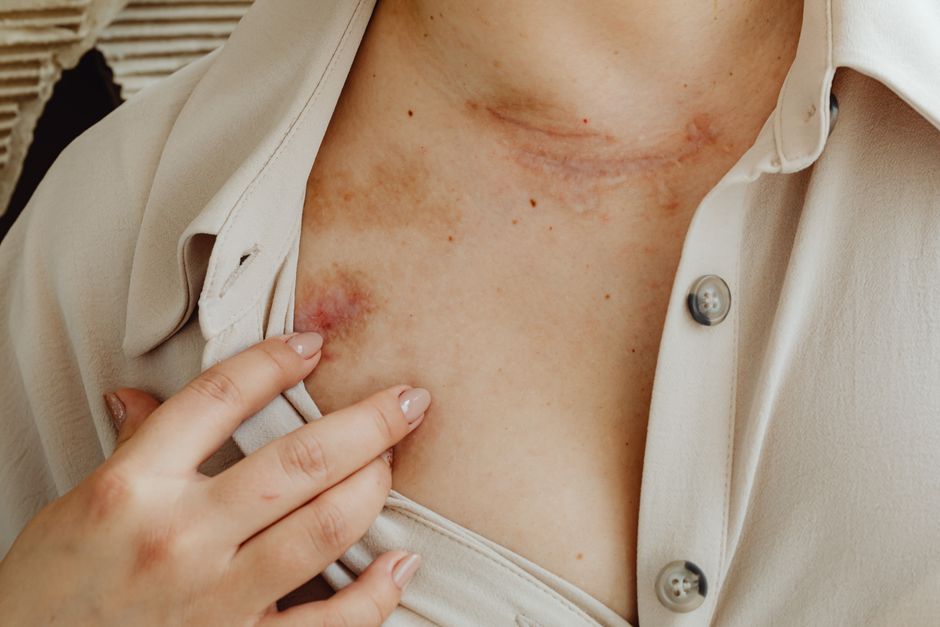
A wound that stalls for weeks or months often has a bacterial community living inside it that antibiotics and dressings cannot easily reach. That community is called a biofilm. Biofilm is a structured layer of bacteria embedded in a self-made matrix that sticks to the wound bed. It triggers constant inflammation, shields the bacteria from treatment, and blocks the normal sequence of tissue repair. That is why a chronic wound can look clean and still refuse to close.
What Is Wound Biofilm and How Does It Form?
Biofilm is not just bacteria sitting on a surface. It is bacteria that have attached to tissue, changed their behavior, and built a protective scaffold around themselves.
The process starts when free-floating bacteria settle onto the wound bed. Once attached, they switch on genes that produce a slime-like substance made of sugars, proteins, and DNA. This matrix holds the community together and anchors it to the tissue. Within this structure, bacteria communicate through chemical signals, a process called quorum sensing. When enough bacteria are present, they coordinate behavior as a group rather than acting as single cells.
This shift matters because biofilm bacteria behave differently from the same species living freely. They grow more slowly. They become far more tolerant of antibiotics and antiseptics. And they resist the immune cells that would normally clear an infection.
Biofilm can form on many surfaces in the body, including teeth, medical devices like catheters and implants, and chronic wounds. In wounds, it often develops in a thin, spread-out layer rather than a thick visible mass. This is one reason it is easy to miss.
How Does Biofilm Stop a Wound From Healing?
Normal wound healing moves through overlapping phases: bleeding and clotting, inflammation, new tissue growth, and remodeling. Biofilm disrupts this sequence, most heavily at the inflammation stage.
The immune system detects the bacterial community and sends inflammatory cells to the area. Those cells release enzymes and reactive molecules meant to kill bacteria. But the biofilm matrix absorbs much of this attack and protects the bacteria inside. The result is a loop: the immune system keeps attacking, the biofilm keeps surviving, and inflammation never fully resolves.
That persistent inflammation does real damage:
- It breaks down newly formed tissue faster than the body can rebuild it.
- It damages the small blood vessels that supply oxygen and nutrients to the wound.
- It keeps the wound stuck in a state where repair cells cannot do their jobs.
Low oxygen levels in the wound bed also work in the biofilm’s favor. Many biofilm bacteria thrive in low-oxygen conditions, while the cells that build new tissue, such as fibroblasts and keratinocytes, need oxygen to function. So the wound environment tilts toward the bacteria and away from healing.
The immune response itself can become part of the problem. Inflammatory cells release compounds that damage healthy tissue alongside bacteria. The wound stays open, which gives biofilm more time to persist. This is why chronic wounds often stay in a holding pattern for months.
Why Are Biofilms So Hard to Treat?
Biofilm bacteria can survive antibiotic concentrations that would easily kill the same bacteria growing freely. This is not the same as classic antibiotic resistance, though the two can overlap.
In classic resistance, bacteria acquire genes that let them destroy or evade a drug. In biofilm tolerance, the bacteria are not genetically resistant. They are protected by their physical structure and their slow growth. The matrix blocks or slows the penetration of drugs. Bacteria deep inside the biofilm grow slowly, and many antibiotics work best against actively dividing cells. Some cells enter a dormant state that makes them even harder to kill.
This means a standard course of antibiotics may fail even when lab testing suggests the bacteria should be susceptible. The drug simply may not reach the bacteria in effective amounts, or the bacteria may not be in a state where the drug works well.
Antiseptics face the same problem. The matrix and the wound’s organic material can neutralize many antiseptic agents before they reach the bacteria. This is why wound care often relies on physically disrupting the biofilm rather than only applying a product to it.
One important point: the presence of biofilm does not always mean there is a classic infection with spreading redness, pus, and fever. Biofilm can keep a wound from healing without producing obvious signs of infection. Clinicians sometimes call this a state of “critical colonization,” where bacteria are interfering with healing but not invading surrounding tissue.




How Do You Know If a Wound Has Biofilm?
There is no simple bedside test that confirms biofilm. Diagnosis is largely clinical, based on how the wound behaves.
Signs that raise suspicion include:
- A wound that has not improved after several weeks of appropriate care.
- A shiny, slimy, or gelatinous film on the wound surface.
- Rolled or thickened wound edges.
- Fragile tissue that bleeds easily.
- Persistent or increasing pain, warmth, or odor.
- Delayed healing despite treatment that should be working.
Lab confirmation is possible through tissue biopsy and specialized microscopy, but this is mainly used in research settings. Routine wound cultures swab the surface, which can miss biofilm bacteria and capture organisms that are not actually driving the problem. This is one reason surface swabs can be misleading.
If a wound is not healing as expected, the presence of biofilm should be considered, especially in chronic wounds such as diabetic foot ulcers, venous leg ulcers, and pressure injuries.
What Does Biofilm Treatment Involve?
The core principle in wound care is that biofilm must be physically disrupted, because it will reform if left alone. The evidence supports regular, thorough cleaning of the wound bed as a central step.
Common clinical approaches include:
- Debridement — removing dead tissue and the surface layer where biofilm lives. This can be done surgically, with special dressings, or with other methods depending on the wound.
- Cleaning — flushing the wound with saline or appropriate solutions to remove loose material and bacteria.
- Antiseptic agents — such as certain topical solutions, used with the understanding that they may need to be reapplied because biofilm returns.
- Dressings — selected to manage moisture, protect the wound, and sometimes help break down biofilm.
- Managing underlying causes — such as poor circulation, diabetes control, or pressure, which otherwise keep the wound from healing.
Antibiotics may be used when there is a spreading infection, but they are generally not a standalone solution for biofilm. Some clinicians combine mechanical disruption with topical or systemic antimicrobials. The evidence for any single product being clearly better than others is limited, and practice varies.
Biofilm reforms quickly after it is disrupted, often within days. This is why treatment usually involves repeated disruption rather than a one-time cleaning. The schedule depends on the wound and is set by the treating clinician.
It is worth being honest here: no single method has been shown to reliably eliminate biofilm on its own. What the evidence supports is a combined approach that keeps disrupting the biofilm while supporting the wound’s ability to heal.
Why Underlying Conditions Matter So Much
A biofilm is often only part of the picture. Many chronic wounds persist because something else is preventing healing, and the biofilm takes advantage of that.
In diabetic foot ulcers, poor blood flow and nerve damage play major roles. In venous leg ulcers, problems with blood returning from the legs keep the wound from closing. In pressure injuries, ongoing pressure cuts off circulation. Treating the biofilm without addressing these factors often fails.
This is why wound care focuses on the whole patient, not just the wound surface. Improving circulation, controlling blood sugar, relieving pressure, and supporting nutrition all affect whether a wound can heal. Biofilm is a major obstacle, but it is rarely the only one.
Can Biofilm Be Prevented?
Preventing biofilm is easier than removing it. Keeping wounds clean, covered appropriately, and monitored matters. For people with conditions that raise the risk of chronic wounds, such as diabetes or poor circulation, early attention to any new wound is important.
Signs that a wound needs medical attention include:
- No improvement after a couple of weeks.
- Increasing pain, redness, swelling, or warmth.
- Foul odor or new drainage.
- Fever or feeling unwell.
- A wound that gets larger instead of smaller.
Prompt care does not guarantee a wound will not develop biofilm, but delayed care gives biofilm more time to establish itself and makes treatment harder.
Frequently Asked Questions
What is wound biofilm?
Wound biofilm is a community of bacteria embedded in a self-made protective matrix that sticks to the wound bed. It shields the bacteria from antibiotics and the immune system, which can keep the wound from healing.
How do I know if my wound has biofilm?
There is no simple bedside test, so diagnosis is based on how the wound behaves. A wound that stalls for weeks, has a slimy film, or fails to improve despite good care may have biofilm.
Why do antibiotics often fail against biofilm?
Biofilm bacteria are protected by their matrix and grow slowly, so drugs may not reach them in effective amounts. This is a form of tolerance rather than classic genetic resistance, though the two can overlap.
Can biofilm be removed for good?
Biofilm can be disrupted, but it tends to reform within days if left alone. Treatment usually involves repeated cleaning and debridement along with managing any underlying condition that is slowing healing.
