
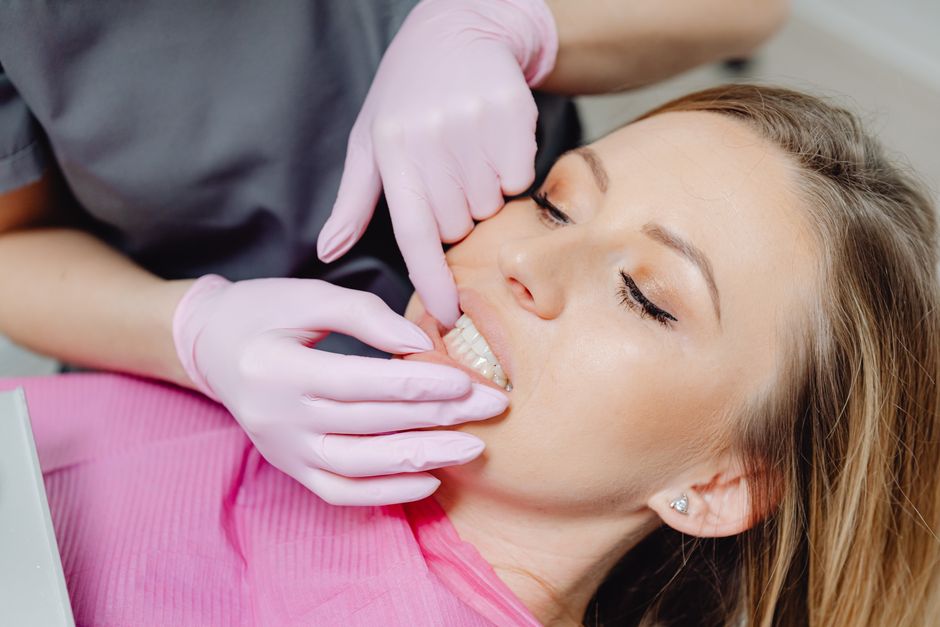
Teeth whitening works on natural tooth structure. It does not work on composite resin, porcelain, or most other filling materials. That single fact explains almost every mismatch people see after whitening. The way to avoid a mismatch is to either whiten before you get fillings, replace or repair the fillings afterward so they match the new shade, or skip whitening on teeth where the filling is front and center. There is no product that whitens a filling itself.
Why Do Fillings Stay the Same Color When You Whiten Your Teeth?
Whitening gels use peroxide compounds. Those compounds break apart pigment molecules inside the enamel and dentin of a natural tooth. A filling is a different material entirely, and peroxide has little to no effect on it.
Composite resin — the tooth-colored plastic material used for most modern fillings — is a mix of resin and glass or ceramic particles. Its color comes from pigments and from the material’s own chemistry, not from the kind of stain that peroxide can break down. Porcelain and ceramic restorations behave the same way. They keep the shade they were made in.
This is why whitening often makes fillings look more visible, not less. The surrounding enamel gets lighter. The filling does not. A filling that blended in perfectly at the start can look dark, gray, or yellow against newly whitened teeth.
One detail people often miss: composite fillings can also pick up surface stains from coffee, tea, and tobacco over time. Those surface stains sit on top of the material and can sometimes be polished off by a dentist. That is different from the filling’s internal color, which whitening cannot change.
How To Whiten Teeth With Fillings Without Mismatches
The mismatch problem has a limited set of real solutions. Which one fits depends on where the filling is, how big it is, and how much shade change you are hoping for.
Whiten first, then match the fillings
This is the most reliable approach and the one most dentists prefer. You whiten your natural teeth first and let the shade settle. Once the color is stable, the dentist replaces or adjusts the fillings to match the new shade.
Timing matters here. Whitening does not stop the moment you finish the last application. Shade can continue to shift for a period afterward as the teeth rehydrate and any residual peroxide clears. Dentists generally wait before placing or replacing front teeth restorations so the final shade is stable. If a filling is matched too early, it can look off once the teeth settle.
The trade-off is cost and time. You are paying for whitening plus new fillings. For small fillings on back teeth, this may not be worth it. For a visible filling on a front tooth, it usually is.
Replace only the visible fillings
You do not have to replace every filling. Only the ones people can see matter for appearance. Fillings on back teeth are rarely noticeable, so leaving them alone is reasonable.
This keeps the cost and the amount of drilling to a minimum. Replacing a filling means removing old material and placing new material, which removes a small amount of additional tooth structure each time. That is a real consideration. Fillings do not last forever, and every replacement takes a little more of the tooth.
Whiten around the filling, not through it
Some people try to whiten only certain teeth or avoid the filled area. This is hard to control. Whitening trays and strips cover a zone of teeth, and gel moves. Trying to whiten one part of a tooth and not another usually does not work well.
If a single tooth has a filling and the rest do not, a dentist can sometimes use a more targeted approach. But in most cases, partial whitening produces uneven results that are harder to fix than the original problem.
Accept the filling and skip whitening on that tooth
Sometimes the simplest answer is to not whiten. If your teeth are a reasonable shade and the filling blends well, whitening may create a problem that did not exist. This is worth considering before starting any whitening routine.
Can You Whiten Bonding and Other Tooth-Colored Materials?
No. Bonding, composite veneers, and porcelain veneers do not respond to whitening gels the way natural teeth do. This applies to the material itself, regardless of brand or type.
There is one partial exception worth knowing about. Some composite materials can pick up external stains on their surface, and a professional cleaning or polishing can remove some of that. But this is surface stain removal, not whitening. It will not lighten the material’s base color, and it will not keep pace with peroxide-based whitening on the teeth around it.
This is also why people who have had bonding or veneers sometimes notice a mismatch building up over years. The natural teeth slowly change shade from diet and age. The restorations do not. Over time the gap widens.





Does Whitening Damage Fillings or Weaken the Bond?
Peroxide whitening does not dissolve composite fillings or break the bond between a filling and the tooth in any way that has been clearly established. Carbamide peroxide and hydrogen peroxide act on pigment, not on the resin-tooth interface.
There is one situation where timing matters. If you have whitening done and then get a new filling placed shortly after, some dentists prefer to wait until the shade is stable. This is about color matching, not about the filling failing.
What whitening can do is cause temporary tooth sensitivity. That is a well-documented side effect of peroxide-based whitening, especially at higher concentrations or with longer wear times. It usually fades after whitening stops. It is not a sign that a filling has been damaged.
What About Whitening Toothpaste and Whitening Mouthwash?
Whitening toothpastes work mainly by abrasion and by removing surface stains. They do not contain enough peroxide, if any, to change the internal color of a tooth, and they certainly do not change the color of a filling.
Some whitening toothpastes contain low concentrations of peroxide. Even so, the contact time is short and the concentration is low. The evidence that these products produce meaningful shade change is limited. They are better thought of as stain-removal products than as whitening products.
This matters for the mismatch question because it means whitening toothpaste is unlikely to create a dramatic mismatch. It also means it will not fix one. If you already have a visible mismatch, toothpaste will not close the gap.
What Should You Do Before You Start Whitening?
Get a dental exam first. This is not a formality. Whitening on top of untreated decay, a cracked filling, or gum disease can cause problems, and a dentist can spot issues you cannot see or feel.
Ask specifically about your fillings before you whiten. Point out any that are visible when you smile. Ask what shade they are and whether whitening is likely to make them stand out.
A few practical questions worth raising with your dentist:
- Which of my fillings are visible when I smile?
- If I whiten, will these need to be replaced to match?
- How long should I wait after whitening before you match new fillings?
- Is the shade change I want realistic for my starting color?
Set realistic expectations about how much lighter your teeth can get. Whitening results vary by starting shade, and teeth with yellow tones tend to respond better than teeth with gray tones. No product can whiten beyond a certain point, and no product can whiten a filling at all.
If the plan involves replacing visible fillings after whitening, ask about cost, timing, and how much tooth structure will be removed. These are fair questions and good dentists expect them.
What Is the Most Realistic Outcome?
For most people with visible fillings, the realistic path is: whiten the natural teeth, wait for the shade to stabilize, then have the visible fillings replaced to match. This produces the best match because the filling is chosen after the final tooth color is known.
For people with only back fillings, whitening usually causes no visible mismatch at all, because no one sees the back teeth. In that case, whitening is straightforward.
The outcome that tends to disappoint people is whitening first and hoping the fillings catch up. They will not. The color gap is predictable, and it is the reason dentists plan the sequence the way they do.
Frequently Asked Questions
Will whitening strips lighten my fillings?
No. Whitening strips use peroxide, which acts on the pigment inside natural tooth structure and has little effect on composite or porcelain. Your fillings will stay the same shade while the teeth around them get lighter.
Can I whiten my teeth if I have a filling on a front tooth?
Yes, but the filling will likely need to be replaced afterward to match your new shade. Whiten first, let the color settle, then have the dentist match the filling to the final result.
How long after whitening should I wait to replace a filling?
Dentists typically wait a period after whitening before matching front teeth restorations, because the shade can keep shifting as the teeth rehydrate. Ask your dentist for a specific timeline based on your whitening method.
Do whitening toothpastes cause mismatches with fillings?
Unlikely. Whitening toothpastes mainly remove surface stains and produce little change in the internal color of teeth, so they rarely create a noticeable mismatch. They also will not fix one.
