
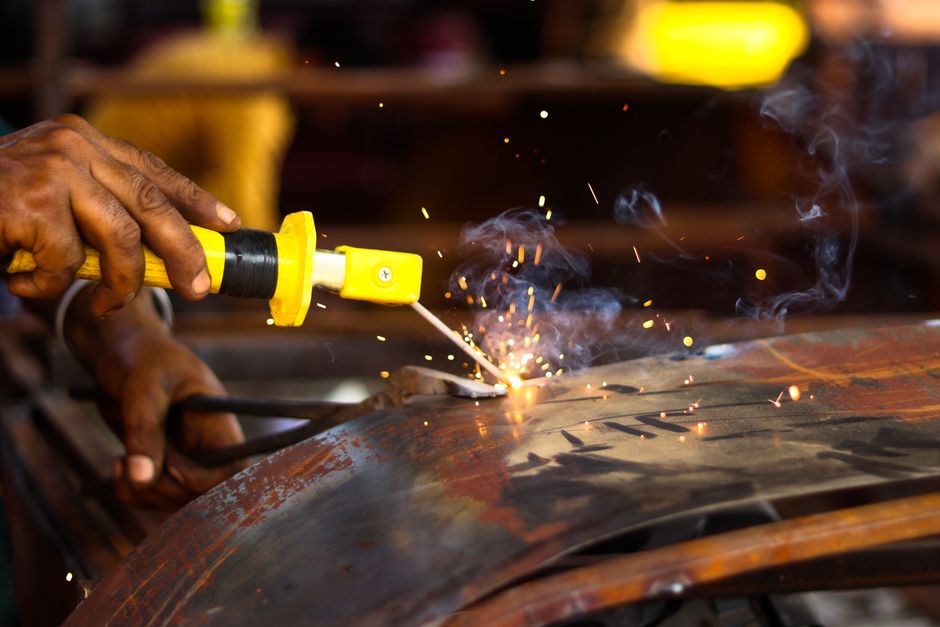
Welding zinc-coated metal like galvanized steel requires you to remove the coating first and use specific safety methods to avoid breathing in toxic zinc oxide fumes. The danger is real — inhaling these fumes causes metal fume fever, a flu-like illness that can knock you out for a day or two. The process is straightforward: grind or chemically strip the zinc coating from the weld area, set up proper ventilation or wear a respirator, and use welding techniques that minimize fume exposure. This article explains exactly what to do and what the evidence says about the risks.
What Makes Welding Zinc-Coated Metal Dangerous?
The zinc coating on galvanized steel vaporizes at welding temperatures. When zinc turns into a gas and mixes with oxygen, it forms zinc oxide fumes. Breathing these fumes is what causes metal fume fever.
Research published by the National Institute for Occupational Safety and Health (NIOSH) shows that metal fume fever symptoms include chills, fever, muscle aches, nausea, and a metallic taste in the mouth. Symptoms typically start 4 to 12 hours after exposure and last 24 to 48 hours. It is not usually fatal, but it is miserable and can leave you unable to work the next day.
Long-term repeated exposure to zinc oxide fumes is less studied, but some evidence suggests it may cause lung damage over time. The Occupational Safety and Health Administration (OSHA) sets a permissible exposure limit of 5 milligrams per cubic meter of air for zinc oxide fumes over an 8-hour workday. Welding without precautions can easily exceed this limit in minutes.
How To Remove Zinc Coating Before Welding
You must remove the zinc coating from the weld area before striking an arc. This is not optional. The thickness of removal depends on the welding method, but a general rule is to strip at least 4 inches on each side of the weld joint.
Grinding is the most common method. Use an angle grinder with a flap disc or grinding wheel to remove the zinc layer until you see bare metal. The zinc coating is usually silver-gray, and the bare steel underneath is duller and darker. Grinding creates dust, so wear a dust mask or respirator rated for metal particles (N95 or higher).
Chemical stripping is another option. Muriatic acid (hydrochloric acid) dissolves zinc quickly. Apply it to the weld area, let it sit for a few minutes, then rinse with water. This method requires rubber gloves, eye protection, and good ventilation because the acid fumes are corrosive. Some people report success with vinegar, but strong evidence is limited — vinegar is too weak for thick galvanized coatings.
Heating the zinc with a torch until it burns off is sometimes used, but this creates zinc oxide fumes directly. It defeats the purpose of removing the coating to avoid fumes. Avoid this method unless you are outdoors with excellent ventilation and wearing a respirator.
| Method | Effectiveness | Fume Risk | Best For |
|---|---|---|---|
| Grinding | High | Low (dust, not fumes) | Small areas, precise removal |
| Chemical stripping | High | Low (acid fumes, not zinc oxide) | Large areas, complex shapes |
| Torch heating | Moderate | High (creates zinc oxide) | Only outdoors with respirator |
What Safety Equipment Do You Actually Need?
Many welders rely on a standard dust mask or a bandana. This is not enough. Zinc oxide particles are extremely fine — smaller than 0.5 microns — and pass through standard dust masks easily.
You need a respirator with P100 filters or an N100 filter. These are rated to capture 99.97% of airborne particles down to 0.3 microns. A half-face respirator like a 3M 6000 series with 7093 P100 filters is a common choice. Full-face respirators offer eye protection as well.
Ventilation is just as important. Weld outdoors when possible. If you must weld indoors, use a local exhaust ventilation system that pulls fumes away from your breathing zone. A simple fan blowing across your work area is not enough — it can spread fumes around the room. OSHA recommends a capture velocity of 100 feet per minute at the weld point for effective fume removal.
Welding helmets with auto-darkening lenses protect your eyes but do nothing for fumes. Some newer helmets have powered air-purifying respirator (PAPR) systems built in. These are expensive but highly effective. Some studies suggest PAPR systems reduce fume exposure by 90% or more compared to standard respirators.





Does Welding Technique Affect Fume Exposure?
Yes. The way you weld changes how much zinc oxide you breathe. Some techniques produce less fume than others.
Short arc welding (also called short-circuit transfer) produces less fume than spray arc or pulse welding. The lower heat input means less zinc vaporizes. If you are using MIG welding on galvanized steel, set your machine to short arc mode if possible.
Weaving the weld bead instead of stringing it straight can help. A wider weave spreads the heat over a larger area, reducing the temperature at any single point. This means less zinc reaches its boiling point.
- Keep your welding amperage as low as possible while still getting good penetration
- Move the torch steadily — do not pause in one spot
- Use a larger diameter electrode to spread heat over a wider area
- Weld in short passes rather than long continuous beads
Some people report that using a higher arc voltage reduces fume production. Strong evidence for this is limited. One study published in the Journal of Occupational and Environmental Hygiene found that voltage adjustments had a smaller effect on fume generation than wire feed speed and travel speed. Focus on travel speed and amperage first.
What Are the Symptoms of Metal Fume Fever and When To Seek Help?
Metal fume fever feels like a bad flu. Symptoms include chills, fever up to 102°F or higher, body aches, headache, fatigue, dry cough, and a metallic taste in your mouth. Some people also report chest tightness or shortness of breath.
Symptoms usually appear 4 to 12 hours after exposure — often waking you up in the middle of the night. The illness typically resolves on its own within 24 to 48 hours. Drinking plenty of water and taking acetaminophen or ibuprofen can help with symptoms.
If symptoms last longer than 48 hours, or if you have difficulty breathing, chest pain, or coughing up blood, see a doctor. These could indicate a more serious condition like chemical pneumonitis or infection. Some studies suggest that people with pre-existing lung conditions like asthma may have more severe reactions to zinc oxide exposure.
There is no specific treatment for metal fume fever beyond symptom management. The best approach is prevention — proper coating removal, ventilation, and respirator use every time.
Common Misconceptions About Welding Zinc-Coated Metal
A widespread myth is that drinking milk before welding prevents metal fume fever. This is not supported by evidence. The idea comes from the belief that calcium in milk binds to zinc and prevents absorption. Research shows that zinc oxide is absorbed through the lungs, not the stomach. Milk does not protect you.
Another misconception is that you can weld galvanized steel safely if you just hold your breath or turn your head away. Zinc oxide fumes are invisible and odorless. By the time you smell something, you are already breathing dangerous levels. Holding your breath for a short weld pass does not help because the fumes linger in your breathing zone.
Some welders believe that removing the coating is unnecessary if you use a special welding rod or wire designed for galvanized steel. There are filler metals with higher silicon content that produce less spatter on galvanized steel, but they do not eliminate zinc oxide fumes. You still need to remove the coating.
As of 2026, there is no clinical evidence that any supplement, vitamin, or medication prevents metal fume fever. The only proven methods are engineering controls (ventilation), personal protective equipment (respirator), and work practice changes (coating removal and technique).
Frequently Asked Questions
Can you weld galvanized steel without removing the coating?
You can, but it is not safe. The zinc coating produces toxic zinc oxide fumes that cause metal fume fever. Always remove at least 4 inches of coating on each side of the weld joint.
What respirator do I need for welding zinc-coated metal?
Use a half-face or full-face respirator with P100 or N100 filters. Standard dust masks do not block the fine zinc oxide particles.
How long does metal fume fever last?
Symptoms typically last 24 to 48 hours and resolve on their own. If symptoms last longer or include difficulty breathing, see a doctor.
Does grinding zinc coating create the same danger as welding it?
Grinding creates zinc dust, not zinc oxide fumes. The dust is still hazardous to breathe, so wear a respirator rated for metal particles during grinding.
