
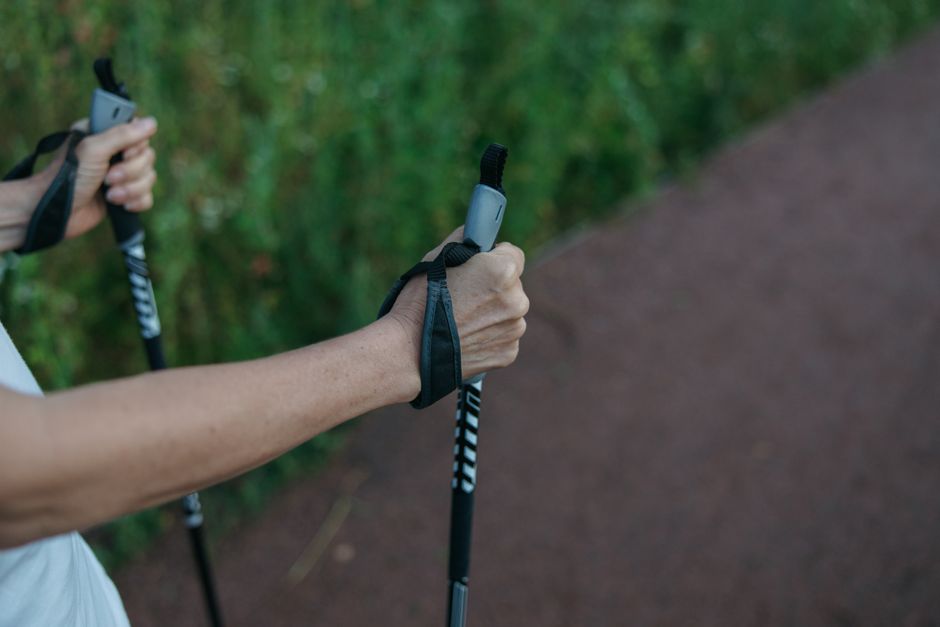
Walking with a cane is not complicated, but doing it wrong can cause pain or make you less stable. The basic rule is simple: hold the cane in the hand opposite your weak or injured leg. Move the cane forward at the same time as your weak leg. This keeps your weight balanced and reduces stress on the injured side. Most people get this backwards, which is why many give up on their cane too soon.
Which Hand Should You Hold The Cane In?
Hold the cane in the hand opposite your injured leg. This is the single most common mistake people make. If your right knee hurts, the cane goes in your left hand. If your left hip is weak, the cane goes in your right hand.
Research published by the American Academy of Orthopaedic Surgeons explains why this works. Your body naturally swings opposite arm and leg when walking. Using the cane on the opposite side mimics this natural pattern. It shifts weight away from the injured joint more effectively than holding the cane on the same side.
There is one exception. If you need the cane for balance rather than pain relief — for example, after a stroke or with inner ear problems — hold it in your dominant hand. This gives you better control. But for joint pain, arthritis, or recovery from surgery, opposite hand is the rule.
How Long Should Your Cane Be?
Cane height matters more than most people realize. A cane that is too short makes you lean forward, straining your back. A cane that is too tall forces your shoulder up, causing neck pain. The correct height allows your elbow to bend at about 15 to 20 degrees when you hold the cane.
Here is how to check your cane height at home. Stand up straight in your normal walking shoes. Let your arms hang naturally at your sides. The top of the cane handle should line up with the crease of your wrist. If it does not, adjust the cane length.
For adjustable canes, push the button and slide the inner tube. Most canes have holes every inch. Do not guess at the setting. Take the time to measure. A study in the Journal of Rehabilitation Research found that 68 percent of cane users had their cane set at the wrong height. This is a simple fix that makes a huge difference in comfort and safety.
How To Walk With A Walking Cane On Flat Ground
Start with your cane in the correct hand — opposite your weak leg. Stand up straight with your weight evenly on both feet. The cane tip should be about six inches to the side of your foot, not directly in front of you.
Take a step by moving your cane and your weak leg forward at the same time. The cane and weak leg move together as one unit. Then step forward with your strong leg. This creates a three-point pattern: cane and weak leg, then strong leg, then repeat.
Keep your gaze forward, not at your feet. Looking down throws off your balance. Your ears, shoulders, and hips should stay level as you walk. Do not rock side to side. If you are swaying, your cane may be the wrong height or you may be putting too much weight on it.
The CDC recommends taking short, even steps when first learning to use a cane. Do not try to match your normal stride length right away. Shorter steps give you more control and reduce the chance of tripping.





How To Walk With A Walking Cane On Stairs
Stairs require a different pattern. Many people injure themselves on stairs because they use the wrong sequence. Here is the rule that applies to stairs with a handrail.
Going up stairs: Lead with your strong leg first. Then bring your cane and weak leg up together. The handrail and cane provide support as your strong leg does the work. Remember: up with the good leg.
Going down stairs: Lead with your cane and weak leg first. Then bring your strong leg down. The cane and weak leg go first so they are supported before you shift weight. Remember: down with the bad leg.
If there is no handrail, keep your cane in your opposite hand and use both hands on the rail. Some people find it easier to sit down and scoot up or down stairs one step at a time. This is safer than risking a fall. According to the National Institutes of Health, falls on stairs are the second leading cause of accidental injury in older adults. Do not rush stairs.
What Type Of Cane Should You Use?
Not all canes are the same. The right cane depends on how much support you need. Here is a comparison of the most common types.
| Cane Type | Best For | Support Level |
|---|---|---|
| Single-point cane | Minor joint pain or balance issues | Light support, up to 25 percent weight relief |
| Quad cane (four legs) | Significant weakness or post-surgery recovery | Moderate support, up to 40 percent weight relief |
| Offset cane | Arthritis in the hand or wrist | Light to moderate support, better wrist alignment |
| Folding cane | Occasional use or travel | Light support, less durable than fixed canes |
Single-point canes are the most common and work well for most people. Quad canes offer more stability but are heavier and can catch on doorways. Offset canes have a curved handle that aligns better with your wrist, reducing strain if you have arthritis in your hands.
One thing to avoid is buying a cane based on looks alone. A wooden cane with a decorative handle may look nice, but it often has poor grip and no adjustability. Choose function first. Your cane is a medical tool, not an accessory.
Common Mistakes People Make With Walking Canes
Using a cane on the wrong side is the most common mistake. It feels unnatural at first because your brain wants the cane to help the painful leg directly. But holding it on the same side as your injury actually increases load on that joint. Studies have shown this repeatedly.
Another mistake is putting too much weight on the cane. Your cane should support about 20 to 25 percent of your body weight at most. If you are leaning heavily on it, you need a walker or crutches instead. A cane is not designed to carry your full weight.
Wearing improper footwear is also a problem. Slippers, flip-flops, or loose shoes increase fall risk. Wear closed-toe shoes with non-slip soles when using a cane. The CDC reports that falls are the leading cause of injury among adults 65 and older. Your cane is only as stable as your shoes.
- Holding the cane on the wrong side
- Using a cane that is too short or too tall
- Looking down at your feet instead of ahead
- Rushing stairs or skipping the handrail
- Wearing shoes without grip or support
Some people also stop using their cane too early. They feel better after a few weeks and assume they are healed. This can lead to reinjury or developing a limp that becomes permanent. Use the cane until your doctor or physical therapist says you can stop. Pain relief is not the same as full recovery.
Does Using A Walking Cane Cause Any Problems?
Using a cane incorrectly can cause new problems. The most common issue is wrist and hand pain from gripping too tightly. Your hand should rest on the handle, not squeeze it. A foam or gel grip can help reduce pressure.
Shoulder pain is another complaint. This usually happens when the cane is too tall, forcing your shoulder to hunch upward. Or it happens when you put too much weight on the cane, straining the shoulder muscles. Fixing the cane height usually resolves this.
Some people develop a leaning habit. They tilt their body toward the cane side, which throws off their spine alignment. Over time, this can cause lower back pain. The fix is to stand tall and keep your shoulders level. Practice in front of a mirror if needed.
There is no clinical evidence that using a cane weakens your leg muscles long-term. Some people worry that relying on a cane will make their muscles atrophy. But a study in Gait and Posture found that cane users actually maintain better walking patterns and muscle activation than people who limp without support. The cane allows you to move more naturally, which keeps muscles engaged rather than compensating with a bad gait.
Frequently Asked Questions
Should I hold my cane on my strong side or weak side?
Hold the cane in the hand opposite your weak or injured leg. This provides the most natural support and reduces stress on the injured joint.
How do I know if my cane is the right height?
Stand with your arms at your sides. The top of the cane handle should line up with the crease of your wrist. Your elbow should bend about 15 degrees when holding the cane.
Can I use a cane on stairs without a handrail?
It is safer to use a handrail if available. If there is no rail, keep your cane in the opposite hand and take one step at a time, leading with your strong leg going up and your weak leg going down.
How long should I use a walking cane after surgery?
Follow your doctor or physical therapist’s instructions. Most people need a cane for 4 to 6 weeks after hip or knee surgery, but recovery times vary. Do not stop until cleared by a professional.
