
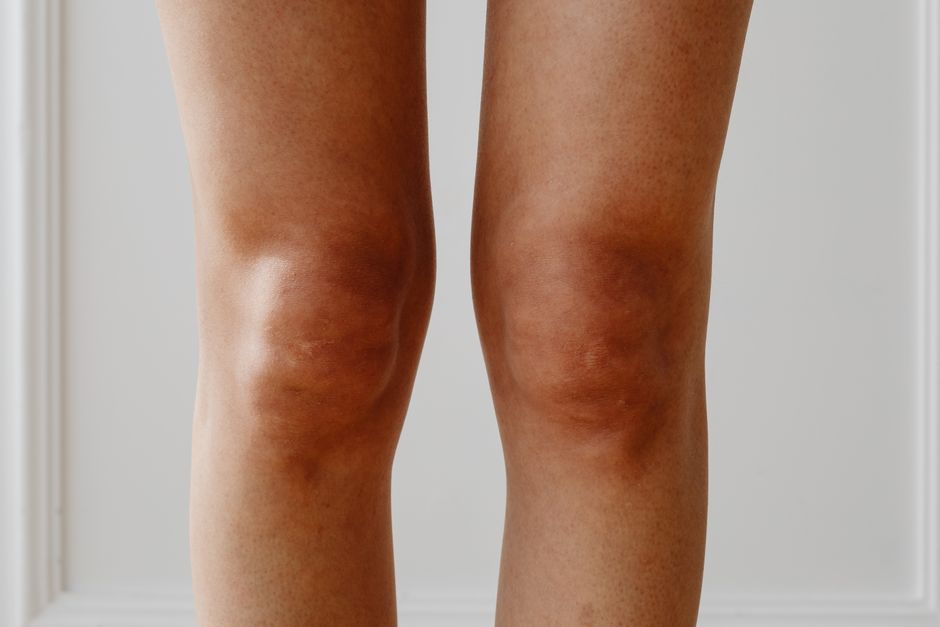
Walking normally after knee replacement is a realistic goal, but it takes consistent work over several months. Most people can walk without a limp by 6 to 12 weeks after surgery, though full recovery of a natural gait often takes 6 months or longer. The key factors are controlling swelling, rebuilding quadriceps strength, and retraining your brain to trust the new joint.
How To Walk Normally After Knee Replacement? Key Facts
Walking normally means your steps are even in length and timing. You do not favor one leg over the other. Your foot lands heel first and rolls through to the toe. Research published in the Journal of Orthopaedic & Sports Physical Therapy found that people who walked with a limp at 3 months were more likely to still have one at 12 months if they did not correct it early.
The biggest obstacle is quadriceps weakness. Your quadriceps muscle on the front of your thigh gets cut during surgery. It loses strength fast. Without this muscle firing correctly, your leg cannot fully straighten when you step forward. That causes a limp. The CDC notes that 60% of knee replacement patients report some gait abnormality at 6 weeks. By 12 weeks with proper rehab that number drops significantly.
Why Do Most People Develop a Limp After Knee Replacement?
A limp after knee replacement is almost never caused by the implant itself. It is caused by muscle inhibition. Your brain stops sending full signals to the quadriceps muscle because of pain and swelling. This is called arthrogenic muscle inhibition. It is a protective reflex that outlives its purpose.
Swelling inside the joint also limits how far you can bend and straighten your knee. When you cannot fully straighten your knee, your leg is shorter on that side when you walk. Your body compensates by hiking your hip or swinging your leg out to the side. Both create an abnormal gait pattern.
Some people develop a limp because they are afraid of falling. This is normal. But walking with a cautious, stiff-legged gait trains your muscles to move incorrectly. The longer you walk with a limp, the harder it is to break the habit. Research in Physical Therapy journal showed that gait retraining is most effective when started before 8 weeks after surgery.
What Exercises Restore a Normal Walking Pattern?
Quadriceps activation is the single most important exercise. You cannot walk normally if your quadriceps does not fire. The simplest way to start is the quad set. Sit with your leg straight on a bed or couch. Tighten your thigh muscle by pushing your knee down into the surface. Hold for 5 seconds. Do 20 repetitions several times a day.
Heel slides help restore bending range. Lie on your back. Slide your heel toward your buttock as far as comfortable. Hold for 5 seconds. Straighten fully. Repeat 15 times. Do this after your quad sets so your quadriceps is warmed up.
Standing knee extensions train your leg to straighten under body weight. Stand holding a counter. Lift your surgical foot slightly off the ground. Straighten your knee fully. Hold for 3 seconds. Lower slowly. Do 10 to 15 repetitions. This directly mimics the part of walking where your leg needs to be straight to accept weight.
Walking backward is a lesser-known but effective exercise. It forces your knee to straighten with each step. Walk backward in a hallway for 2 to 3 minutes holding onto a rail. Do this twice a day once you are steady on your feet.
| Exercise | Purpose | Frequency |
|---|---|---|
| Quad sets | Wake up quadriceps muscle | 3-4 times daily, 20 reps |
| Heel slides | Restore knee bending | 2-3 times daily, 15 reps |
| Standing knee extensions | Straighten leg under weight | 2 times daily, 10-15 reps |
| Walking backward | Reinforce full knee extension | 1-2 times daily, 2-3 minutes |



How Does Swelling Affect Walking and What Can You Do About It?
Swelling is the main reason people cannot walk normally in the first 4 to 6 weeks. Fluid inside the knee joint limits motion. It also triggers muscle inhibition. The American Academy of Orthopaedic Surgeons states that swelling control is as important as exercise in the first month after surgery.
Ice is the most effective tool. Ice your knee for 20 minutes at a time, 4 to 5 times per day. Elevate your leg above heart level when sitting or lying down. Compression stockings or a wrap help keep fluid from pooling around the joint.
A common mistake is walking more to try to reduce swelling. Walking increases blood flow to the area, which can actually increase swelling in the early weeks. The better approach is to walk short distances frequently, then ice and elevate immediately after. The rule of thumb is 10 to 15 minutes of walking followed by 30 minutes of elevation with ice.
Some people report that swelling returns when they increase activity at 6 to 8 weeks. This is normal. It does not mean you are damaging the implant. It means your soft tissues are still adapting. Back off walking slightly for a day or two and increase icing. Resume at the previous level once swelling drops.
What Walking Aids Help You Progress to Normal Walking?
A walker is standard for the first 1 to 2 weeks. It provides stability and allows you to bear as much weight as comfortable. The goal during this phase is not perfect walking. It is getting moving safely while letting swelling decrease.
Transitioning to a cane is a major step. Use the cane in the hand opposite your surgical leg. For example, if your right knee was replaced, hold the cane in your left hand. This keeps your weight centered and encourages a natural arm swing. Many people hold the cane on the same side, which throws off their gait.
Some studies suggest that people who switch from a walker to a cane too early develop worse gait patterns. Wait until you can stand on your surgical leg alone for 10 seconds without wobbling. If you rush to a cane before your quadriceps is strong, you will compensate with your hip and lower back.
Walking poles are an option for some people at 6 to 8 weeks. They engage your upper body and encourage a longer stride. Evidence is limited, but some physical therapists recommend them for gait retraining. They are not a replacement for a cane during early recovery.
What Walking Mistakes Keep You From Walking Normally?
- Looking down at your feet. This throws your head and shoulders forward, shifting your center of gravity. Keep your chin level and look 10 to 15 feet ahead.
- Walking too fast. Speed comes after a normal gait pattern. Walking fast with a limp reinforces the limp. Slow down until your steps are even.
- Not fully straightening your knee. If you walk with your knee slightly bent, your gait will never normalize. Check in a mirror or have someone watch you.
- Shuffling. Short, shuffling steps prevent your knee from extending fully. Consciously lift your foot and take a normal step length.
- Hiking your hip. If your hip rises on the surgical side with each step, your knee is not straightening enough. Address the range of motion first.
One mistake that surprises people is wearing the wrong shoes. Flat shoes with thin soles give you better ground feedback than thick cushioning shoes. You need to feel the floor to walk naturally. Save the running shoes for later when you are walking for exercise rather than gait retraining.
Another overlooked factor is sleep position. Sleeping with a pillow under your knee keeps it bent for hours. This can make it harder to fully straighten the next day. Sleep with your leg flat on the bed if possible. If you need a pillow for comfort, place it under your calf rather than directly under the knee.
How Long Until Walking Feels Natural Again?
Most people report that walking feels mostly normal by 3 months. But natural and automatic are different things. At 3 months you may still need to think about each step. At 6 months walking usually becomes automatic again. Research from the Hospital for Special Surgery found that gait symmetry continues to improve up to 12 months after surgery.
Some people feel a clicking or clunking sensation when they walk. This is often the patella tracking over the new implant. It is usually harmless and often decreases over time. If clicking is accompanied by pain or catching, mention it to your surgeon.
Walking on uneven ground is harder than walking on flat surfaces. Grass, gravel, and slopes challenge your balance and coordination. Start with flat indoor surfaces. Progress to sidewalks. Add uneven terrain around 8 to 12 weeks if your balance is good. Do not rush this. Falling is the biggest setback in recovery.
Nighttime stiffness can make your first steps in the morning feel abnormal. This is normal for up to a year. Walk a few steps in place before you head to the bathroom. It wakes up the muscles and lubricates the joint.
Frequently Asked Questions
When can I walk without a cane after knee replacement?
Most people can walk without a cane by 3 to 4 weeks after surgery. You should be able to stand on your surgical leg alone for 10 seconds without losing balance before giving up the cane.
Why does my leg feel like it is dragging when I walk?
A dragging leg usually means your quadriceps muscle is not strong enough to lift your foot during the swing phase of walking. Quad sets and walking backward exercises help correct this.
Can walking too much after knee replacement cause damage?
Walking does not damage the implant itself, but overdoing it can increase swelling and slow recovery. Increase walking distance by no more than 10 percent per week.
Is it normal to walk with a limp after 3 months?
A small limp at 3 months is common but should be improving. If your limp is not getting better, ask your physical therapist to check your knee extension range and quadriceps strength.
