
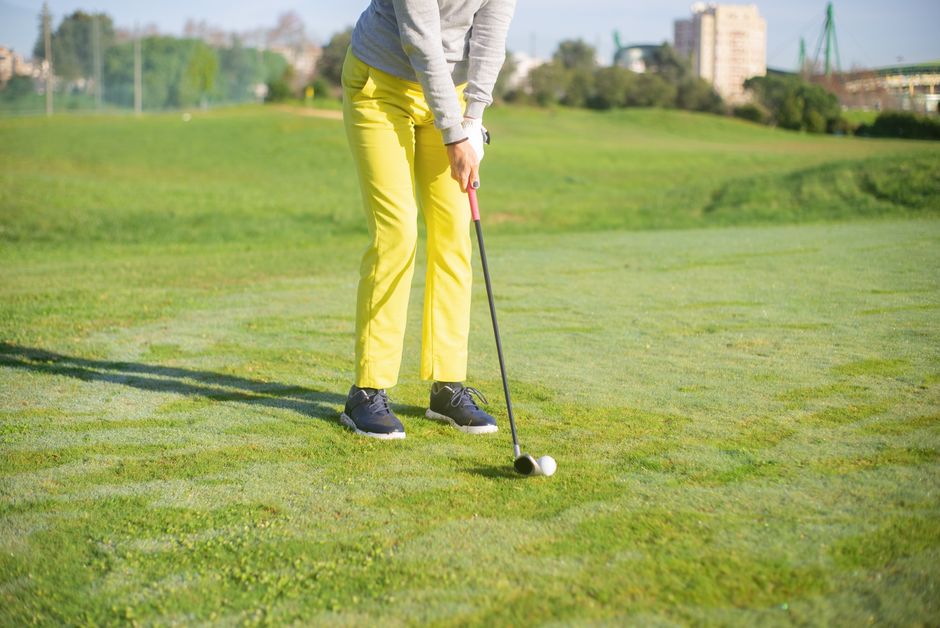
Power in the golf swing starts from the ground up. While your arms and torso get most of the attention, your legs are the engine that drives club head speed. To use your legs for power, you need to shift your weight into your trail leg during the backswing, then drive your lead knee and hip toward the target to start the downswing. This leg drive creates ground force that transfers energy up through your body and into the club. Without proper leg action, you lose distance and often compensate with your arms, which leads to inconsistency.
Why Do Your Legs Matter So Much in the Golf Swing?
Your legs are the first contact point with the ground. Every powerful athletic movement — throwing a punch, hitting a baseball, or swinging a golf club — relies on pushing against the ground. This is called ground reaction force. When you push down and against the ground with your legs, the ground pushes back with equal force. That energy travels up your body and into the club head.
Research on golf biomechanics consistently shows that skilled players generate significant vertical and horizontal ground forces during the swing. Amateur golfers often fail to use this force effectively. They may swing with their arms and upper body while their lower body stays passive. The result is a loss of potential club head speed and a greater reliance on timing to hit the ball solidly.
Your legs also set the foundation for your swing path. If your lower body is unstable, your upper body must make constant adjustments. That creates inconsistency. A stable, active leg action keeps your swing on plane and allows your torso to rotate freely.
What Is the Correct Leg Movement in the Backswing?
The backswing is not just about turning your shoulders. Your legs must support that turn while storing energy. As you rotate your upper body away from the target, your weight should shift into your trail leg — the right leg for a right-handed golfer. This is not a lateral slide. It is a rotational shift where your trail hip moves back and your trail knee stays flexed.
Your lead leg — the left leg for a right-handed golfer — should remain stable but active. The lead knee will naturally flex slightly and move inward toward the trail leg. This creates a feeling of winding up or coiling. The internal rotation of your lead hip and the external rotation of your trail hip store elastic energy in your muscles and tendons.
One common mistake is swaying the hips too far laterally away from the target. This moves your head off the ball and makes it difficult to return to the same position at impact. Instead, think of rotating around your spine while your legs brace against the ground. The weight shift happens because of your turn, not because you slide your hips sideways.
Another mistake is straightening the trail leg too much. While some professional golfers do straighten their trail leg, most amateurs benefit from maintaining flex. Keeping flexion in your trail knee helps you push off the ground more effectively during the downswing.
How Do You Start the Downswing With Your Legs?
The downswing starts from the ground up. Many recreational golfers begin the downswing with their arms or shoulders. That is a mistake. The correct sequence begins with your lower body initiating the movement toward the target.
For a right-handed golfer, the downswing starts with a slight lateral shift of the hips toward the target while the upper body stays back. Your lead knee moves toward the target, and your lead foot pushes into the ground. This push creates the ground reaction force that generates power.
Your trail leg also plays a critical role. As your hips rotate toward the target, your trail heel may lift off the ground. This is normal and indicates that you are pushing off your trail foot. The push from your trail leg adds to the rotational speed of your hips.
The key sequence is: legs lead, hips follow, torso follows, then arms and club. This is called the kinematic sequence. Research on elite golfers shows that this proximal-to-distal sequencing — from the center of the body outward — maximizes club head speed. When your legs start the downswing, your upper body has time to lag behind, creating a whip-like effect that increases speed at impact.



What Is the Role of the Lead Leg at Impact?
At impact, your lead leg acts as a brace. Your lead knee should be flexed and stable, not locked. Your lead hip should be rotated toward the target, and your weight should be mostly on your lead foot. For most full shots with irons and driver, golfers shift roughly 80 to 90 percent of their weight onto the lead foot by impact.
This braced lead leg serves two purposes. First, it stops your forward momentum. If your lower body keeps moving past the ball, your upper body must slow down to compensate, which reduces club head speed. Second, the brace allows your hips to rotate through the shot. The rotation of your hips is a major source of power.
Think of your lead leg as a post that your hips rotate around. If that post is weak or unstable, your hips cannot rotate efficiently. If the post is locked straight, your body may tilt backward, causing poor contact. The goal is a firm but flexed lead leg that allows full hip rotation.
Your trail leg at impact is nearly extended. The trail heel is off the ground, and the trail foot is rolling onto its toe. This position shows that you have fully pushed off the trail side and transferred your energy into the lead side.
How To Use Your Legs In The Golf Swing For Power: Drills
If you want to improve your leg action, you need to train it deliberately. Here are three drills that directly target leg drive and ground force.
The Step-Through Drill. Take your normal setup. As you start your downswing, take a step with your trail foot toward your lead foot. This forces your lower body to initiate the downswing and encourages weight transfer. It also trains the feeling of pushing off the trail leg. Make slow swings at first, then gradually increase speed.
The Pause Drill. Make a backswing and pause at the top for two seconds. Hold your position with your weight on your trail leg. Then start the downswing by driving your lead knee toward the target. This drill builds awareness of the correct starting sequence. If your arms start the downswing, you will feel it immediately.
The Feet-Together Drill. Hit short shots with your feet together. This forces your legs to work in balance. You cannot sway or slide, so you must rotate your hips and use your legs efficiently. Start with half swings and focus on solid contact. This drill is excellent for improving timing between your lower and upper body.
Practice these drills without a ball first. Focus on the feeling of the movement. Then add a ball and gradually increase your swing length. Give each drill at least two or three practice sessions before judging your progress.
Common Leg Mistakes That Kill Your Power
Several common leg faults reduce power and consistency. Recognizing them is the first step to fixing them.
Swaying. Sliding your hips too far away from the target during the backswing is a frequent problem. This moves your head off the ball and makes it hard to return to the same spot. It also reduces the coil in your trail hip. Fix it by focusing on rotating rather than sliding. A simple check: place an alignment stick on the ground just outside your trail hip. If your hip touches the stick during the backswing, you are swaying too much.
Early Extension. This happens when your hips move toward the ball during the downswing instead of rotating. It causes you to stand up at impact, which leads to thin or topped shots. Early extension often results from a lack of hip mobility or from trying to hit the ball too hard. Work on hip rotation exercises and focus on keeping your hips moving in a circular path, not toward the ball.
Passive Lower Body. Some golfers keep their legs completely still during the swing. They rely entirely on their arms and shoulders. This severely limits power. Your legs must be active in both the backswing and downswing. If you are not feeling pressure shifts in your feet, you are likely not using your legs enough.
Locked Lead Knee. Straightening your lead knee at impact can cause your hips to stall. When your hips stop rotating, your arms must take over. This often results in a flip of the wrists and inconsistent contact. Keep a slight flex in your lead knee through impact.
How Do Your Feet and Ankles Contribute?
Your feet and ankles are the direct connection to the ground. They are not passive. The pressure in your feet changes throughout the swing. During the backswing, pressure moves to the inside of your trail foot. During the downswing, pressure shifts to the inside of your lead foot.
Think of pushing the ground away from you rather than just standing on it. This active pushing creates the ground reaction force that adds power. Golfers who wear shoes with good traction and play on stable surfaces have an advantage because they can push harder without slipping.
Your ankles also contribute to stability. Strong ankles prevent excessive rolling and keep your weight centered over your feet. If your ankles are weak, you may wobble during the swing, which forces your upper body to compensate.
Frequently Asked Questions
Should my back leg straighten during the golf swing?
Your trail leg may straighten somewhat during the backswing, but most amateurs benefit from maintaining some flex. The straightening happens naturally as your hips rotate, not as a deliberate action.
How much weight should be on my front foot at impact?
For most full shots, roughly 80 to 90 percent of your weight should be on your lead foot at impact. This allows your hips to rotate fully while your lead leg braces against the ground.
Can I generate power with my legs if I have knee problems?
Yes, but you may need to modify your swing. Shorter swings and a focus on hip rotation instead of deep knee flex can reduce strain. Consult a physical therapist or golf instructor familiar with your condition before making changes.
Do professional golfers use their legs differently than amateurs?
Professional golfers generate more ground force and sequence their lower body movement more efficiently. They also have better hip mobility, which allows them to rotate more deeply without losing balance.
