
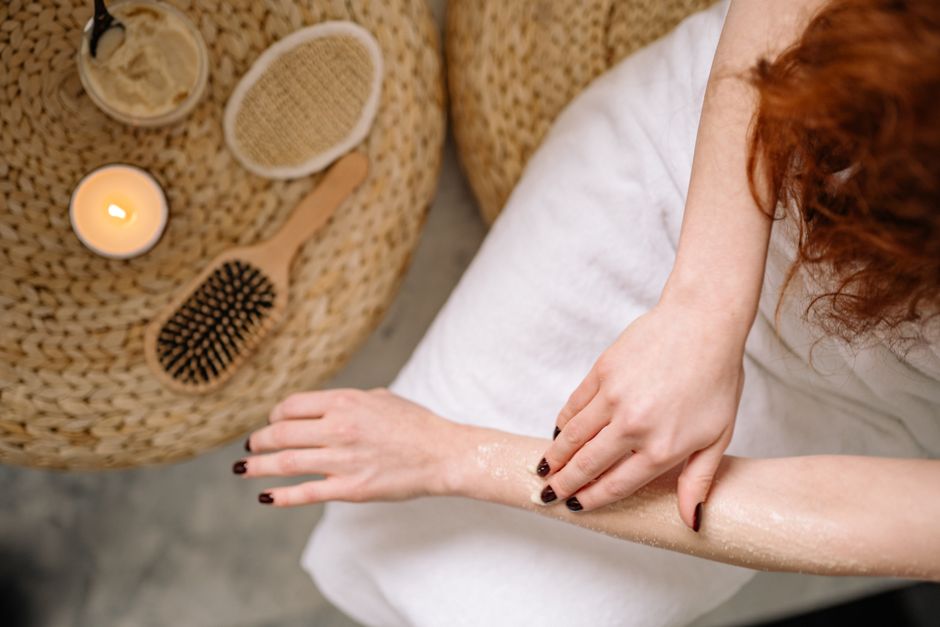
A sugar scrub can leave your skin feeling smooth and soft, but only if you use it correctly. The basic method is simple: apply the scrub to damp skin, massage in gentle circular motions for about 30 seconds, then rinse thoroughly with warm water. The key is to let the sugar granules do the exfoliating work without pressing too hard. Many people scrub too vigorously or on dry skin, which causes micro-tears and irritation. This guide covers the proper technique, the best order to use it in your shower routine, and how to pick the right scrub for your skin type.
How To Use Sugar Scrub for the Best Results
Start with damp, not soaking wet, skin. Water helps the sugar dissolve slightly, which softens the granules. If your skin is too wet, the scrub will wash away before it does any work.
Scoop out a generous amount with clean, dry hands. Water in the jar can introduce bacteria and cause the sugar to melt prematurely. Apply the scrub to your skin and use small, circular motions with light to medium pressure.
Spend about 30 seconds on each major body area. Pay extra attention to rough zones like elbows, knees, and heels, but do not press harder there. The sugar granules are already abrasive. Pressing harder does not increase exfoliation benefits; it increases the risk of damaging your skin barrier.
Rinse off with warm water. Hot water strips natural oils from your skin. After rinsing, pat your skin dry with a towel rather than rubbing. Rubbing can undo the smoothing effect you just created.
Follow with a moisturizer or body oil while your skin is still slightly damp. This locks in hydration and is the step most people skip. Exfoliation removes dead skin cells, but it also temporarily removes some of your skin’s natural moisture. Replacing that moisture is essential.
When Should You Use a Sugar Scrub in Your Shower Routine?
Use your sugar scrub at the end of your shower, not the beginning. Showering first softens the skin and opens pores. The warm water hydrates the outer layer of skin, making it more pliable and ready for exfoliation.
Shampoo and condition your hair first. Rinse off any body wash or soap before you scrub. You want a clean surface for exfoliation. If you scrub before washing, the soap can mix with the sugar and reduce its abrasive quality.
Shave after you scrub, never before. Exfoliating first removes dead skin cells and lifts ingrown hairs so your razor glides more smoothly. Shaving before exfoliating can irritate freshly shaved skin and cause stinging or redness.
The ideal sequence is: shampoo, condition, body wash, turn off the water, sugar scrub, rinse, then moisturize after you step out.
How Often Should You Exfoliate with a Sugar Scrub?
Two to three times per week is the standard recommendation for most people. Daily exfoliation is generally too much for the skin on your body. Your skin needs time to rebuild its protective barrier between exfoliation sessions.
Your skin type changes the answer. People with dry or sensitive skin should start with once a week. If your skin tolerates that well, you can increase to twice a week. People with oily skin or thicker skin on areas like the feet can often handle three times per week.
Watch for signs of over-exfoliation. Redness, stinging, burning, or a tight feeling after you rinse means you are scrubbing too often or too hard. If you notice any of these, stop for a week and let your skin recover.
Season changes matter too. Your skin tends to be drier in winter months. You may need to reduce frequency during cold, dry weather and increase it slightly in humid summer months.





What Type of Sugar Scrub Should You Choose?
Brown sugar has finer granules than white sugar. It dissolves faster, which makes it a gentler option for sensitive skin. White sugar has larger, more crystalline granules that provide a more vigorous exfoliation. Both work well; it is about matching the texture to your tolerance.
Check the base oil. Most sugar scrubs use a carrier oil like coconut oil, jojoba oil, sweet almond oil, or grapeseed oil. Coconut oil is thick and rich, ideal for dry skin. Jojoba oil is lighter and closer to your skin’s natural sebum. If you are prone to body acne, a lighter oil like grapeseed is less likely to clog pores.
Salt scrubs are not the same as sugar scrubs. Salt is more abrasive and can sting on broken skin. If you have cuts, razor burn, or any skin condition like eczema, stick with sugar scrubs.
Beware of added “actives” in commercial scrubs. Some products add acids like glycolic or salicylic acid to the sugar base. These chemical exfoliants can increase irritation when combined with physical exfoliation. If you already use a chemical exfoliant in your routine, choose a plain sugar scrub without added acids.
Can You Use Sugar Scrub on Your Face?
It is not recommended for most people. The skin on your face is thinner and more delicate than the skin on your body. Sugar granules are often too coarse for facial skin and can create micro-tears.
If you want to exfoliate your face, use a product specifically formulated for facial use. Facial exfoliants use finer particles and gentler formulations. Some sugar scrubs labeled “facial” use ultra-fine sugar, but even these require a very light touch.
Never use a body sugar scrub on your face. The granules are too large and the oils may be too heavy, potentially clogging facial pores. This is one of the most common mistakes people make with sugar scrubs.
If you do use a fine sugar scrub on your face, limit it to once a week. Avoid the eye area completely. The skin around your eyes has no oil glands and is the thinnest skin on your body.
What Are the Risks of Using Sugar Scrub Incorrectly?
Scrubbing too hard causes micro-tears in the skin. These tiny breaks in the skin barrier can lead to redness, irritation, and increased sensitivity. They also allow bacteria to enter more easily, which can trigger breakouts or infections.
Using a scrub on broken or irritated skin is a common mistake. Do not use sugar scrubs on sunburned skin, active acne, open cuts, or areas with eczema flare-ups. The abrasive action will worsen these conditions.
Contamination is a real concern. Sugar scrubs in jars can harbor bacteria if you dip wet fingers into them. Always use a clean, dry spoon or spatula to remove the product. If you notice a change in smell, color, or texture, throw it out. Do not take risks with spoiled products.
Some people experience allergic reactions to essential oils or fragrance in commercial scrubs. If you develop a rash or itching after use, stop using the product. Patch test a new scrub on a small area of skin like your inner forearm before applying it to your whole body.
How To Make a Sugar Scrub at Home
Homemade sugar scrubs are simple and cost-effective. The basic ratio is one part oil to two parts sugar. For example, one cup of sugar mixed with half a cup of oil produces a standard scrub consistency.
Use a neutral oil like coconut, olive, or jojoba. Melt coconut oil slightly if it is solid. Mix thoroughly until the sugar is evenly coated. Store the scrub in a clean glass jar with a tight-fitting lid.
You can add a few drops of essential oil for fragrance, but this is optional. Some essential oils, like citrus oils, can make your skin more sensitive to sunlight. If you add them, rinse the scrub off thoroughly and apply sunscreen if you will be outdoors.
Homemade scrubs have a shorter shelf life than commercial products. They do not contain preservatives. Make small batches and use them within two to three weeks. Keep the jar out of direct water exposure to prevent mold growth.
Do not use sugar scrubs made for your body on your face. The same rule applies to homemade versions. Keep separate scrubs for body and face if you choose to use one on your face at all.
Frequently Asked Questions
Should I use a sugar scrub before or after shaving?
Use it before shaving. Exfoliating first lifts dead skin cells and helps prevent ingrown hairs, which gives you a closer and smoother shave.
Can I use a sugar scrub every day?
No, daily use is too much for most people. Two to three times per week is the general recommendation, but sensitive skin types should start with once a week.
Is it okay to leave sugar scrub on my skin?
No, rinse it off after massaging for about 30 seconds. Leaving it on does not increase benefits and can leave a heavy residue on your skin.
Why does my skin feel oily after using a sugar scrub?
That is the carrier oil from the scrub. Rinse with warmer water or follow with a lighter moisturizer. If the oily feeling bothers you, choose a scrub with a lighter oil like grapeseed instead of coconut oil.
