
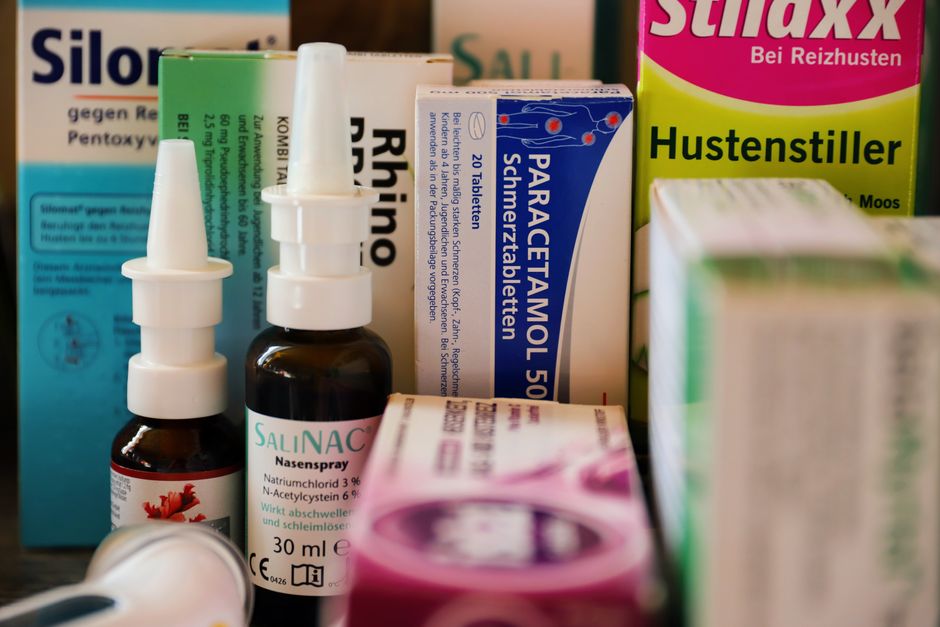
Nasal saline spray is one of the simplest tools you can use to ease a dry, stuffy, or irritated nose. To use it correctly, tilt your head slightly forward or to the side, insert the nozzle just inside one nostril while pointing it toward the outer wall of the nose, and squeeze gently as you breathe in slowly through that nostril. Repeat in the other nostril, then let the excess saline drain or blow your nose softly. Used this way, saline does not treat infection or allergy itself. It rinses away mucus, irritants, and allergens, and it adds moisture to tissue that has dried out.
What Is Nasal Saline Spray Actually Doing?
Saline is salt water. The “normal saline” used in most sprays is a 0.9% sodium chloride solution, which matches the salt concentration of your body’s own fluids. That matching is not a marketing detail. It is why plain saline tends to feel neutral inside the nose rather than stinging.
Your nasal lining is coated in a thin layer of mucus that traps dust, pollen, smoke, and germs. When that lining dries out or the mucus gets thick, the nose feels blocked and irritated. Saline adds water back to the surface and thins the mucus so it can move. It also physically washes away particles sitting on the lining.
What saline does not do is kill bacteria or viruses. It is not a decongestant and it does not shrink swollen tissue the way a medicated spray does. Any relief you feel comes from clearing and moisturizing, not from treating the underlying cause. That distinction matters when you are deciding whether saline is the right product for your problem.
How To Use Nasal Saline Spray Correctly Step By Step
Getting the angle right is the part most people miss. The inside of your nose is not a straight tube. It has a divider down the middle and curved passages on each side, and the tissue that swells when you are congested sits on the outer walls. Aiming straight up the middle can push saline into the back of your throat or hit the septum, which is the divider.
Here is the sequence:
- Wash your hands first.
- Blow your nose gently if it is runny or crusted. Do not blow hard.
- Shake the bottle if the label says to.
- Tilt your head slightly forward, or turn it to one side. Some people find a slight forward tilt works best; others prefer tilting to the side. Either is fine.
- Insert the nozzle just past the nostril opening. You do not need to push it deep.
- Point the tip toward the outer wall of that nostril, not toward the center of your nose.
- Breathe in slowly through that nostril as you squeeze the bottle once or twice.
- Repeat on the other side.
- Let the saline and loosened mucus drain, or blow your nose softly afterward. Sniffing hard pulls it into your throat, which is not harmful but is unpleasant.
Wipe the nozzle with a clean tissue after each use. If you are using the same bottle for more than one person, that is a problem — nasal spray bottles should not be shared.
How Often Can You Use It, and Is It Possible To Overdo It?
Saline spray is generally considered safe for frequent use, including daily use, because it contains no medication. Many clinicians suggest using it as often as needed for dryness or congestion. That is common practice rather than a rule backed by strict dosing trials.
There is one real caution. Repeated, forceful rinsing can dry out or irritate the nasal lining in some people, especially if you use it many times a day. If your nose feels more raw after using saline, back off.
A second caution involves the type of saline. Hypertonic saline has a higher salt concentration than your body fluids. Some evidence suggests hypertonic solutions may help with congestion more than normal saline does, but they can also sting or burn. If a hypertonic spray stings, that is expected, not a sign something is wrong.
One more point worth knowing: saline spray and saline rinse are not the same product. A spray delivers a small mist. A rinse or irrigation device — such as a squeeze bottle or neti pot — delivers a larger volume of water that flows through the nasal passages. Rinses can be more effective at clearing thick mucus, but they carry a safety requirement that sprays do not. If you use a rinse, the water must be distilled, sterile, or previously boiled and cooled. Tap water should never go into a nasal rinse device. That guidance comes from public health authorities and is not optional.





Does Saline Spray Help With Congestion, Allergies, or Sinus Problems?
For allergies, the evidence is reasonably consistent. Rinsing pollen and other allergens off the nasal lining can reduce symptoms, and saline is often recommended alongside allergy medications rather than instead of them. It is a supporting tool, not a replacement for treatment that targets the immune response.
For a common cold or a stuffy nose, saline can loosen mucus and make breathing feel easier. It will not shorten how long you are sick. No evidence shows saline cures or speeds recovery from a viral infection.
For chronic sinus problems, saline rinses are widely used and often recommended by clinicians. The evidence for sprays specifically is thinner than for rinses. If you have persistent sinus symptoms, saline may help manage them, but it is not a substitute for a diagnosis.
For a dry nose — from winter air, heating, or dry climates — saline spray is a reasonable first step. It adds moisture directly where the problem is.
What saline will not fix: a structural blockage, nasal polyps, or a deviated septum. If one side of your nose is always blocked regardless of what you do, that is worth having looked at.
Saline Spray vs. Medicated Nasal Sprays
These products work differently and are not interchangeable. Saline is a rinse and moisturizer. Medicated sprays contain an active drug that acts on the tissue.
| Type | What it contains | What it does |
|---|---|---|
| Saline spray | Salt water (often 0.9% sodium chloride) | Moistens, thins mucus, washes away irritants |
| Hypertonic saline | Salt water at higher concentration | Same, with some evidence of greater congestion relief |
| Decongestant spray | A drug that narrows blood vessels | Shrinks swollen tissue; can cause rebound congestion if used too long |
| Steroid spray | A corticosteroid | Reduces inflammation; used for allergies and chronic conditions |
The rebound congestion point is worth understanding. Decongestant sprays work well for a short time, but using them beyond the labeled limit can cause the nose to swell more when the drug wears off. That cycle is called rebound congestion, and it can be hard to break. Saline does not cause it. This is one reason saline is often suggested as a first step or as a companion to other sprays.
If you use both saline and a medicated spray, many clinicians suggest using saline first to clear the passage. That is a practical suggestion, not a proven rule — but the reasoning is straightforward: a clearer nose may let the medicated spray reach more of the lining.
Making Your Own Saline, and What To Avoid
You can make saline at home, but the water rule matters here too. Use distilled or sterile water, or water that has been boiled and cooled. Mix with non-iodized salt and a pinch of baking soda in the proportions given by a reliable recipe. Do not guess at the amounts. Do not use table salt with anti-caking additives if you can avoid it.
If you are buying a product, check whether it is a spray or a rinse, and whether it is normal or hypertonic. Both are fine. They just do different things.
Do not use a saline product past its expiration date, and do not use a bottle that has been open for a very long time. Do not share bottles. And if your symptoms are getting worse rather than better, saline is not the answer — that is a signal to see a clinician.
Frequently Asked Questions
How do you use nasal saline spray correctly?
Tilt your head slightly forward or to the side, insert the nozzle just inside one nostril, and aim it toward the outer wall rather than the center. Squeeze gently while breathing in slowly, then repeat on the other side.
Can you use nasal saline spray every day?
Yes, saline spray is generally considered safe for daily use because it contains no medication. If your nose feels raw or irritated from frequent use, cut back.
Should you sniff hard after using saline spray?
No, sniffing hard pulls the saline into your throat instead of letting it work in the nose. Breathe in gently, then let the excess drain or blow your nose softly.
Is tap water safe for a nasal rinse?
No. Water used in a nasal rinse device must be distilled, sterile, or previously boiled and cooled. Tap water can carry organisms that are dangerous when they reach the nasal lining.
