
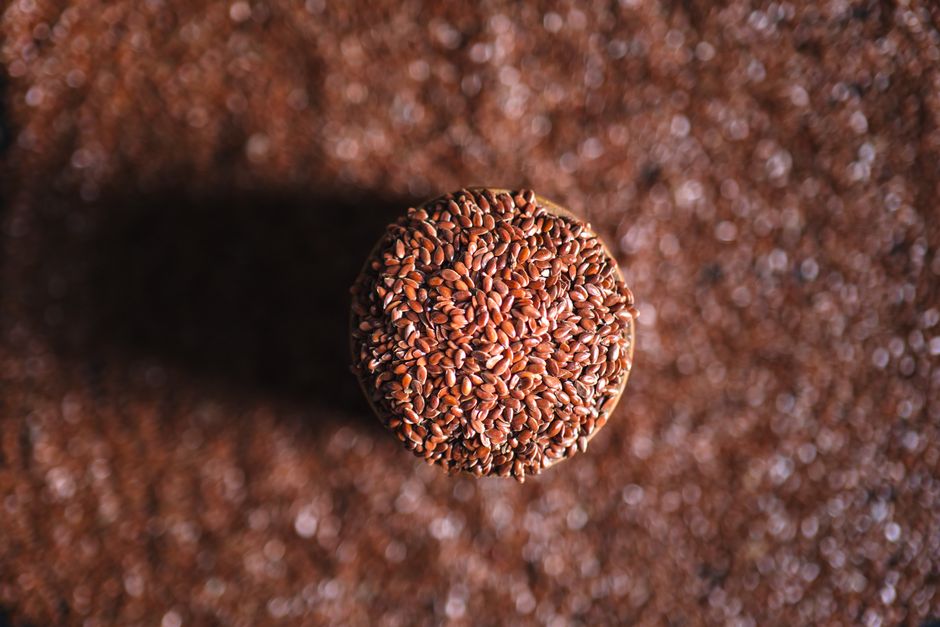
Ground flax seed is one of the few foods that delivers three useful nutrients at once: fiber, alpha-linolenic acid (an omega-3 fat), and lignans, a group of plant compounds with antioxidant activity. To use it in your daily diet, grind whole seeds in a coffee grinder or buy pre-ground flax, then add one to two tablespoons to oatmeal, yogurt, smoothies, baked goods, or savory dishes like meatloaf and soups. Keep it in the refrigerator, drink enough water alongside it, and start with a smaller amount if your gut is not used to high-fiber foods.
Why Does Grinding Matter So Much?
Whole flax seeds can pass through your digestive tract largely intact. Your teeth do not break them down well, and the hard outer shell resists digestion. That means many of the nutrients inside stay locked away.
Grinding cracks that shell. Once cracked, the fiber, omega-3 fats, and lignans become far more available to your body. This is one of the clearest and most consistently supported points in flax seed research. If you are swallowing whole seeds and expecting the full benefit, you are likely missing most of it.
There is a trade-off. Grinding exposes the oils to air, and those oils can go rancid. Whole seeds keep for many months in a cool, dark place. Ground flax is far more perishable. Buy it in small amounts, or grind only what you will use over a week or two.
A coffee grinder reserved for spices and seeds works fine. So does a small electric mill. You do not need special equipment.
How To Use Ground Flax Seed In Your Daily Diet?
You can stir it into almost anything with a wet or soft texture. The flavor is mild and slightly nutty, so it disappears into most dishes without changing how they taste.
Common everyday uses include:
- Stirred into oatmeal, overnight oats, or hot cereal
- Blended into smoothies and protein shakes
- Mixed into yogurt, cottage cheese, or applesauce
- Baked into muffins, pancakes, breads, and cookies
- Sprinkled over salads or roasted vegetables
- Added to meatloaf, burgers, or veggie patties as a binder
- Stirred into soups, stews, or pasta sauce near the end of cooking
One practical note: flax absorbs liquid and thickens. If you add it to a smoothie, drink it reasonably soon rather than letting it sit for hours and turn into a gel.
As a general reference, many people use one to two tablespoons of ground flax per day. That range is widely cited and is a reasonable starting point for most healthy adults. It is not a medical prescription, and there is no single official daily target specifically for flax seed.
How Much Should You Actually Take?
There is no government-set recommended daily amount for flax seed the way there is for vitamin C or calcium. What exists instead is general guidance from nutrition sources suggesting roughly one to two tablespoons of ground flax daily for adults.
More is not automatically better. Flax is high in fiber, and a large jump in fiber can cause bloating, gas, and cramping. If you currently eat little fiber, start with a teaspoon or so and build up over a week or two.
How much fiber are we talking about? According to USDA nutrient data, one tablespoon of ground flax seed contains close to 2 grams of fiber. Two tablespoons gets you near 4 grams. For context, most adults are advised to aim for roughly 25 to 38 grams of total fiber per day depending on age and sex.
Here is a rough nutrient comparison for one tablespoon of ground flax seed, based on USDA data:
| Nutrient | Approximate amount per tablespoon |
|---|---|
| Calories | About 37 |
| Total fat | About 3 grams |
| Fiber | About 2 grams |
| Protein | About 1.3 grams |
| Carbohydrate | About 2 grams |
These figures are approximate and can vary slightly by source and by how finely the seed is ground.





What About the Omega-3 in Flax?
Flax is one of the richest plant sources of alpha-linolenic acid, or ALA. That is a genuine omega-3 fat. But there is a detail many people miss.
ALA is not the same as the omega-3 fats found in fatty fish, which are EPA and DHA. Your body can convert ALA into EPA and DHA, but the conversion is inefficient. Estimates vary, but the general scientific consensus is that only a small fraction of ALA is converted, and conversion to DHA is especially limited.
This matters. If you are relying on flax as your only omega-3 source and expecting the same effects as eating salmon, the evidence does not support that. Flax is a good plant source of ALA. It is not a direct substitute for marine omega-3s.
For people who do not eat fish, flax can still contribute to total omega-3 intake. It is just worth understanding what it does and does not provide.
Does Ground Flax Help With Cholesterol or Blood Sugar?
This is where the evidence gets more interesting, and also more mixed.
Flax contains soluble fiber, the type that can bind cholesterol in the gut and modestly lower LDL cholesterol. Some studies suggest ground flax may lower LDL cholesterol by a small amount, particularly in people with elevated levels. The effect is generally modest, not dramatic, and results across studies vary.
On blood sugar, some research indicates that flax taken with meals may slightly blunt post-meal glucose rises, likely because of its fiber and fat content slowing digestion. The evidence here is not strong enough to present flax as a blood sugar treatment.
What is fair to say: flax fits well into a diet pattern that supports heart health and steady blood sugar. It is not a stand-alone remedy, and no one should stop a prescribed medication because they added flax to their diet.
Can Flax Help With Digestion and Regularity?
Yes, and this is one of its more reliable effects. Flax is a good source of both soluble and insoluble fiber. Insoluble fiber adds bulk to stool, and soluble fiber absorbs water and forms a gel. Together they can help soften stool and support more regular bowel movements.
That same gel-forming property is why flax is sometimes used as an egg substitute in baking. One tablespoon of ground flax mixed with about three tablespoons of water and left to sit for a few minutes creates a gel that can bind baked goods together.
The flip side is that flax needs water to work well. If you add a lot of fiber without enough fluid, you can end up more constipated, not less. Drink water throughout the day when you increase flax.
Are There Any Risks or People Who Should Be Careful?
For most healthy adults, ground flax in typical food amounts is well tolerated. There are a few situations where caution is reasonable.
Because flax can slow digestion and affect how the gut absorbs things, there is a theoretical concern that it could interfere with the absorption of some oral medications if taken at the same time. A practical approach some clinicians suggest is to separate flax from medications by a couple of hours. This is common-sense guidance rather than a strongly established rule.
Flax contains compounds that in very large amounts have been studied for hormonal effects. In normal food quantities, this is not a known concern for most people. People with hormone-sensitive conditions who are considering large supplemental doses should talk with their doctor rather than assume it is neutral.
Flax can also slow blood clotting in theory because of its omega-3 content. People on blood-thinning medication, or scheduled for surgery, should check with their clinician before taking large amounts.
And the basics: increase fiber gradually, drink enough water, and store ground flax cold to keep it from going rancid.
How Should You Store It?
Whole flax seeds store well for many months in a cool, dark, dry place. Ground flax is different. Once ground, the oils are exposed and can turn rancid within weeks at room temperature.
Keep ground flax in an airtight container in the refrigerator, where it holds up for a few weeks to a couple of months. For longer storage, the freezer works well. If ground flax smells sharp, bitter, or like paint, throw it out. That is rancidity, not flavor.
Frequently Asked Questions
Should I use whole or ground flax seed?
Ground flax is far better absorbed because your body cannot break down the hard outer shell of whole seeds. If you use whole seeds, grind them yourself or buy pre-ground and keep it refrigerated.
How much ground flax seed per day is safe?
General nutrition guidance suggests about one to two tablespoons of ground flax daily for most healthy adults. Start lower if you are not used to high-fiber foods, and drink enough water.
Does flax seed replace fish oil for omega-3?
No. Flax provides ALA, a plant omega-3, but your body converts only a small fraction of it into the EPA and DHA found in fish. Flax is a good plant source, not a direct substitute.
Can I put ground flax in hot coffee or tea?
You can, but it will thicken the liquid and settle at the bottom. It works better stirred into foods with more texture, like oatmeal or yogurt.
