
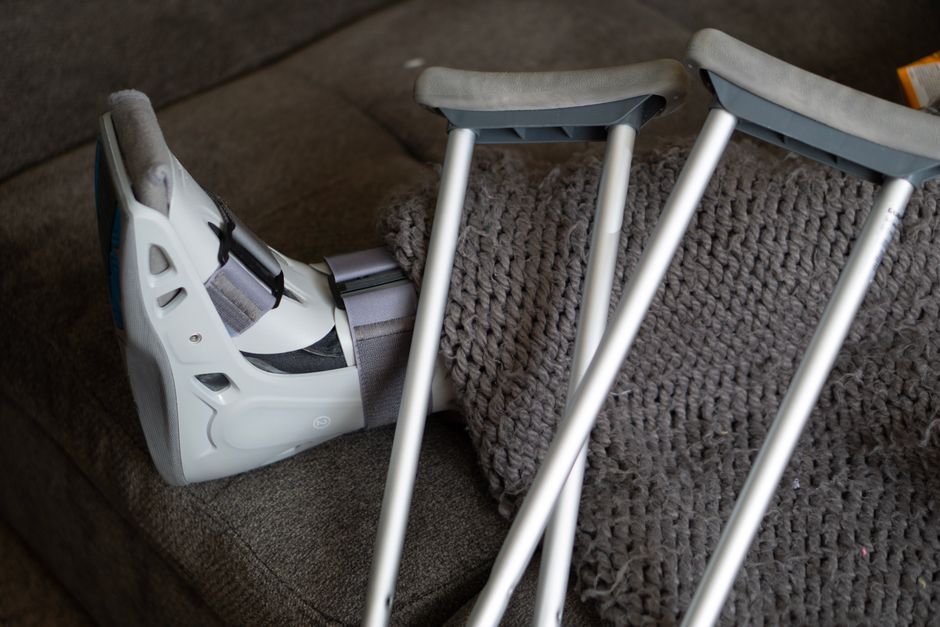
Elbow crutches, also called forearm crutches, are a common mobility aid after an injury, surgery, or for long-term conditions. Using them incorrectly can cause falls, nerve damage, or shoulder pain. The safe method is to keep your weight on your hands, not your armpits or wrists, and to move the crutch and opposite leg together in a controlled step. Fit matters more than technique — if the crutch height and handgrip are wrong, no amount of practice will make walking safe.
How Do Elbow Crutches Differ From Underarm Crutches?
Elbow crutches have a cuff that wraps around your forearm and a handgrip you hold. Underarm crutches have a padded top that presses against your ribs and armpit. The key difference is where the weight lands.
With underarm crutches, people often lean into the top pad, which can damage nerves in the armpit. Elbow crutches avoid that problem because the cuff distributes force along the forearm. This makes them a better choice for long-term use or for people who need crutches for more than a few weeks.
Elbow crutches are common in Europe and increasingly used in the US. They are often preferred by younger patients and people with good upper body strength. They are also used when one leg must bear no weight at all after surgery.
How Do You Set The Correct Height For Elbow Crutches?
Height adjustment is the first step and the most common source of error. Stand up straight in your normal shoes. The top of the crutch should reach about 1 to 2 inches below your armpit. This is not where you press your body weight — it is just a reference point.
Your elbow should bend about 15 to 30 degrees when your hand rests on the grip. If your elbow is fully straight or locked, the crutches are too short. If your elbow is bent sharply beyond a right angle, they are too tall.
The handgrip should be at the level of your wrist when your arm hangs naturally at your side. When you grip it, your wrist should be straight, not bent up or down. A bent wrist means the grip is set at the wrong height.
Never adjust crutches while standing on stairs or uneven ground. Make all adjustments seated or on flat, stable flooring. Check the push-button or twist-lock mechanism is fully engaged before putting weight on the crutch.
What Is The Correct Way To Walk With Elbow Crutches?
The basic walking pattern is called the tripod or three-point gait. Place both crutches about one small step ahead of you. Move your injured or weaker leg forward with the crutches, keeping your weight on your hands and your stronger leg. Then step through with your stronger leg, landing slightly ahead of the crutches.
Keep your weight on your hands, not on your forearm cuffs. The cuffs support and guide the crutch — they are not meant to carry your body weight. Pressing down into the cuffs can cause forearm pain and bruising.
Your head should stay up, looking forward, not down at your feet. Looking down rounds your shoulders and shifts your center of gravity forward, which increases fall risk. Use your peripheral vision to see the floor ahead.
Take short, even steps. Long strides with crutches are unstable and tire your arms quickly. A normal walking rhythm with crutches is slower than your usual pace — that is expected.





How Do You Sit Down And Stand Up With Elbow Crutches?
Sitting down is a common point of failure. Back up to the chair until you feel the edge against the back of your legs. Reach back with one hand to confirm the chair is there. Move your injured leg forward so it is extended slightly in front of you. Lower yourself slowly using your stronger leg and both arms on the armrests or the chair seat.
Keep the crutches in your hand or within reach. Do not toss them aside — you will need them to stand up. If the chair has no armrests, hold both crutches in one hand and use the other hand on the chair seat for support.
To stand up, slide forward to the edge of the chair. Place your stronger foot flat on the floor, slightly behind you. Hold both crutches in one hand and push up with your stronger leg and the other arm. Once standing, transfer one crutch to each hand and re-check your balance before stepping.
How Do You Climb Stairs With Elbow Crutches?
Stairs are the highest-risk activity with crutches. The rule is simple: up with the good, down with the bad. Going up, lead with your stronger leg. Going down, lead with your injured leg and the crutches.
Going up: Stand close to the first step. Place both crutches on the step above if you have a handrail, or keep them on the current step. Step up with your stronger leg. Then bring your injured leg and both crutches up to the same step. Repeat one step at a time.
Going down: Place both crutches on the lower step first. Move your injured leg down to that step while keeping your weight on your stronger leg. Then bring your stronger leg down. The crutches and injured leg move first; the strong leg always moves last when descending.
If there is a handrail, use it. Hold the rail with one hand and keep both crutches in the other hand. This is safer than using two crutches without the rail. If the stairs have no rail and you are not confident, sit on the step and slide down one step at a time. This is not embarrassing — it is the safest option.
What Mistakes Cause Falls And Injuries With Elbow Crutches?
The most common mistake is putting weight on the forearm cuffs instead of the hands. This creates friction and can compress nerves in the forearm. Over time, this can cause numbness, tingling, or weakness in the hands.
Another frequent error is walking on wet or slippery surfaces. Crutch tips are rubber, but they are not slip-proof on water, ice, or polished floors. Take shorter steps on these surfaces and keep the crutch tips directly below your shoulders, not too far forward.
Wearing the wrong footwear is also a hazard. Flip-flops, loose slippers, and high heels have no place with crutches. Use closed-toe shoes with non-slip soles and secure fastening. Your stronger leg is doing most of the work — it needs a stable base.
Carrying items while walking with crutches is a leading cause of falls. Do not hold a cup, phone, or bag in your hand while moving. Use a backpack, a waist pouch, or ask someone to carry items for you. Your hands must stay free to grip the crutches.
When Should You See A Healthcare Professional About Crutch Use?
If you feel numbness, tingling, or persistent pain in your hands, arms, or shoulders, stop using the crutches and get help. These symptoms may mean the crutches are the wrong height, the grip is positioned incorrectly, or you are carrying too much weight through your arms.
If you cannot manage stairs, get in and out of a car, or use the bathroom safely with crutches, ask for a referral to a physical therapist. A therapist can teach you the specific techniques for your situation and check your crutch fit.
Some people should not use elbow crutches at all. If you have significant weakness in both arms, poor balance, or a condition that affects coordination, a walker or a wheelchair may be safer. A healthcare provider can help you decide what device matches your needs.
Frequently Asked Questions
How tight should the forearm cuff be on elbow crutches?
The cuff should be snug but not tight enough to press into your arm. You should be able to slide one finger between the cuff and your forearm.
Can you use elbow crutches on stairs without a handrail?
Yes, but only if you are confident and use the up-with-good, down-with-bad method. If you are unsure, sit on the step and slide down one step at a time.
How long does it take to learn to walk with elbow crutches?
Most people feel comfortable within a few days of regular practice. Full confidence on stairs and uneven ground often takes one to two weeks.
Should you use elbow crutches on the side of the injured leg?
No, you use one crutch on the opposite side of the injured leg if you are using a single crutch. With two crutches, each hand holds one, and you move the injured leg with the crutches.
